Alex Gilady
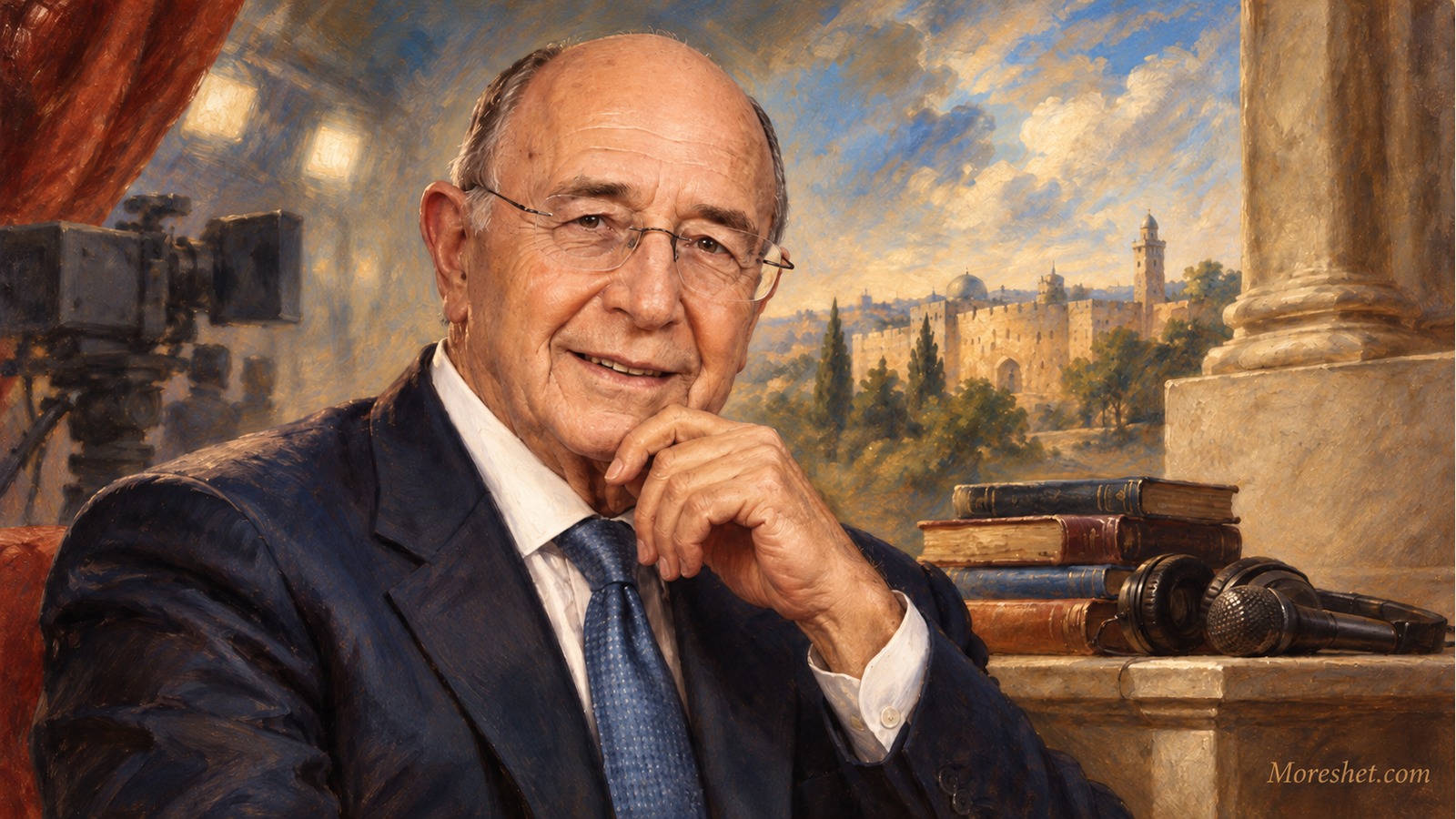
Alex Galadi — AI-generated artistic portrait · Moreshet.com
Israeli journalist, television executive and Olympic broadcasting pioneer
Alex Gilady (9 December 1942 – 13 April 2022) was an Israeli journalist, television producer, sports executive and international Olympic official. Over nearly six decades, he worked at the intersection of journalism, broadcasting, sports and global media. He began in Israel as a newspaper sports reporter and television executive, rose to senior leadership at NBC Sports, helped establish the Israeli television company Keshet, and served as a member of the International Olympic Committee.
From a Tehran childhood to Israeli broadcasting
Gilady was born in Tehran as Alexander Kleinberger to Shimon and Shoshana, Jewish parents from Poland who had fled during the Second World War. He arrived in Israel as a child with his family, one of the children known as the Tehran Children, and grew up in Ramat HaSharon. He studied at the Mevo'ot Yam Naval College. His early life connected the experience of a Jewish refugee family with the formative years of the young State of Israel.
In 1964, Gilady joined the sports desk of the newspaper Yedioth Ahronoth. Four years later he moved to Israeli television's sports department, becoming its director in 1975. In 1977 he was appointed director of special events, overseeing broadcasts that became shared moments in Israeli public life. They included the 1977 European basketball championship final won by Maccabi Tel Aviv, Egyptian President Anwar Sadat's historic visit to Israel, and the 1979 Eurovision Song Contest, held in Israel. His production of Eurovision earned him the David's Violin Award.
Building a global sports-broadcasting career
In 1980, Gilady joined the European Broadcasting Union delegation to the Winter Olympics in Lake Placid. The relationships he developed there helped lead to his move in 1981 to NBC's sports division in the United States. He helped the network pursue major sports rights, including the 1983 World Athletics Championships in Helsinki, and advanced to senior positions in international planning and development at NBC Sports.
One of his most consequential achievements was negotiating with the International Olympic Committee over NBC's United States broadcasting rights for the 1988 Seoul Olympics. NBC paid $300 million, an unprecedented sum at the time. The broadcasts nevertheless proved highly profitable, laying the foundation for a long-running relationship between NBC and the Olympic movement. Later agreements reached into the billions of dollars, including contracts covering Olympic events from 2021 through 2032. Gilady therefore helped shape the commercial and media system through which the Olympic Games reached audiences around the world.
He was involved in NBC's coverage of the Olympics in Barcelona, Atlanta, Sydney, Salt Lake City, Athens, Beijing and London. The broadcasts won him seven Emmy Awards. These honors reflected more than individual success: they marked the ability of an Israeli media professional to operate at the highest level of international sports television and to influence the standards by which major global events were presented.
Shaping Israeli commercial television
Alongside his American career, Gilady helped establish Keshet Broadcasting in 1993 and led its bid for a Channel 2 franchise. He helped assemble the schedule and recruit leading figures from Israeli television. After Keshet won the tender, he served as its chief executive, and in 2005 returned as president of the group. His work formed part of Israel's transition from an overwhelmingly public broadcasting system to a competitive commercial television market, influencing the country's production industry and viewing culture.
In the late 1980s, Gilady founded Tele-Event, a company that acquired sports broadcasting rights. It obtained, among other properties, Israeli rights to Wimbledon and the US Open tennis championships and sold them to Channel 2 and cable companies. A subsequent legal dispute over foreign channels carrying the tournaments reached Israel's Supreme Court and contributed to a precedent associated with the temporary blocking of foreign channels during certain international sporting events. The case illustrated how broadcasting rights had become a central issue in Israeli media, business and public policy.
Leadership in the Olympic movement
In 1994, Gilady became a member of the International Olympic Committee, a position he held until his death. He served on organizing committees for the Athens 2004, Beijing 2008 and London 2012 Olympics, took part in broadcast planning and held a vote in the selection of host cities. From 2004 to 2019 he chaired the International Basketball Federation's Television Council. Within the IOC, he also worked on commissions dealing with communications, public relations and social development through sport.
In the late 1990s, Gilady helped prepare an initial bid by Tel Aviv to host the 2012 Olympic Games and contributed $250,000 toward the planning effort. The bid was abandoned amid the security situation in the region, but the initiative reflected his determination to connect Israel with major international sporting institutions. In preparation for the Tokyo 2020 Games, he served as vice-chairman of the Coordination Commission. He also presented Israeli gymnast Linoy Ashram with her gold medal at the Games.
Gilady received an honorary doctorate from the University of Haifa in 2007 and a lifetime-achievement award from the Jewish Sports Museum in 2006. He was also recognized after his death with the Olympic Order in Silver in 2022. Together, these distinctions reflect the breadth of his work across journalism, television, sport and international event management.
Final years and enduring influence
Gilady died in London on 13 April 2022, aged 79, from lung cancer, and was buried at the HaNetsach cemetery in Ramat HaSharon. His professional life remained rooted in Israel while reaching far beyond it. He helped make sport a global television experience, opened international pathways for Israeli media professionals and contributed to the growth of commercial television in Israel.
In 2017, allegations of sexual harassment and sexual assault were published. Gilady denied the rape allegations, acknowledged that one account was substantially accurate, and temporarily stepped aside from his position at Keshet. In 2018 he filed a defamation suit against Oshrat Kotler and Neri Livneh and later withdrew it after mediation. These events form part of the public record of his life alongside his professional achievements.
Why Alex Gilady's legacy belongs in Moreshet
Alex Gilady merits inclusion in an archive of Jewish and Israeli heritage because his career occupied several institutions that shaped modern Israeli public life: the sports press, Israeli television, Keshet Broadcasting and the global Olympic movement. He brought major national and international events to Israeli audiences while helping turn sports broadcasting into a sophisticated professional and commercial field with worldwide influence.
His story links a Jewish refugee family's wartime journey through Tehran with immigration to Israel, the building of a local media career and leadership within global institutions. For readers of Moreshet and visitors to Moreshet.com, that combination offers a concrete view of how Israelis and Jews have participated in international cultural systems, how television created shared experiences, and how a media professional from Israel helped shape the way the world watched the Olympic Games.