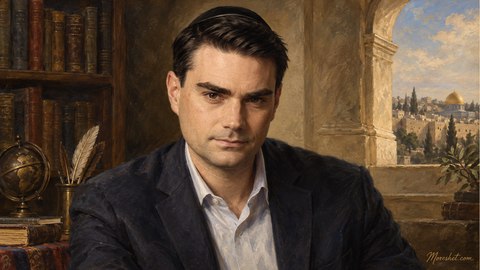
Tuvia Tzafir
Six decades of satire, performance, and children's culture in Israel
Tuvia Tzafir, born Tuvia Kozlowski on December 31, 1945, is an Israeli actor, comedian, mimic, singer, voice actor, television presenter, and children's entertainer. Over more than six decades, he has moved between stage, cinema, television, satire, dubbing, and children's programming. Each field brought him a different audience, while his distinctive comic timing and gift for characterization made him a familiar presence across generations. Since the beginning of the twenty-first century, he has been especially identified with his beloved children's persona, Grandpa Tuvia.
From Florentin to the stage
Tzafir grew up in Tel Aviv's Florentin neighborhood in a traditional Jewish family of Polish origin. In the early 1960s, while serving in the Nahal entertainment troupe, he established himself as both a performer and a singer. His performance of "Echad Cholamani," a duet with Shula Chen, was an early indication of the combination of music, acting, and stage presence that would define his career.
After leaving the Nahal troupe, Tzafir entered professional entertainment and developed a style built on mimicry, quick character changes, and precise comic timing. He appeared in stage productions, television entertainment programs, and films, including the successful 1986 show "Hagigot Siyum Ha-Rotatzia". Many of his stage projects were written by the satirist Ephraim Sidon, with whom he formed an important creative partnership.
Satire as a public language
During the 1970s, Tzafir joined the satire programs "Lo Hakol Over" and "Nikuy Rosh". There he began impersonating Israeli political figures, including Yitzhak Rabin and Menachem Begin. These performances did more than display his technical skill: they turned public figures into recognizable comic characters and helped establish televised satire as a lively way for Israelis to interpret public life.
In the 1980s, Tzafir became a frequent performer on the entertainment program "Siba LaMesiba," where political impersonations appeared alongside sketches and musical comedy. He also guest-starred in the sitcom "Krovim Krovim." During the 1990s, he supplied voices for the political puppets in the satirical program "HaCharzufim," appeared in "HaAgaf HaSagur," and presented "Tzafir HaNefesh," written by Ephraim Sidon. He also hosted the television game show "Zeh HaSod Sheli" after Uri Zohar's departure.
His television work continued in the following decades. He appeared on the "Yair Lapid" talk show, participated in the daily program "HaShir Shelanu," acted in the drama series "Telenovela Ba'am" and "Danny Hollywood," and appeared in "Savri Maranan" and "Eifo Ata Chai?" In 2019, he returned to the character he had played in the classic film "Giv'at Halfon Eina Ona" for the stage musical at Habima Theatre.
Film, dubbing, and memorable voices
Tzafir was part of a group of Israeli films that became enduring popular classics. His credits include "Salomonico" and "Natzhe and the General" in 1972, "Charlie Ve'hetzi" in 1974, "Hagiga B'Snuker" in 1975, "Giv'at Halfon Eina Ona" and "Eizeh Yofi Shel Tzarot!" in 1976, "Ha-Lahaka" in 1978, "Nisuin Nusah Tel Aviv" in 1979, and "Ha-Instalator" in 1986. These roles connected him to the popular Israeli cinema and comic culture of the 1970s and 1980s.
One of his most recognizable contributions was his Hebrew voice for the Genie in Disney's animated film "Aladdin." He voiced the character again in "The Return of Jafar," "Aladdin and the King of Thieves," and the television series. He later voiced Manny in "Ice Age" and Bigweld in "Robots." Through this work, Tzafir helped make major international productions feel natural and culturally immediate to Hebrew-speaking children.
Grandpa Tuvia and the culture of childhood
The central achievement of Tzafir's later career was the creation and development of Grandpa Tuvia. The character offered children not only entertainment but also a framework of stories, songs, play, and encounters with Jewish and Israeli cultural themes. His successful show "Misiba BaYa'ar Im Saba Tuvia" led to video releases and a series of follow-up productions, including "Grandpa Tuvia: Stories from the King's Hand," "The Magic Coat of Grandpa Tuvia," "Bible Stories with Grandpa Tuvia," and "The Story of a Nation."
Through performances, recordings, television programs, and children's games, stories from the Bible and the history of Israel became part of the shared childhood experience of many families. "Grandpa Tuvia: The Story of a Nation" was also adapted as a children's film. Tzafir appeared in additional children's productions, including "Sipurim LeNimi" and "Tuvia and His Sons," and continued to combine humor with storytelling and music.
His children's work also included playing Baloo in the 1996 stage musical "The Jungle Book," a role he later reprised in a renewed production; the Giant in "Pim Pam Po"; and roles in productions of "Pinocchio" and "Noah's Ark." From 2008 onward, he appeared repeatedly in the popular "Matak Shel Festival" series, performing seven times between 2008 and 2016. His later children's projects included "Tobi Dובי," "Tuvia's Kingdom," "A Friday Hug," "Songs from Grandpa's House," "Grandpa Doolittle," and "The Animal Stories of Grandpa Tuvia," created to mark twenty years of the character.
Tzafir also participated in "Story Time with Grandpa Tuvia," children's recordings, computer games, television series, and live shows. His importance in this field lies in the continuity of the persona: Grandpa Tuvia became more than a single performance, developing into a recognizable world through which children encountered narrative, song, biblical material, and Israeli identity.
Family and continuity
Tzafir has been married to Yael since 1966. They met in elementary school, and she has served as a producer of his shows. The couple live in Ramat Hasharon and have three children, including television producer and director Yoav Tzafir. This family partnership has accompanied and supported a long career that has remained active across changing media and audiences.
Why this legacy belongs in Moreshet
Tuvia Tzafir merits inclusion in the archive because his work occupies several central arenas of Israeli cultural life: political satire, popular cinema, television entertainment, Hebrew dubbing, and children's culture. His impersonations in "Nikuy Rosh" and "HaCharzufim" show how humor became a public language in Israel. His film roles connect him to a formative period in Israeli popular cinema, while his voice as the Genie in "Aladdin" became part of the Hebrew-speaking childhood experience of an international classic.
His most lasting contribution may be Grandpa Tuvia. Through stories, songs, and productions dealing with the Bible and the history of Israel, he presented Jewish and Israeli heritage in an accessible, warm, and entertaining form. The character's reach extended across live theater, recordings, television, film, and children's games, allowing the same cultural material to circulate among families and across generations.
For these reasons, Tzafir's career belongs naturally in Moreshet. Its importance is not simply the number of roles he played, but his ability to connect generations, popular entertainment, and cultural memory, while also bringing international works into Hebrew through his dubbing. Moreshet.com preserves a meaningful record of a performer whose work helped shape Israeli satire and became part of the cultural and childhood heritage of many Israelis.