Sefi Rivlin
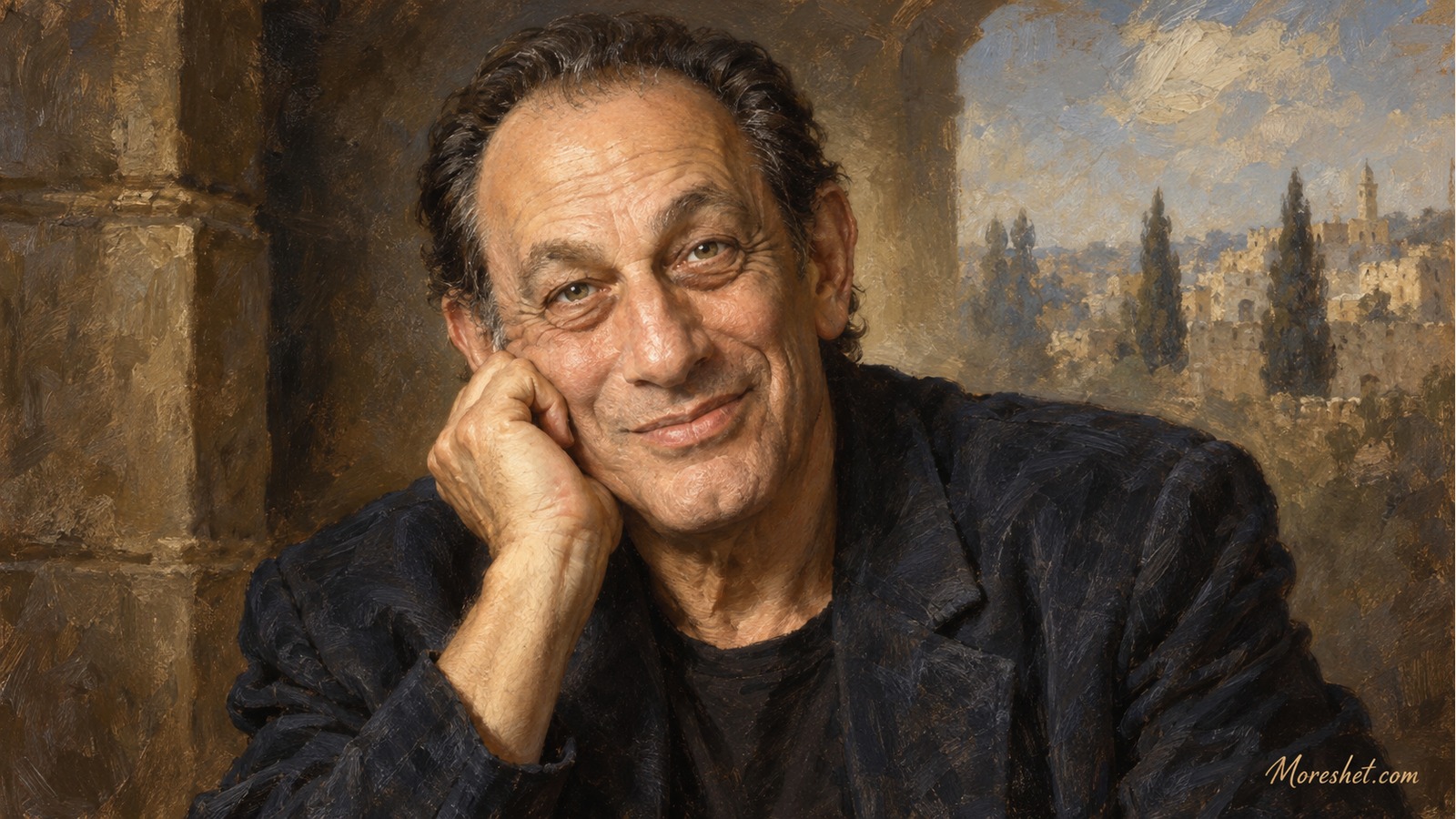
Sefi Rivlin — AI-generated artistic portrait · Moreshet.com
The actor and comedian whose characters became part of Israel’s shared cultural memory
Yosef “Sefi” Rivlin (7 November 1947–3 December 2013) was an Israeli actor, comedian, television host and public figure. Across four decades, he worked in theater, television, film and live entertainment, becoming one of the most recognizable figures in Israeli popular culture. Characters such as Fistuk and Itche, together with the many comic personalities he created in satire, children’s programming and variety shows, made him part of the everyday memories of several generations.
From the stage to the public imagination
Rivlin was born in Tel Aviv and grew up in Nahalat Yehuda, a workers’ moshav that became a neighborhood of Rishon LeZion in 1988. His father, Lipa Rivlin, had commanded the Irgun in Rishon LeZion, and his family was connected for generations to local settlement and public life. As a boy, Sefi played football for Hapoel Rishon LeZion at children’s, youth and senior levels. His love of sport remained part of his identity even after he turned to acting.
After studying at the Beit Zvi School for the Performing Arts, Rivlin became one of the early actors of Jerusalem’s Khan Theater when it was reestablished in 1973. His first leading stage appearance was in The Servant of Two Masters, directed by Michael Alfreds, a role that earned him a nomination for the Kinor David Award. He later appeared in the musical Arugot HaTa’avah and, in 1976, performed with Avraham Mor in The Travels of Benjamin the Third. Although the musical was not a commercial success, its Naomi Shemer songs—including “Snow on My City,” “Song of the Grasses” and “A Sign We Have Not Yet Arrived”—became widely known.
Rivlin continued to perform on stage throughout his career, particularly in comedies, while also taking on roles that demanded strong dramatic and theatrical presence. He appeared in La Cage aux Folles with Yisrael Poliakov and returned to the stage in 2010 in Heroes at Habima, alongside Yossi Pollak and Aharon Almog. He also created successful live comedy shows, including The Grimberg Brothers’ Tales, My Wife Is a Default Fine and Memories from Paprika. He hosted the Festigal children’s song festival in 1989 and 1993 and appeared in musicals, including Snow White.
Fistuk, Itche and the characters who entered Israeli homes
Rivlin’s major breakthrough came through television. Motty Kirshenbaum brought him to the influential satire program Nikui Rosh after a recommendation from Tuvia Tzafir. Rivlin quickly established himself as a performer with exceptional timing, improvisational skill and a gift for physical comedy. From 1975 to 1981, he played the unruly Fistuk on the Educational Television children’s program Rega im Dodley. He later carried the character into At Fistuk’s Home, turning Fistuk into one of the most beloved figures in the history of Israeli children’s television.
On Zehu Ze!, Rivlin created a succession of comic sketches and characters, often performing with Shula Chen, Tiki Dayan and other leading entertainers. His memorable creations included the detective Nach Rav-Moach, the dual characters in the “Moked” sketches and the neighbors who argued from their balcony in the program’s language segment. He also hosted the children’s game show Two in One Head with the mime artist Hanoch Rosen, and appeared in programs such as Solo, Hopa Hei, Motza”sh and Tzipi Without a Break.
During the 1980s and 1990s, Rivlin expanded his work into television series and entertainment programs. He played a central role in the ten-part comedy miniseries The Orchestra, which won the Golden Rose at the Montreux competition. He also played numerous roles in Hopa Hei. With the launch of Israel’s commercial Channel 2, he starred in Itche, the Israeli adaptation of All in the Family, and in Sefi, shaped around the comic language associated with Mr. Bean. Both series brought his style to an especially broad audience and made him one of the defining performers of early commercial television.
His connection with audiences also extended to sport. Rivlin appeared on programs about English football, including The Mysterious Magic Journey and Empire of Grass, served on the panel of The 91st Minute, and performed football-related impersonations on Offside. He hosted the talk show Take It Easy, appeared in The Strip and Elvis, and played Grandpa Sefi in the children’s program Rinat’s Wonderland.
Film, satire and public service
Rivlin appeared in Israeli films including Just Today, Film and Breakfast, The Fox in the Chicken Coop, Hasamba and the Horse Thieves, The Great Madness, April Fool and Avi Nesher’s The Secrets. His film work complemented a career that moved comfortably among stage comedy, satire, children’s television, popular entertainment and cinema.
Rivlin also appeared in Likud election broadcasts in 1977, 1981 and 1984, contributing to and, in some sketches, writing comic material. In 1998 he ran for the Rishon LeZion City Council, entered the council in 2003 and was elected again in 2008 as a member of the Paz faction. He held the community-relations portfolio and was later appointed the city’s cultural adviser and coordinator of celebrations marking Rishon LeZion’s 130th anniversary. In 2013, he was named a distinguished citizen of Rishon LeZion.
Illness, courage and farewell
In 1993, Rivlin began experiencing problems with his vocal cords and withdrew from theater for seven years. In 2006, he was diagnosed with laryngeal cancer. He chose an intensive course of treatment intended to preserve his vocal cords, underwent a series of operations in Boston and spoke publicly about the experience in the programs Uvda and Laga’at BaRuach. In 2010 he announced that he had recovered and expressed the hope that his experience would encourage others living with cancer.
When the disease returned, he underwent surgery in 2012 to remove his vocal cords and lost the ability to speak. In his final televised interview, broadcast in February 2013, he answered questions in writing. He died at Sheba Medical Center on 3 December 2013, aged 66. His coffin was placed at the Habima Theater in Tel Aviv for a public farewell attended by entertainers and public figures, and he was buried in Rishon LeZion’s old cemetery.
Remembrance and continuing influence
Rivlin’s influence can be measured not only by the number of programs and characters in which he appeared, but also by the cultural memory he helped create. Fistuk connected humor, play and imagination for children who grew up with Educational Television. His characters in satire and variety programs turned gestures, expressions and comic styles into elements of popular Israeli speech.
After his death, a community center and cultural hall in Kiryat Hasharon, Netanya, were named in his memory. Since 2015, Rishon LeZion has hosted the Sefi Rivlin Comedy and Humor Festival, usually during Purim, and Israel Post issued a commemorative stamp bearing his portrait. Later television productions continued to honor him, and in 2024 HOT8 released the documentary Sefi, examining his cultural and public activities.
Why Sefi Rivlin’s legacy belongs in Moreshet
Sefi Rivlin merits inclusion in Moreshet because he worked in one of the most influential arenas of Israeli life: everyday culture, created in homes, on television screens, on theater stages and through encounters between generations. He did more than make audiences laugh. He created shared characters, helped shape the language of Israeli entertainment and brought theater, satire and comedy to a remarkably broad public.
His career reflects the development of Israeli culture from the 1970s into the twenty-first century—from Educational Television and the Khan Theater, through children’s programs and political satire, to commercial television, cinema and local public service. For Moreshet.com, his story matters because it shows how one performer can shape a society’s shared cultural memory, encourage imagination and laughter among children and adults, and remain present in community life long after his death.