Reuven Merhav
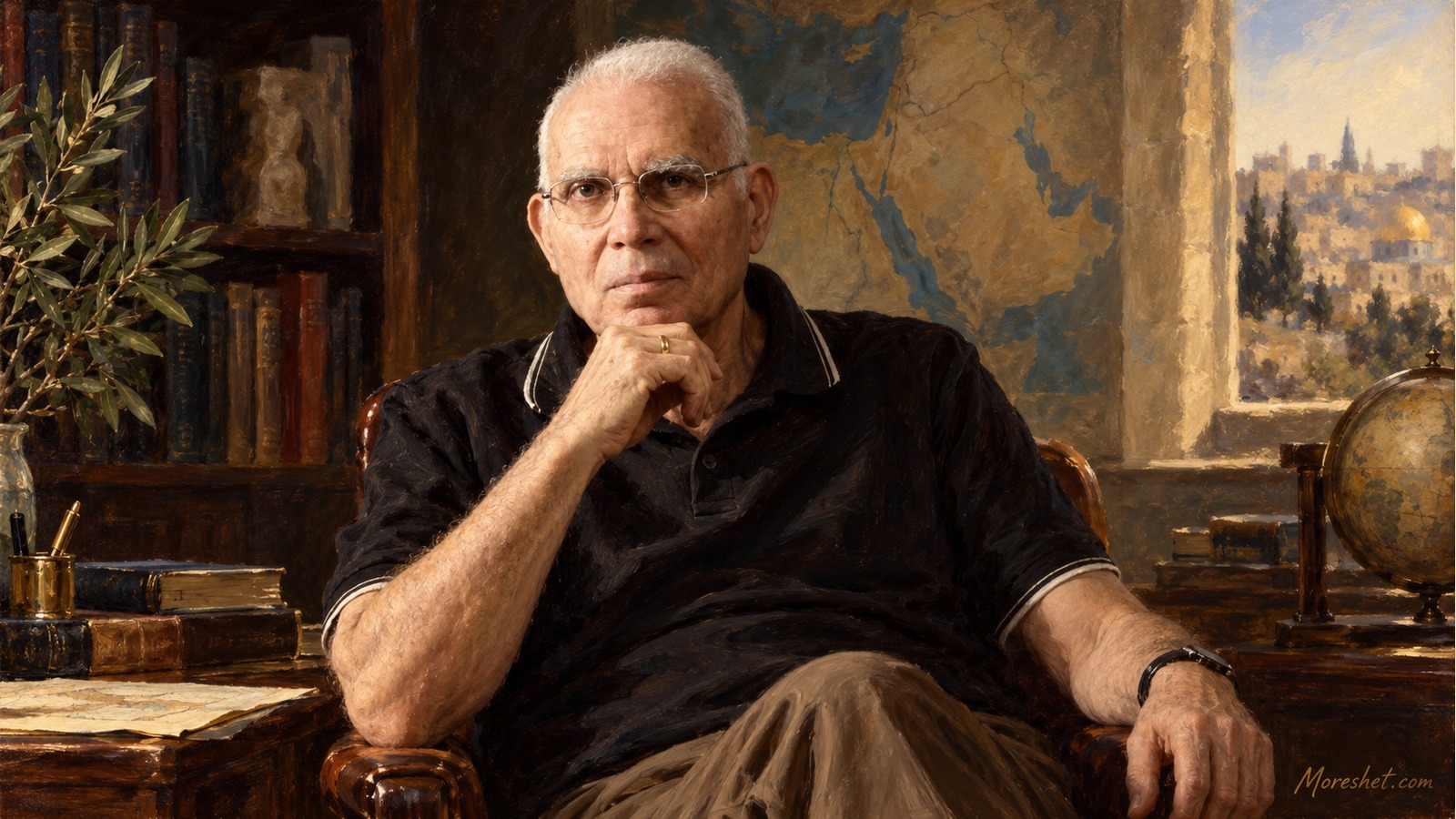
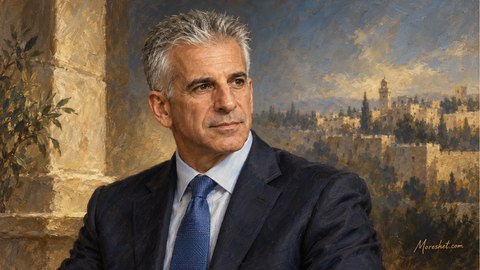
Reuven Merhav — AI-generated artistic portrait · Moreshet.com
Israeli intelligence officer and diplomat who helped open the path to China, prepare Operation Solomon, and support the integration of Ethiopian Jews
Reuven Merhav (born February 9, 1936) is an Israeli diplomat, intelligence veteran, Middle East specialist, and public servant whose career joined discreet statecraft with practical institution-building. After more than two decades in the Shin Bet and Mossad, he entered the Foreign Ministry, served as its director-general from 1989 to 1991, and then led the Ministry of Immigrant Absorption from 1991 to 1993. His work contributed to the opening of Israel’s diplomatic relationship with China, the negotiations with Egypt over Taba, the diplomatic preparations for Operation Solomon, and the integration of Ethiopian Jews in Israel.
Across these assignments, Merhav repeatedly worked where formal relations were limited, political conditions were changing, and trust had to be built over time. His knowledge of Arabic, Islam, regional history, and government institutions enabled him to move between intelligence, diplomacy, policymaking, education, and Jewish communal service. The result was a career whose effects reached beyond official titles to touch Israeli security, international relations, aliyah, education, and the rights of Holocaust survivors.
Education and an early commitment to public life
Born Reuven Markowitz to Jewish parents who had escaped Nazi persecution in Germany, Merhav grew up with a direct family connection to the upheaval that transformed European Jewry. That background later found a public expression in his work for Central European Jewish heritage and Holocaust-era restitution.
He attended Hugim High School in Haifa and belonged to the founding group associated with Kibbutz Dvir in the Negev. During his compulsory military service, he served in the Nahal and in a paratrooper reconnaissance unit during the period of the IDF’s reprisal operations.
Merhav studied Arabic language and literature, Islamic studies, and the history of Muslim countries at the Hebrew University of Jerusalem, and later pursued advanced historical studies at Tel Aviv University. This combination of language, history, and regional knowledge became a professional foundation for assignments across the Middle East, Africa, and Asia.
His public involvement began while he was still a student. From 1959 to 1960, he served as president of the National Union of Israeli Students, participated in the Independent student movement, and was among the founders of Pi Ha’aton, the Hebrew University student newspaper. These activities introduced themes that would recur throughout his career: organizational leadership, informed public debate, and service beyond a narrowly defined profession.
Two decades in Israeli intelligence
The Shin Bet, Africa, and Iran
From 1961 to 1983, Merhav served in Israel’s intelligence community. In the Shin Bet, he specialized in countering Eastern European intelligence activity in Israel and held collection and security assignments, including work connected with security at the Foreign Ministry and a posting involving the National Iranian Oil Company.
He subsequently served in the Mossad in regions central to Israel’s peripheral strategy. His overseas appointments included deputy head of station in Addis Ababa, head of station in Nairobi, and a senior post in Tehran before the Iranian Revolution. These assignments gave him direct experience of the Horn of Africa, Iran, and the broader Middle East at a time when Israel relied heavily on relationships beyond the immediate Arab-Israeli arena.
Back at headquarters, Merhav led a department in the Mossad’s foreign-relations division. Its responsibilities included developing contacts with Christian groups in Lebanon. The work demanded more than intelligence collection: it required political judgment, cultural fluency, and the ability to sustain channels of communication in unstable environments.
From covert relationships to open diplomacy
Lebanon and the path to China
After leaving the Mossad, Merhav joined the Ministry of Foreign Affairs. In 1983 he was sent to head the ministry’s representation in Beirut during the difficult period following the First Lebanon War. From 1985 to 1988, he served as Israel’s consul general in Hong Kong, where he worked to cultivate contacts with the People’s Republic of China before the two countries had formal diplomatic relations.
That effort required gradual, carefully calibrated engagement. Academic, professional, and unofficial contacts provided a means of building confidence in the absence of embassies and full diplomatic recognition. Merhav’s ability to operate through both formal and informal channels helped convert exploratory contacts into a durable governmental relationship.
Foreign Ministry director-general: China, Taba, and Operation Solomon
Merhav served as director-general of the Foreign Ministry under Foreign Minister Moshe Arens from 1989 to 1991. During his tenure, Israel established a presence in Beijing that began under an academic framework and developed into its first official mission in the Chinese capital. This was an important practical step toward the establishment of full diplomatic relations in January 1992 and the opening of the Israeli embassy.
He also acted as a leading Israeli negotiator in the discussions with Egypt concerning the implementation of the Taba settlement. Taba was returned to Egypt in 1989 following international arbitration and detailed bilateral arrangements. The process demonstrated how professional negotiation could resolve a sensitive territorial dispute while preserving the Egypt–Israel peace treaty.
One of Merhav’s most consequential contributions to Jewish life came through the preparations for Operation Solomon. In May 1991, the operation brought thousands of Ethiopian Jews to Israel in a remarkably concentrated airlift. Its execution depended on coordination among the Israeli government, security agencies, diplomats, and Jewish organizations. Merhav helped negotiate and prepare the diplomatic and administrative conditions that made the rescue possible, contributing to an operation that transformed the future of an entire Jewish community.
Turning aliyah into long-term integration
After leaving the Foreign Ministry, Merhav became director-general of the Ministry of Immigrant Absorption. From 1991 to 1993, the ministry confronted the complex task of integrating Ethiopian immigrants alongside the much larger wave of immigration from the former Soviet Union. The work required the state to translate the achievement of aliyah into housing, education, public services, and opportunities for social and economic participation.
Merhav continued this commitment after leaving government. He became the founding chairman of the Ethiopian National Project, a partnership joining the Ethiopian Israeli community, the Government of Israel, and world Jewry. From 2002 to 2007, the project worked to improve educational achievement and opportunity for Ethiopian Israeli youth. Its cooperative structure recognized that immigration does not end at the airport: successful integration requires sustained investment, community participation, and attention to the next generation.
Institutions, policy research, and teaching
Merhav was the founding and first chairman of the executive committee of the Max Stern Yezreel Valley College during a formative period in the institution’s development. His work helped strengthen an academic institution created to expand access to higher education in northern Israel and contribute to the region’s social and economic growth. He also served as a public representative for employers on the National Labor Court and participated in other public committees.
As a fellow of the Jerusalem Institute for Policy Research, Merhav took part in preparing policy studies on possible arrangements for Jerusalem. His collaborative research included an examination of the Hashemite Kingdom of Jordan’s potential role in a future permanent-status settlement for the city, addressing legal, political, and practical dimensions. Prime Minister Ehud Barak called on him to advise at the Camp David summit in July 2000.
Merhav served on the executive committee of the Council for Peace and Security, a nonpartisan organization bringing together veterans of the military, intelligence community, foreign service, and academia. He also advised and taught at the IDF’s Operational Theory Research Institute and lectured in the Hebrew University’s graduate program in public policy and government from 2006 to 2008. Through these roles, he passed field experience in intelligence, geopolitics, and government to future officers, researchers, and public officials.
In 2010, he was appointed to the Turkel Commission, the public commission that examined the Gaza flotilla incident and related questions concerning Israel’s blockade policy. His appointment drew on decades of experience in security affairs, diplomacy, international relations, and public administration.
Central European Jewish heritage and Holocaust-era restitution
Alongside his state service, Merhav devoted years to Jewish communal work. He became the 11th head of the presidium of the Association of Israelis of Central European Origin and served on the board of the Conference on Jewish Material Claims Against Germany. Since 1951, the Claims Conference has negotiated compensation and restitution and directed support to Holocaust survivors around the world.
In 2009, Merhav led the Israeli delegation to the Holocaust Era Assets Conference in Prague. The gathering addressed property restitution, looted art, Jewish communal assets, and the social needs of survivors, culminating in the Terezin Declaration. He later advised the European Shoah Legacy Institute, which was established to monitor and advance the conference’s principles, and in 2015 was named to its honorary board.
This service connected Merhav’s family history as the son of refugees from Nazi Germany with concrete institutional work on behalf of survivors, heirs, and Jewish communities. It also supported the preservation of Central European Jewish heritage in Israel—not simply as the memory of a destroyed world, but as a living tradition that helped shape Israeli public administration, education, culture, and communal life.
Recording a life at historical turning points
In 2022, Merhav published his Hebrew memoir, Makom BaMerhav: When a Person Meets the Paths of History. The book places his personal journey against some of the major developments in modern Israeli history: the state’s early decades, its activity in Africa and Iran, the opening to China, the aliyah of Ethiopian Jewry, and the evolution of Israeli foreign and security policy. By recording experiences that often unfolded away from public view, he added a firsthand perspective to Israel’s historical memory.
Why Reuven Merhav’s legacy belongs in Moreshet
Reuven Merhav merits inclusion in Moreshet because his work intersected with several defining responsibilities of Israel and the Jewish people. He served Israel’s security in demanding intelligence arenas, helped build a path toward diplomatic relations with China, contributed to the peaceful implementation of the Taba settlement, and helped prepare the conditions for Operation Solomon.
His significance extends well beyond diplomacy. Merhav followed the rescue of Ethiopian Jews with practical work on integration and education, helped establish an academic institution serving northern Israel, and devoted volunteer leadership to Holocaust survivors’ rights and Central European Jewish heritage. Moreshet.com documents his career as an example of how regional knowledge, patient diplomacy, and sustained institution-building can shape Israel’s security and international standing while improving the lives of Jewish communities across generations.