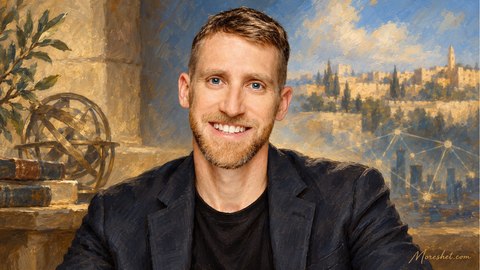
Andrew Stephen “Andy” Grove
The engineer, Holocaust survivor, and industrial leader who guided Intel from memory chips to microprocessors and reshaped modern technology management
Andrew Stephen “Andy” Grove (September 2, 1936–March 21, 2016) was a Hungarian-born Jewish American engineer, executive, author, and teacher whose work helped shape both the semiconductor industry and the mass adoption of personal computing. He joined Intel on the day of its incorporation in 1968, organized engineering and manufacturing at the young company, became its president in 1979, chief executive in 1987, and chairman in 1997. Under his leadership, Intel established itself as a leading producer of microprocessors—the components at the heart of millions of personal computers and servers.
Grove’s importance extends beyond the growth of one corporation. He combined a scientist’s command of semiconductor devices, an operator’s attention to manufacturing, and an unusual willingness to abandon a successful past when technology or competition changed. Through his books, teaching, and management practice, he introduced ideas that spread far beyond Intel. Strategic inflection points, constructive confrontation, and management through measurable objectives and key results became part of the working vocabulary of technology companies and other organizations around the world.
A Jewish childhood under Nazism and communism
Grove was born András István Gróf in Budapest to a middle-class Jewish family, the son of Mária and György Gróf. At four, he nearly died from scarlet fever, which left him with partial hearing loss. When he was eight, Nazi Germany occupied Hungary. Within months, hundreds of thousands of Hungarian Jews were deported, most of them to Auschwitz and other killing sites.
Grove and his mother survived by assuming false identities and accepting shelter from friends. His father was taken away for forced labor in the East, survived, and reunited with the family after the war. Grove’s childhood was therefore marked by mortal danger, concealment, and repeated political upheaval. In his memoir, he recalled living through a fascist dictatorship, German occupation, the destruction of Hungarian Jewry, the Soviet siege of Budapest, a brief and unstable postwar democracy, and successive repressive communist governments.
During the Hungarian uprising of 1956, the twenty-year-old Grove left his family and crossed into Austria. He reached the United States in 1957 with little money and limited English. In New York he met Eva Kastan, herself an Austrian refugee. They married in 1958, raised two daughters, and remained together for the rest of his life.
From refugee student to semiconductor engineer
Education became Grove’s route into his new country. He studied chemical engineering at the City College of New York, a public institution that had opened professional paths to generations of immigrants and working-class students, and earned his bachelor’s degree in 1960. He completed a doctorate in chemical engineering at the University of California, Berkeley, in 1963.
Grove then joined Fairchild Semiconductor, one of the companies from which Silicon Valley’s chip industry emerged. He worked as a researcher and rose to assistant director of development, gaining practical knowledge of the physics, fabrication, and reliability of integrated circuits. In 1967 he published Physics and Technology of Semiconductor Devices, a university text that connected scientific principles with the realities of manufacturing. Over his career, he also produced more than forty technical papers and held several patents relating to semiconductor devices.
Building Intel and betting the company on microprocessors
Turning designs into manufacturable products
Robert Noyce and Gordon Moore formed Intel in 1968 after leaving Fairchild. Grove joined on the day Intel was incorporated and was one of its earliest employees, although the company did not classify him as a founder. As director of engineering, he took responsibility for turning designs and laboratory processes into reliable products that could be manufactured at commercial scale. That capability was crucial in an industry where an invention alone was not enough: success also required yield, quality control, process discipline, and factories capable of producing increasingly complex components in enormous quantities.
Intel initially concentrated on memory chips, while also developing processors that helped change the course of computing. The 4004 was among the earliest commercial general-purpose microprocessors. It was followed by the 8008 and 8080, the latter used in the Altair 8800 and associated with the first wave of enthusiasm for personal computers. IBM’s selection of Intel’s 8088 for its personal computer gave the company’s architecture extraordinary momentum. Later generations, including the 80386, 80486, and Pentium, became a hardware foundation for a global computing ecosystem.
Leaving the memory business
One of Grove’s defining achievements arose from crisis rather than easy growth. During the 1980s, Intel’s memory business came under intense pressure from Japanese competition, declining prices, and deteriorating economics. Grove and Moore led Intel out of DRAM production and concentrated its resources on microprocessors. The decision meant cutting operations, changing priorities, and relinquishing a field in which the company had accumulated expertise, history, and professional pride.
The move became a classic example of what Grove later called a strategic inflection point: a moment when a change in technology, competition, regulation, or customer behavior undermines the assumptions on which an organization has been built. For Grove, leadership meant more than improving an existing operation. It required recognizing when reality had changed and acting before attachment to the past became fatal. Intel’s focus on processors positioned it to become one of the central companies of the information economy.
Growth on a global scale
Grove became Intel’s president in 1979 and chief executive in 1987. By 1997, annual revenue had reached $20.8 billion, compared with just $2,672 in the company’s first year. During his tenure as CEO, Intel’s market capitalization rose from roughly $4 billion to about $197 billion, and its workforce reached approximately 64,000. The company reinvested heavily in research, development, and fabrication facilities because each new generation of chips demanded both long-range scientific planning and immense industrial investment.
Grove transferred the chief executive role to Craig Barrett in May 1998, remained chairman until 2004, and continued as a senior adviser. His service thus spanned Intel’s transformation from a new venture into a semiconductor company of worldwide consequence.
A management system that traveled beyond Intel
Objectives, measurement, and output
Grove treated management as a discipline that could be taught, tested, and improved. In High Output Management, first published in 1983, he described a manager’s work as a system for increasing the output of teams and neighboring units. He rejected vague aspirations in favor of defined objectives paired with results that could be measured and verified.
The approach he developed at Intel became a major source of the system now known as OKRs—Objectives and Key Results. Venture capitalist John Doerr learned the method in an internal Intel course taught by Grove and later carried it into other organizations, including Google. By connecting an ambitious objective with concrete evidence of progress, OKRs became a widely used management tool in technology companies, nonprofit organizations, and institutions.
Constructive confrontation and the power of knowledge
Grove cultivated what Intel called “constructive confrontation”: direct, sometimes forceful debate about ideas, evidence, and decisions, with no exemption for senior executives. He believed that knowledge power should outweigh positional power. The principle was visible in Intel’s physical culture as well. Grove worked in an ordinary cubicle rather than a paneled executive office and rejected special dining rooms, parking spaces, and other status privileges.
The purpose of candor was not conflict for its own sake. Grove wanted to prevent hierarchy from suppressing information. He valued employees who detected warning signs and challenged an accepted view—the organizational “Cassandras” who might notice a threat or opportunity before senior leadership did. In a fast-changing industry, creating room for those voices could determine whether a company adapted in time.
Only the paranoid survive
His 1996 book Only the Paranoid Survive turned his best-known maxim into a practical theory of leadership. Grove did not advocate indiscriminate suspicion. He argued for disciplined alertness: success encourages complacency, so leaders must continually examine new technologies, products, customers, sales channels, and competitors. They must repeatedly ask whether the practices that produced yesterday’s success remain appropriate for tomorrow.
Generations of executives and entrepreneurs read and applied these ideas. Their authority came from the combination of an analytical framework with hard operational experience. Grove was not writing as an outside observer; his concepts arose from responsibility for factories, employees, product schedules, research programs, and investment decisions involving billions of dollars.
Author, teacher, and public voice
Alongside his Intel career, Grove taught advanced courses at the University of California, Berkeley, and Stanford’s Graduate School of Business. His writing ranged from semiconductor physics to operations, corporate strategy, and memoir. In Swimming Across, he recorded his Jewish childhood in Hungary, his family’s survival, and his escape to the West. The book preserved not merely the origin story of a prominent executive but a personal account of persecution, displacement, adaptation, and reconstruction.
In his later years, Grove warned that invention alone could not sustain an economy if it lost the capacity to scale manufacturing and turn discoveries into industries and jobs. Separating research and product design from production, he argued, could eventually weaken innovation itself. This position reflected his experience as an engineer who understood that a breakthrough idea reaches society only through a difficult network of people, processes, skills, suppliers, and factories.
Health, medical research, and philanthropy
Grove was diagnosed with prostate cancer in 1995. He investigated the available treatment evidence and wrote a widely discussed personal article for Fortune, drawing attention to the difficulty patients faced in obtaining clear, integrated medical information. After being diagnosed with Parkinson’s disease in 2000, he supported foundations and research directed toward better treatment and an eventual cure.
He also gave back to institutions that had shaped his life. A $26 million gift to the City College of New York—the largest contribution the institution had received at that time—led to the naming of the Grove School of Engineering. The gift carried particular meaning: a young refugee who had found opportunity at a public college was expanding that opportunity for future generations of engineers.
Grove became an important supporter and fundraiser for the University of California, San Francisco, and its Mission Bay campus. His assistance benefited prostate cancer research, cancer research facilities, and clinical and translational science. He also served for years as an overseer and board member of the International Rescue Committee and became a founding supporter of its Pathways to Citizenship program. That work joined his personal refugee history to practical assistance for people rebuilding their lives in a new country.
Recognition and professional legacy
Time named Grove its 1997 Person of the Year for his role in the dramatic growth of microchip power and innovative potential. He received the IEEE Medal of Honor in 2000 and the Strategic Management Society’s lifetime achievement award in 2001. In 2004, the Wharton School recognized him as the most influential business person of the preceding quarter-century, and in 2009 he was inducted into the California Hall of Fame. These honors reflected the unusual breadth of his work across engineering, industry, executive leadership, and strategy.
Grove died at his home in Los Altos, California, on March 21, 2016, at the age of 79. He left his wife, Eva, two daughters, grandchildren, and an intellectual and industrial legacy embedded in processors, fabrication plants, engineering classrooms, management books, and the daily practices of organizations around the world.
Why Andrew Stephen “Andy” Grove’s legacy belongs in Moreshet
Andy Grove merits a central place in Moreshet because his life connects defining chapters of twentieth-century Jewish experience with the emergence of the digital economy. He was a Jewish child who survived Nazi persecution through a false identity and shelter, a refugee who escaped a communist regime, and an engineer who built a career of global consequence in the United States. His memoir preserves a personal witness to the destruction of Hungarian Jewry and to the demanding work of beginning again after persecution and displacement.
His achievements tangibly affected Jewish and Israeli life as well as the wider world. The microprocessors Intel developed and manufactured during his leadership powered computers used in education, research, medicine, industry, and communication. His management methods influenced technology companies and entrepreneurs, including those working in Israel’s research-intensive innovation economy. His support for engineering education, medical research, refugees, and immigrants turned personal success into durable opportunities for others.
By preserving his story, Moreshet.com recognizes that Jewish heritage is expressed not only through religious or national leadership but also through science, industry, teaching, memory, and civic responsibility. Grove’s legacy demonstrates how the memory of danger and loss can coexist with bold creation—and how engineering precision, openness to dissent, and the courage to change direction can shape institutions and improve human life for generations.