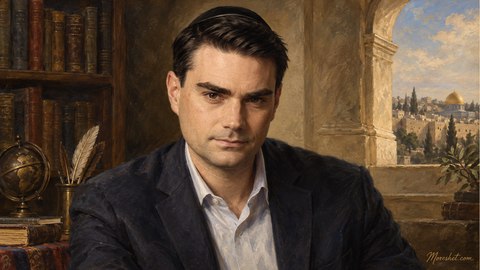
Moti Giladi
An Israeli actor, comedian, singer and songwriter whose career bridges popular entertainment, cinema and Yiddish culture
Mordechai “Moti” Giladi, born on December 18, 1946, is an Israeli actor, comedian, singer and songwriter. For more than five decades, he has moved among the country’s major forms of popular entertainment: military-ensemble performance, commercial theater, recorded music, cinema, television, comedy and Yiddish theater. His importance lies in that breadth. Giladi did not build his career around a single medium; he brought together singing, acting, imitation, songwriting and cantorial performance, becoming a recognizable presence in Israeli cultural life.
From a Military Ensemble to the Stage
Giladi was born, raised and educated in Karkur, the son of David and Malka Giladi, Jewish immigrants from Poland. As a teenager he worked picking strawberries and painting pipes and plumbing connections at Mekorot facilities. His professional career began during his service in the Central Command military entertainment troupe, one of the formative institutions of Israeli popular culture. Military ensembles provided a path into public performance for many future Israeli singers and actors, and Giladi’s early experience there established the versatile stagecraft that would define his career.
After completing his service, he appeared in the musicals I Like Mike and Long Live the Horses at the Giora Godik Theatre in 1968. He released his first album in 1969 and appeared the following year as the soldier Amos in the film Lupo. In 1971 he released a single and also began gaining recognition as a lyricist. Among his best-known songwriting credits is You and I Were Born in 1948, with music by Yigal Bashan, an arrangement by Eldad Shrem and a performance by Edna Lev. The song won first place at the 1973 Hebrew Song and Chanson Festival, placing Giladi within the Israeli tradition of popular songs that connect national memory with accessible entertainment.
In 1976 he appeared in the sequel Lupo in New York. By then, his work already extended beyond a conventional singer’s career. He moved between writing, performing, acting and comedy, developing the broad artistic identity that would allow him to remain active as Israeli entertainment changed around him.
American Years and a Return to Israel
During the 1970s, Giladi moved to the United States, where he studied film, theater and visual art at Queens College. He also performed and worked as a cantor, an interest that had begun during his youth in Karkur. This combination of artistic training and Jewish musical practice gave his career a distinctive range, linking Israeli popular culture with older traditions of Jewish performance.
When he returned to Israel in the 1980s, he created a comedy show built around impressions of artists and politicians. His imitations relied not only on vocal and physical resemblance but also on close observation of public figures and the ability to turn current public language into comedy. In 1987 he joined Gadi Yagil in the successful entertainment show The National Institute for Drilling, directed by Israel Poliakov. The production reflected a particularly Israeli form of popular satire, combining sketches, music and recognizable public personalities.
International Representation and Israeli Cinema
In 1986, Giladi was selected to represent Israel at the Eurovision Song Contest in Bergen, Norway, together with singer Sarai Tzuriel. Their duet, Yavo Yom (“A Day Will Come”), finished nineteenth with seven points. Although the competitive result was modest, the appearance gave Giladi a visible role in presenting Israeli popular music to a European audience.
Giladi’s film work also showed that his abilities extended beyond comedy and variety performance. In 1991 he appeared in Yaakov Goldwasser’s award-winning film Beyond the Sea and received strong praise for his acting. The role demonstrated his capacity for dramatic performance as well as entertainment. He later appeared in Lemon Popsicle: The Party Continues (2001), Single Plus (2012) and Dover Kosashvili’s A Pair of Doves (2017).
Yiddish, Television and Artistic Continuity
One of the most significant dimensions of Giladi’s work is his sustained engagement with Yiddish. In 2002 he created the Yiddish musical show Gefilte Fresh, and in 2007 he was a featured performer at the Yiddish Festival in Warsaw. In 2011 he played the leading role in Napoleon’s Treasure at the Yiddishpiel Theatre. Beginning in 2014, he performed with his daughter Dorin in Yiddish Is My Treasure.
These projects treated Yiddish not simply as a relic of an earlier Jewish world but as a living stage language—musical, humorous and capable of reaching contemporary audiences. In this respect, Giladi’s work helped preserve a cultural connection between Israeli entertainment and the Jewish languages and performance traditions carried by generations of immigrants and their families.
At the same time, he continued working in television and film. He appeared in two episodes of the children’s series The Pyjamas in 2004 and played “Thin Uzi” in Hasamba Generation 3 in 2010. He was a regular guest on the Reshet Bet program Live Night, competed in the second VIP season of Big Brother Israel in 2015, and appeared in Naor’s Friends and the sketch series Shabas. His later appearances in Who Has Heard of Hava and Nava, Savri Maranan and Zaguri Empire show his continuing ability to work within new television formats after decades in the profession.
During the early 2000s, Giladi also gained renewed recognition when his name became part of a recurring line in the cult television program Ha-Chalomot Be-Hakitzis: “You said the explicit name… Sarai Tzuriel and Moti Giladi.” The reference became part of Israeli comic memory and introduced his name to another generation of viewers. It illustrates how a performer’s cultural presence can continue beyond his original songs, films or stage shows, entering the shared language of popular culture.
Family and Artistic Partnership
Giladi was married to Orna Lidaï until her death in 1993; they had three children, Idan, Liad and Dorin. In August 1997 he married actress Osnat Shir-Vishnitsky. The two performed together in the successful entertainment show Zug Me-Shamayim (“A Match Made in Heaven”), which was presented approximately 600 times in Israel and abroad. They have a daughter, Liron, and divorced in 2014. His later performances with Dorin in Yiddish Is My Treasure extended the relationship between family, performance and the transmission of cultural memory across generations.
Why Moti Giladi’s Legacy Belongs in Moreshet
Moti Giladi merits inclusion in the archive because his career documents and contributes to several central strands of Israeli cultural life. He has worked as a singer, lyricist, actor, comedian and television performer, while also bringing Yiddish language and Jewish musical traditions to contemporary stages. His award-winning festival song, Eurovision appearance, satirical shows, film roles and work with the Yiddishpiel Theatre together form a record of the ways Israeli entertainment has connected national memory, humor, popular music and Jewish heritage.
His significance is not measured only by the number of roles he played or performances he gave. It lies in his ability to reach different audiences across changing eras: military-ensemble and festival audiences, cinema and television viewers, admirers of political satire, and people seeking a living connection to Yiddish culture. Moreshet and Moreshet.com preserve such stories because Jewish and Israeli heritage is also carried through performers who make songs, languages, humor and shared memories part of everyday life. Giladi’s work belongs to that continuing cultural record.