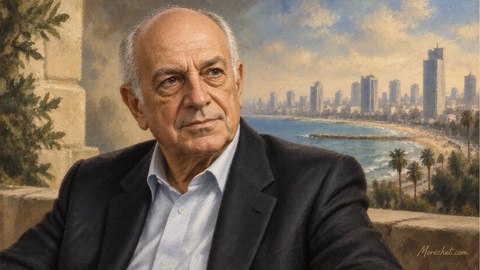
Ezekiel Sahar
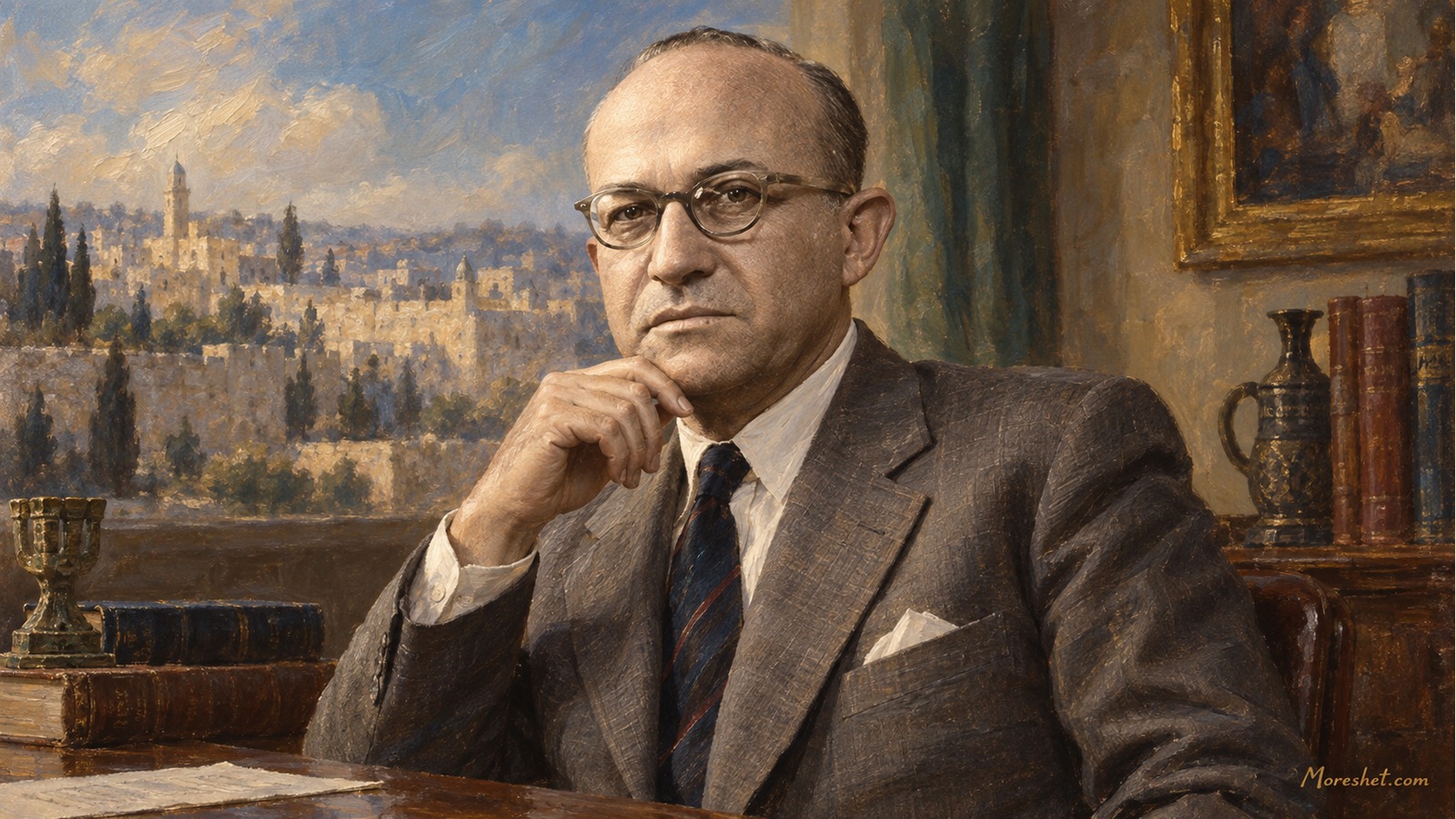
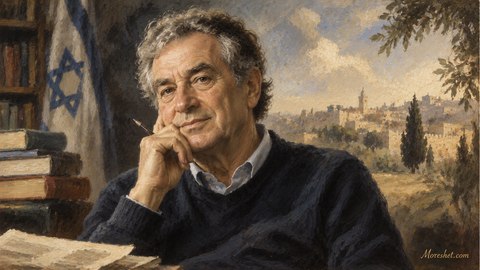
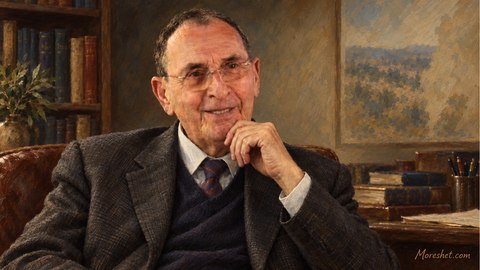
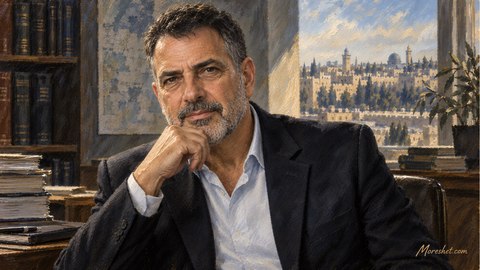
Ezekiel Sahar — AI-generated artistic portrait · Moreshet.com
Israel’s first police commissioner, diplomat, and supporter of Jewish and Israeli culture
Ezekiel Sahar (born Ezekiel Sakharov; January 10, 1907–September 28, 1998) was the first Inspector General of the Israel Police. From 1948 to 1958, he led the demanding work of creating a national police force for the new State of Israel: establishing its command structure, shaping its policies, and laying the institutional foundations on which the service would develop. His career also included military service, public leadership, diplomacy, support for Israeli artists, and the preservation of Jewish art and Judaica.
Jerusalem roots and public service
Sahar was born in Jerusalem in 1907 and grew up as a third-generation resident of the Land of Israel. His parents were Rivka, née Ben-Tovim, and Yitzhak Mordechai Sakharov, a timber merchant. His family connected the old and new Jewish communities in the country. His paternal grandfather was Rabbi Ezekiel Sakharov, while his maternal grandfather, Yitzhak Isaac Ben-Tovim, was one of the members of the First Aliyah. Sahar had three brothers—Israel, Eliyahu, and Aharon—who continued and expanded their father’s business, as well as two sisters, Zehavit and Miriam.
In the 1930s, he studied at the London School of Economics. He did not complete his studies after being recruited to help purchase weapons for the Haganah in Europe. From 1936 to 1940, he served as Chaim Weizmann’s secretary. The position placed him close to the leadership of the Zionist movement and exposed him to the political and practical challenges facing the Jewish community in Mandatory Palestine before statehood.
Military service and assistance to survivors
From 1941 to 1946, Sahar served in the British Army as a transport-company commander with the rank of major. He took part in campaigns in North Africa, the Battle of El Alamein, and the Allied advance into Italy and Austria. He was highly regarded by those under his command. At the end of the war, he was involved in organizing the immigration to Palestine of survivors of the death camps.
His transition from British military service to Zionist institution-building reflected the upheavals of the period. The organizational and command experience he acquired in the army became valuable as Jewish and Israeli institutions had to be created under extraordinary conditions and as survivors sought a home in the Jewish homeland.
Building the Israel Police
After leaving the British Army, Sahar worked in the political department of the Jewish Agency. In 1947, David Ben-Gurion asked him to plan the future Israel Police. The assignment required him to imagine the structure of a civilian national police force for a state that did not yet exist: its chain of command, division of responsibilities, operating framework, and ability to function during an emergency while serving a diverse and rapidly changing society.
On May 14, 1948, the day Israel was established, Sahar was appointed the first Inspector General of the Israel Police. Ben-Gurion also asked him to adopt a Hebrew surname, and Sakharov chose Sahar. During his tenure, the police developed its policies and its basic institutional framework. He remained Inspector General until the end of May 1958, making him the central figure in the organization’s formative decade.
The significance of his service lies in more than holding the first title. Sahar had to establish professional routines, a command system, and an organizational identity while Israel’s other public institutions were being created at the same time. The framework developed under his leadership became part of the state system that served Israeli citizens in the decades that followed.
Diplomatic service and later public life
After leaving the police, Sahar was appointed Israel’s ambassador to Austria, serving until 1960. The post expanded his public role from domestic institution-building and security administration to representing the young state abroad. He later returned to Israel following his testimony in the libel case brought by Amos Ben-Gurion against the “Shurat Hamitnadvim” group. The testimony was sharply criticized in a Supreme Court ruling. Sahar was prosecuted, convicted of perjury, and sentenced to a fine and a suspended prison term. In October 1968, President Zalman Shazar pardoned him.
Sahar subsequently entered the business world. After the Six-Day War, he was also involved in land brokerage in Judea and Samaria.
Art, Judaica, and music
Alongside his public career, Sahar became a recognized collector of art and Judaica. He supported many Israeli artists, several of whom were his friends, helping provide encouragement and patronage for local creative work. His cultural involvement went beyond private collecting. In Haifa, he initiated the establishment of a museum devoted to the French Jewish painter Mane-Katz. The initiative linked European Jewish art with Israel’s developing cultural life and helped preserve the work of an artist whose identity and art were deeply connected to Jewish experience.
Sahar was also a singer. Songs associated with him include “Yafim Haleylot BeCanaan” (“The Nights in Canaan Are Beautiful”), “Mekhuroti,” “Seh VaGedi” (“Sheep and Kid”), and “Shirat HaH alil” (“Song of the Flute”). His musical activity reveals a less familiar dimension of a man known chiefly for command and public administration: he was also personally involved in Hebrew culture and performance.
Family and commemoration
Sahar married Dina, née Ginzburg, and they had three sons. In January 2002, the Israel Police national headquarters in Jerusalem was named after him. The commemoration reflects his place in the history of the police and his role as the founder who shaped one of the central public institutions of the State of Israel.
Why Ezekiel Sahar belongs in Moreshet
Ezekiel Sahar merits inclusion in Moreshet because his life touched several formative dimensions of Jewish and Israeli history. He helped organize the immigration of survivors of the death camps, contributed to the planning of the institutions of the emerging state, and led the creation of the Israel Police. As its first Inspector General, he influenced how a central national institution was organized and how it would serve the public during Israel’s earliest years.
His legacy also joins state-building with Jewish memory and Israeli culture. As a diplomat, he represented the young country abroad. As a collector, patron, and initiator of the Mane-Katz Museum, he helped preserve and promote Jewish and Israeli artistic heritage. His work as a singer adds a personal cultural dimension to his public achievements. Taken together, these contributions make his story valuable to an archive concerned with the people who built Israel’s institutions and enriched its cultural life. Moreshet and Moreshet.com preserve precisely this kind of connected legacy: the record of a life whose influence extended from public service and national security to Jewish art, memory, and culture.