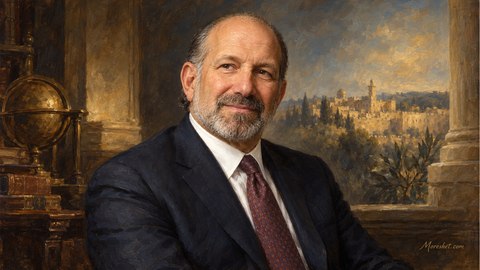
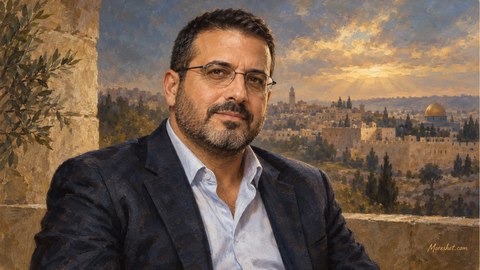
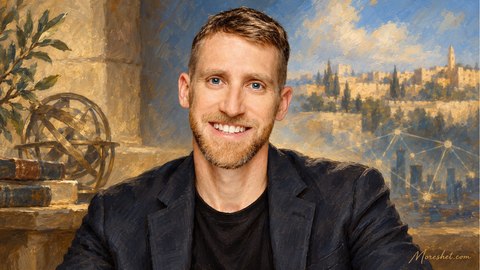
Eli Mizrahi
The Jerusalem entrepreneur who helped transform Mahane Yehuda Market into a center of food, culture and nightlife
Eli Mizrahi was a Jerusalem entrepreneur, restaurateur and influential figure in the city’s commercial and social life. For decades, he worked in Mahane Yehuda Market, which he regarded not simply as a place of business but as his home. Through the cafés, restaurants and nightlife venues he established there, he helped shape the way residents and visitors experienced one of Jerusalem’s best-known public spaces.
Bringing a Wider World to Mahane Yehuda
Born in Jerusalem, Mizrahi lived there throughout his life. As a young man, he traveled extensively and encountered restaurants, cafés and entertainment venues operating within marketplaces around the world. He saw the possibility of bringing that energy to Mahane Yehuda, combining the market’s traditional commercial character with a more contemporary, youthful and vibrant urban culture.
In 2002, he opened Café Mizrahi with his daughter Moran, who had returned from pastry studies at Le Cordon Bleu. The café operated for 14 years and became one of the market’s defining establishments. It was known as a home for artists and local music and offered a setting where food, conversation and culture could meet. In this way, it helped expand the market’s role beyond daytime commerce.
Building a Nighttime Jerusalem
Mizrahi understood that revitalizing the market required attracting new audiences, including young people, families and students, alongside its established shoppers and merchants. With that vision, he established Casino de Paris with his daughter Yaara and additional partners, including Shaanan Streett.
Casino de Paris operated for eight years as a distinctive bar and restaurant. It came alive after the market stalls had closed, giving Mahane Yehuda a new evening rhythm. Folding chairs, outdoor heaters and a courtyard that filled with life after the daytime stalls were packed away turned the market into an urban meeting place after dark.
The venue continued operating through periods of war, security tensions and economic difficulty, contributing to Jerusalem’s distinctive nightlife. During the COVID-19 pandemic, Yaara Mizrahi announced its closure. The decision marked the end of an important chapter in the family’s business life and reflected the difficulty of sustaining cultural and culinary institutions during a period of profound uncertainty.
Leadership Among the Market’s Merchants
Alongside his own businesses, Mizrahi served for an extended period as chair of the market’s merchants’ committee. In that role, he worked to advance infrastructure improvements, improve conditions in the market and promote Mahane Yehuda as a lively and youthful destination.
His contribution was therefore larger than the individual businesses he opened. Mizrahi recognized Mahane Yehuda’s potential as a place where commerce, food, music, social life and nightlife could coexist. By pursuing that vision, he helped create conditions for additional cafés, restaurants and bars, broadening both the market’s audience and its hours of activity.
A Lasting Mark on Jerusalem
Mizrahi’s significance lies in the way he connected local tradition with urban change. He did not seek to detach the market from its identity as a place of merchants, families and long-standing relationships. Instead, he added new layers of culture and recreation to that identity. Café Mizrahi and Casino de Paris were practical expressions of this approach, providing spaces for encounter while remaining rooted in the character of the market.
After his death, Jerusalem Mayor Moshe Lion paid tribute to him as a pioneer and as someone who recognized the market’s potential as a place of entertainment. The tribute reflected Mizrahi’s role in a broader transformation through which Mahane Yehuda became one of the most recognizable centers of Jerusalem’s culinary, cultural and nighttime life.
Why Eli Mizrahi’s Legacy Belongs in Moreshet
Eli Mizrahi merits inclusion in Moreshet because his work shows how local entrepreneurship can shape the daily life and identity of an entire community. Through the cafés, restaurants and nightlife venues he established, and through his work on behalf of the market’s merchants, he helped change Mahane Yehuda and strengthen its place at the heart of Jerusalem’s public culture.
His legacy is visible not only in the businesses associated with his name, but also in the spaces he created for artists, musicians, families, students and merchants. His story demonstrates how an initiative rooted in a particular neighborhood can influence the way generations meet and how a historic marketplace adapts to a changing city. For these reasons, and because of his lasting imprint on Jerusalem’s food culture, cultural life and nightlife, Eli Mizrahi belongs in the archive of Jewish and Israeli heritage preserved by Moreshet.com.