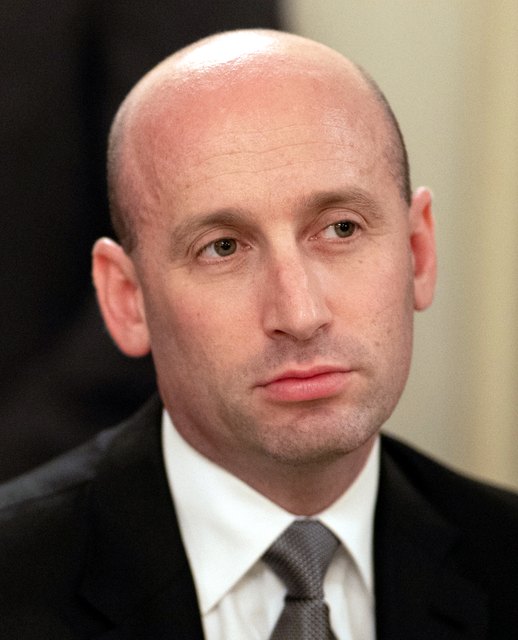
David Kimche
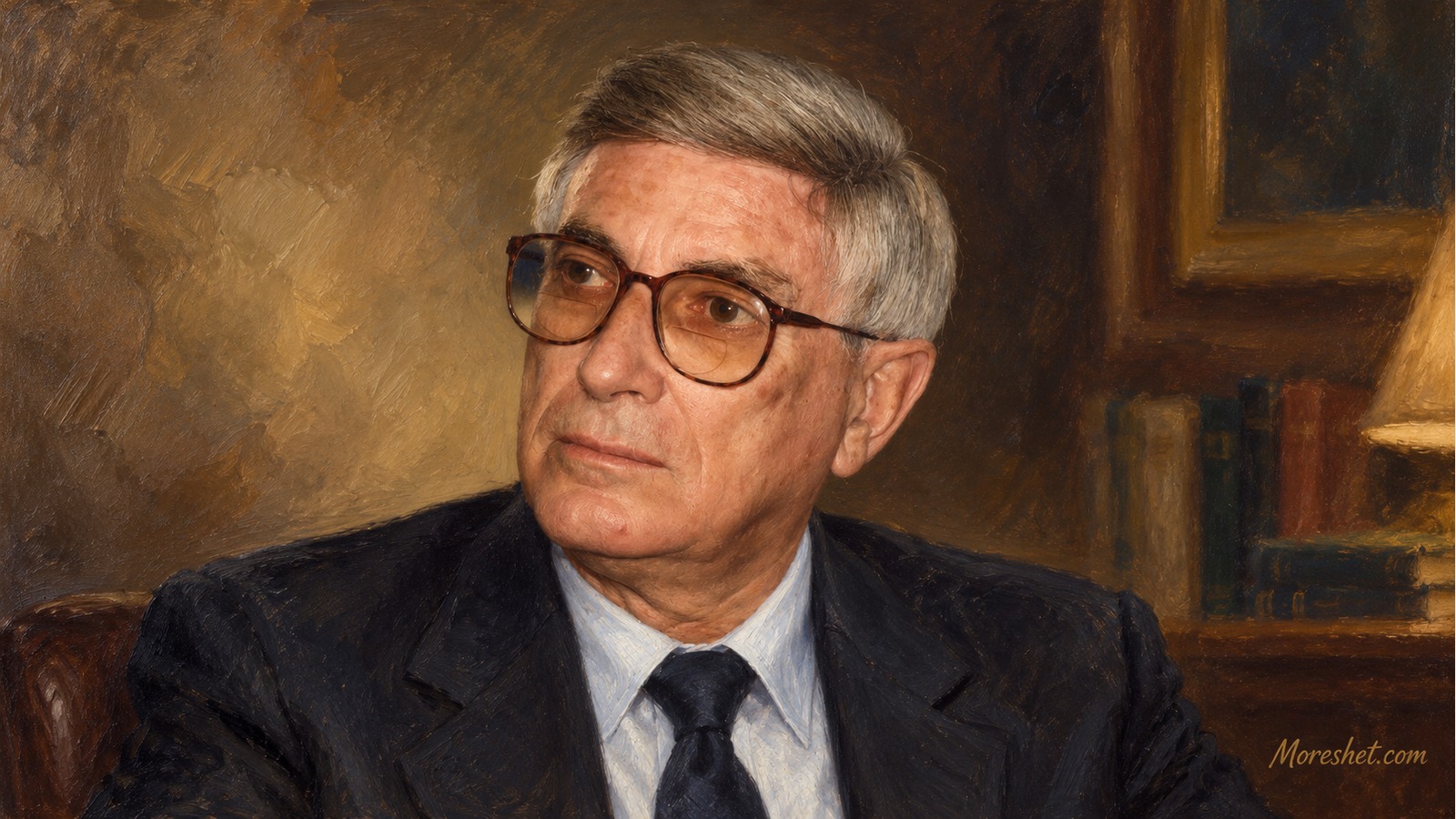
David Kimche — AI-generated artistic portrait · Moreshet.com
Israeli intelligence officer, diplomat, Foreign Ministry director general, author and journalist, whose career linked Mossad service, backchannel diplomacy, foreign policy and regional peace efforts
David Kimche, also known as Dave Kimche, was an Israeli intelligence officer, diplomat, director general of the Ministry of Foreign Affairs, author, journalist and public figure. Born in London in 1928, he immigrated to Mandatory Palestine before statehood, fought in the Haganah during Israel’s War of Independence, joined Mossad in 1953, rose to become deputy director of the service, and after leaving intelligence was appointed director general of Israel’s Foreign Ministry. For decades he worked at a rare intersection of intelligence, diplomacy, secret contacts, Middle Eastern policy, Israel’s relations with Africa and Asia, peace efforts and Israel’s engagement with the wider world.
Kimche belonged to that group of figures who operated largely behind the scenes while exercising significant influence on Israeli policy. He knew the language of intelligence and the language of diplomacy, and could move between covert mission and political conversation, between academic research and strategic analysis, and between public service and public writing. His story represents a generation of Israeli system-builders who began as fighters in the struggle for independence, matured inside the institutions of the young state, and carried out delicate tasks that could not always be handled through official channels alone.
London, Habonim and aliyah to Palestine
David Kimche was born in London on February 14, 1928, the ninth child in his family. During his childhood the family moved to Zurich and later returned to England before the outbreak of the Second World War. He grew up in a British Jewish Zionist environment and was active in Habonim, the Zionist pioneering youth movement that prepared young Jews for kibbutz life, aliyah and practical work in the Land of Israel.
In 1946 Kimche immigrated to Mandatory Palestine on a student visa and studied agriculture at the Hebrew University of Jerusalem. When his visa expired, he remained in the country illegally. The decision expressed his commitment to the Zionist project at a time when entry into the land was still controlled by the British Mandate and Jewish immigration was often a legal, political and practical struggle.
Alongside his studies he worked as an editor at the Jerusalem Post, then one of the important English-language newspapers in Palestine. This work connected him early to the world of information, language, explanation and the relationship between the emerging Jewish state and the international public. Later in life he would return repeatedly to that junction between knowledge, interpretation, policy and the shaping of public understanding.
The Haganah, Jerusalem and the War of Independence
In November 1947, as the struggle over the country’s future intensified after the partition decision, Kimche enlisted in the Haganah. He served in the Hish as a fighter in the student platoon of the Moriah Battalion, which operated in and around Jerusalem. Jerusalem was one of the hardest arenas of that period: a mixed city under pressure and siege, with unmatched national, religious and political importance.
Kimche fought in Israel’s War of Independence and was wounded in the battle for the Abu Tor neighborhood of Jerusalem. The experience of fighting in the besieged city was not only an early military chapter, but part of his personal encounter with the cost of Jewish sovereignty. A young student from England found himself in a war in which the future of the Jewish community and the status of Jerusalem were being decided.
After the war he left agricultural studies and turned to Middle Eastern studies and sociology. This move indicates the direction his life would take: from land and agriculture toward the study of societies, national movements, states, regions and power relations. Kimche completed bachelor’s and master’s degrees at the Hebrew University in 1953, and later studied at the Institute of African and Asian Studies at the Sorbonne in Paris.
Academic research and the Afro-Asian world
Kimche was not only an operator. He was also a scholar of international relations and the developing world. In 1970 he completed a doctorate in international relations, focusing on the Afro-Asian movement. That field mattered greatly to the young State of Israel, which was trying to build relations with new states in Africa and Asia, understand anti-colonial politics, and find its place in a world of blocs, non-aligned movements and newly independent countries.
His English-language book The Afro-Asian Movement: Ideology and Policy of the Third World grew out of this academic work. It dealt with the ideology and foreign policy of the Third World and showed that Kimche did not see African and Asian states merely as intelligence arenas. He understood them as political spaces with their own history, consciousness, leadership and interests.
This ability to combine research, language, culture and policy was one of his major assets. Israel in the 1950s and 1960s needed people who understood not only Europe and the United States, but also Africa, Asia, the Arab world and the new systems formed after the collapse of empires. Kimche contributed to that understanding as both practitioner and researcher.
Mossad career: human intelligence, secret links and Tevel
In 1953 Kimche joined Mossad, Israel’s foreign intelligence service. In his first role he served as an instructor at the School of Political Science in Jerusalem, and later moved to Tzomet, the division responsible for human intelligence. He later served as a station head in a European country, held senior positions in Tevel, the division responsible for Mossad’s relations with foreign intelligence services and political contacts, and carried out many missions in Africa, Asia and Europe.
Tevel suited his character especially well. It required intelligence understanding, but also diplomatic ability, patience, personal trust, conversational skill, historical memory and the ability to detect a political opening where the official channel was blocked. Kimche operated under various covers, including journalist, businessman and diplomat, and developed a reputation as a man able to manage sensitive contacts in arenas where open contact was impossible or dangerous.
In 1968 he was appointed to establish Mossad’s staff division, intended to concentrate and coordinate the operational branches. In 1973 he was sent to Europe as regional head of Tevel, and in 1976 he was appointed head of the Tevel division. He later rose to become deputy director of Mossad. This path placed him at the center of Israel’s security and intelligence system during a period when secret contacts were a central tool of Israeli foreign policy.
Africa, Asia and backchannel diplomacy
During his years in Mossad, Kimche was involved in many missions in Africa and Asia. The young State of Israel saw the newly independent states of Africa and Asia as possible partners, arenas of influence and spaces in which security, agricultural, technological and political relations could be built. In a world of Cold War competition, decolonization and great-power rivalry, these relationships required considerable creativity.
Kimche worked in a world in which official diplomacy was not always enough. Sometimes it required emissaries who could open doors without ceremony, build trust before an agreement existed, and test political possibilities before a government was ready to declare them. He was among those who represented Israel through the quiet channel: conversations, meetings, messages, understandings and groundwork for future policy.
This appreciation of backchannel diplomacy remained with him after his retirement from Mossad. In his view, what appeared impossible through the official route might sometimes become possible through a side channel that was personal, patient, trusted and discreet. That was one of the central professional lessons of his life.
Director general of the Foreign Ministry and Israeli policy in the 1980s
In 1980 Kimche left Mossad and was appointed director general of Israel’s Ministry of Foreign Affairs. He held the post through the middle of the decade. The move from intelligence service to the senior professional role in the Foreign Ministry was not accidental. Kimche brought with him unusual experience in international contacts, intelligence, backchannel diplomacy, regional understanding and the ability to work in an arena where open policy and covert policy often intersected.
During this period he was involved in major diplomatic and covert matters. He met with Bashir Gemayel in Lebanon as early as 1976 during the creation of ties between Israel and Lebanese Christians, and he remained involved in issues connected to Lebanon and the First Lebanon War. He was also connected to Israeli moves in the Iran-Contra affair, in which secret channels, American-Iranian contacts and regional considerations played a central role.
The Foreign Ministry during Kimche’s time operated in a changing Middle East. Peace with Egypt was still new; the First Lebanon War changed Israel’s position in the north; post-revolutionary Iran altered the regional map; and the Arab world was divided by internal struggles, conflict with Israel and competition among regional forces. In such conditions, a Foreign Ministry director general had to understand not only protocol and official diplomacy, but also intelligence, security, hidden channels and the limits of power.
Special envoy, Madrid and peace initiatives
After completing his service as director general of the Foreign Ministry, Kimche served as a special ambassador of the Government of Israel, especially in relations with Eastern Europe, and carried out additional special missions. He was a member of the Israeli delegation to the Madrid Conference in 1991, one of the important stations in the diplomatic process after the Gulf War, opening new multilateral and bilateral channels among Israel, Arab states and the Palestinians.
Kimche was also among the drafters of the Geneva Initiative in 2003, an unofficial civil-diplomatic initiative that sought to outline a possible permanent Israeli-Palestinian agreement. His participation showed his continuing commitment to the idea that unofficial channels can prepare political ground, preserve a language of settlement and present leaders and publics with options even when the official system is frozen.
This reflected a deep continuity in his career: from secret intelligence to the Foreign Ministry, from quiet missions to open conferences, and from behind-the-scenes contacts to civil peace initiatives. Kimche believed that Israel’s security did not depend only on force, but also on the ability to speak with adversaries, identify changing interests and build channels when the front door was closed.
Author, journalist and interpreter of Israeli history
Alongside his intelligence and diplomatic work, Kimche was a prolific writer. Over the years he wrote political editorials for the Jerusalem Post, sometimes under various pseudonyms. His public writing continued his diplomatic work: an effort to explain the Middle East, Israel, diplomatic struggle and the possibilities of peace to a broader audience.
Together with his brother, the British-Jewish journalist Jon Kimche, he wrote The Secret Roads: The “Illegal” Migration of a People, 1938–1948, a book about Aliyah Bet and the effort to bring Jews to Palestine in defiance of British Mandatory restrictions. The book is important because it documents one of Zionism’s major rescue and immigration efforts before statehood, showing how Jews, emissaries, ships and organizations acted against international limits in order to bring survivors and refugees to the land.
With his brother he also wrote Both Sides of the Hill, dealing with the War of Independence as seen from the Israeli and British-Arab sides. With Dan Bawly he wrote The Sandstorm on the Six-Day War, and later he wrote The Last Option on the peace process. His books show a man who did not only act, but also sought to document, interpret and leave readers a basis for understanding Israel’s diplomatic and military history.
Institutions, foreign affairs and civil society
Kimche founded and served as president of the Israel Council on Foreign Relations, a body intended as a forum for diplomatic, academic and policy conversation about Israel and the world. The council expressed his desire to create in Israel a serious public space for foreign-policy discussion beyond narrow partisan or security debate. The council later became connected with the Israel Journal of Foreign Affairs, which aimed to advance professional and intellectual discussion of foreign policy.
Kimche was a member of the Board of Governors of the Hebrew University, the Harry S. Truman Research Institute for the Advancement of Peace, and the board of the Peres Center for Peace. He was therefore connected not only to institutions of security and government, but also to institutions of knowledge, peace, research and civil society. That movement characterizes people whose careers do not end with state service, but continue in the building of frameworks for long-term thinking.
For thirteen years he also served as senior vice president of MIC, Millicom International Cellular, an international communications corporation. From 2005 to 2008 he chaired the board of Maariv. These roles extended his activity into communications, business and management, and continued his long-standing connection among information, media, policy and public influence.
The ultimate intelligence man and diplomat of quiet channels
At Kimche’s funeral, former Mossad chief Shabtai Shavit described him as the ultimate intelligence man, an intellectual, a top-rank spy, a statesman and a man of operations. The eulogy captured Kimche’s professional complexity well. He was not only a spy in the narrow sense, and not only a diplomatic official in the bureaucratic sense. He was a person who lived between worlds and knew how to use the tools of each.
His distinctiveness lay in the ability to see the diplomatic dimension inside an intelligence operation and the intelligence dimension inside a diplomatic process. He understood that a secret contact was not an end in itself, but a means of opening possibilities: agreement, deterrence, rescue, cooperation or prevention of escalation. He belonged to a generation in which Israel had to build its global networks almost from nothing, sometimes through formal paths and sometimes through ways invisible to the public.
David Kimche died of cancer at his home in Ramat HaSharon on March 8, 2010, at the age of 82, and was buried at Kibbutz Shfayim. He left behind his second wife, Ruth, and four children from two marriages. His first wife was ceramic artist and sculptor Rina Kimche. His memory remains tied to the fields in which he worked throughout his life: security, diplomacy, writing, peace and Israel’s relationship with the world.
Why this legacy belongs in Moreshet
David Kimche merits inclusion in Moreshet because he represents a central but often hidden layer of Israel’s state-building: intelligence officers, diplomats, emissaries and policy shapers who worked where it was not always possible to publish, declare or sign. From the Haganah in Jerusalem to Mossad, from the Foreign Ministry director general’s office to peace initiatives, he worked across decades to strengthen Israel’s security, status and international relationships.
Moreshet.com documents Kimche because Jewish and Israeli heritage consists not only of elected leaders and visible military commanders, but also of those who built quiet channels, documented history, created foreign-policy institutions and searched for ways to turn security and diplomatic power into understanding, contact and peace. David Kimche’s place in Moreshet rests on the rare combination of intelligence, diplomacy, research, journalism, writing and institution-building — a combination that influenced how Israel acted in the world and how it told its story.