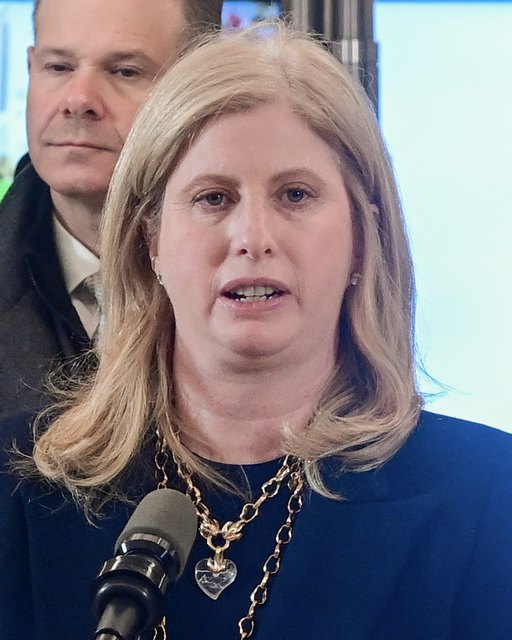
Claudia Sheinbaum Pardo
The climate scientist who became Mexico’s first woman president and its first president of Jewish heritage
Claudia Sheinbaum Pardo is a Mexican scientist, energy researcher, and politician who has served as president of Mexico since October 1, 2024. Her election marked two national firsts: she became the first woman to hold the office and the first president of Mexico with Jewish family heritage. Long before reaching the presidency, she had built an unusual career spanning academic research on energy and climate change, environmental administration, and the government of one of the world’s largest cities.
Her significance extends beyond the barriers she broke. Sheinbaum brought advanced scientific training and experience with complex urban systems into public life. Her career offers a consequential example of research on energy consumption, emissions, and sustainable development moving beyond universities and international reports to shape transportation, education, environmental policy, public safety, and social programs affecting millions of people.
A Jewish Mexican family of migrants and scientists
Sheinbaum was born in Mexico City on June 24, 1962, into a secular Jewish family in which science and public engagement were central. Her father, chemical engineer Carlos Sheinbaum Yoselevitz, was of Ashkenazi Jewish descent; his father emigrated to Mexico from Lithuania in 1928. Her mother, biologist Annie Pardo Cemo, came from a Sephardi Jewish family that reached Mexico from Sofia, Bulgaria, after the Second World War and the persecution of European Jews.
Her parents participated in Mexican left-wing and social movements but were not religiously observant. Sheinbaum has recalled encountering Jewish tradition primarily through her grandparents and celebrating holidays with them. Her public identity is chiefly Mexican and secular while openly acknowledging her Jewish roots. The family’s history represents an important chapter in Latin American Jewish life: migrants from Eastern Europe and the Balkans found refuge and opportunity in Mexico, and their children and grandchildren became contributors to its sciences, universities, and civic institutions.
From physics to energy engineering and climate research
Sheinbaum studied at the National Autonomous University of Mexico, commonly known as UNAM, one of Latin America’s leading academic institutions. She earned a bachelor’s degree in physics followed by graduate degrees in energy engineering, including a doctorate. She conducted part of her doctoral research at Lawrence Berkeley National Laboratory in California, where she examined energy use in Mexican transportation and trends in building energy consumption.
She joined UNAM’s Institute of Engineering faculty in 1995. Across her academic career, she co-authored more than 100 papers and two books dealing with energy, the environment, and sustainable development. Her research addressed practical questions for a developing industrial economy: how transportation and buildings consume energy, how the steel and cement industries generate carbon emissions, how efficiency standards affect household electricity use, and how Mexico and other Latin American countries might reduce emissions while pursuing national development goals.
Her most internationally visible scientific contribution came through the Intergovernmental Panel on Climate Change. She contributed to the industry chapter in the mitigation volume of the IPCC’s Fourth Assessment Report in 2007 and later served as a lead author in work for the Fifth Assessment Report. The IPCC and Al Gore jointly received the 2007 Nobel Peace Prize. Sheinbaum was one of the many scientists who contributed to the panel’s work; the prize was awarded to the organization, not to every contributing author as an individual Nobel laureate. That distinction matters, but it does not diminish the value of her work on reports that helped establish the scientific foundation for climate policy worldwide.
Turning research into environmental and transportation policy
Sheinbaum’s transition from academia to government began at the city level. From 2000 to 2006, she served as environment secretary of the Federal District while Andrés Manuel López Obrador headed the Mexico City government. Her responsibilities included an electronic vehicle-registration center and the introduction of Metrobús, a bus rapid transit system operating in dedicated lanes. The network gave residents a more efficient public alternative to private cars and subsequently became an essential part of the capital’s transportation system.
She returned to electoral government as mayor of the Mexico City borough of Tlalpan in 2015. Three years later, voters elected her head of government of Mexico City. She was the first woman elected to that post and its first holder from a Jewish background. Running a metropolis of many millions placed her in direct charge of mass transit, policing, schools, infrastructure, health services, and environmental programs.
Governing Mexico City
Education, community, and access to opportunity
One of her administration’s most far-reaching initiatives was Mi Beca para Empezar, a scholarship program serving about 1.2 million children from preschool through lower secondary education. Mexico City gave the program constitutional status in 2022. Her government also established the Rosario Castellanos Institute of Higher Studies and the University of Health, expanding routes into higher education and the training of health professionals.
The administration created a network of community centers known as PILARES in underserved neighborhoods. These centers provided education, digital training, sports, arts, and cultural activities in accessible local settings. The initiative received UNESCO recognition in 2021. Its importance lay not only in the facilities themselves but in giving children and adults places to study, acquire useful skills, and strengthen community ties.
Urban mobility and the environment
During Sheinbaum’s term, Mexico City opened the first two lines of Cablebús, an aerial cable-car system connecting steep, outlying neighborhoods with employment centers and other transit services. It reduced travel burdens for residents long dependent on slow and congested road routes. Her administration also extended the Metrobús network, electrified Line 3, added lower-emission buses, introduced a unified fare card across transit systems, and expanded bicycle lanes and the Ecobici bike-sharing service.
Her environmental program included tree planting, restrictions on single-use plastics, waste-separation infrastructure, solar energy, and proposed improvements to water access and electric transportation. Not every target was completed during her tenure, but the governing approach tied climate policy to ordinary urban needs: cleaner air, shorter commutes, better water service, and more usable public space.
Safety, women, and crisis management
Sheinbaum’s security policy combined community and education programs with expanded policing, intelligence, investigation, and coordination among law-enforcement bodies. According to figures reported by the city, Mexico City’s homicide rate fell from 17.9 to 8.6 per 100,000 residents between 2018 and 2022. Her administration declared a gender-violence alert, established a citywide assistance line, and developed more than 700 kilometers of designated safe corridors intended to make public spaces safer for women.
Her tenure also encompassed severe tests, notably the COVID-19 pandemic and the fatal collapse of an elevated section of Metro Line 12. During the pandemic, she encouraged mask use, established a text-message guidance service, and urged residents to rely on official medical information. The period demonstrated both the value and the difficulty of applying scientific reasoning within enormous political and administrative systems.
A historic presidential victory
Sheinbaum left the Mexico City government in June 2023 to seek the presidential nomination of the coalition led by the Morena party. In the election of June 2, 2024, she won 59.76 percent of the vote, carried 31 of Mexico’s 32 states, and received more votes than any presidential candidate in the country’s history up to that point. She was inaugurated as Mexico’s 66th president on October 1, 2024.
Her victory transformed the visible possibilities of leadership in a country where women obtained full national voting rights only in 1953. For the first time, millions of Mexican girls and women saw a woman lead the federal executive, government, and armed forces. The result also carried unprecedented meaning for Mexican and Latin American Jews: a descendant of Jewish immigrants from Lithuania and Bulgaria had reached the country’s highest public office while presenting herself neither as a religious leader nor as a communal representative, but as a fully Mexican national leader.
In the opening period of her presidency, Sheinbaum advanced the expansion and constitutional protection of social programs. These included financial support for women aged 60 to 64, home health visits for older adults and people with disabilities, and broader scholarships for children in public education. She also created cabinet-level bodies dedicated to women and to science, the humanities, technology, and innovation, as well as an agency for digital transformation. Her energy policy combines her background in climate research with support for a strong role for state-owned energy companies. That is a complex balance, and the ultimate results of an ongoing presidency must be judged over time rather than inferred from plans or early announcements.
Why Claudia Sheinbaum Pardo’s legacy belongs in Moreshet
Claudia Sheinbaum Pardo belongs in Moreshet because her life brings together several historically consequential stories: Jewish migration from Europe to Latin America, the contribution of second- and third-generation descendants to national science and public institutions, the advancement of women into positions of executive power, and the movement of scientific knowledge into policies that affect millions of lives.
Her place in the archive rests on accomplishment, not ancestry alone. She studied energy use and carbon emissions, contributed to major international climate assessments, helped establish a central component of Mexico City’s bus network, expanded educational and community institutions, and won the presidency in a record-setting democratic election. For readers of Moreshet.com, her career also broadens the geography of Jewish heritage beyond its better-known centers in Israel, Europe, and North America. It shows how Jewish family memory can coexist with a complete Mexican national identity and find expression not through religious office but through science, civic service, and national responsibility. Her presidency remains a developing chapter, but the barriers she has already broken and the institutions and policies she has helped build give her story an enduring place in the record of contemporary Jewish and human achievement.