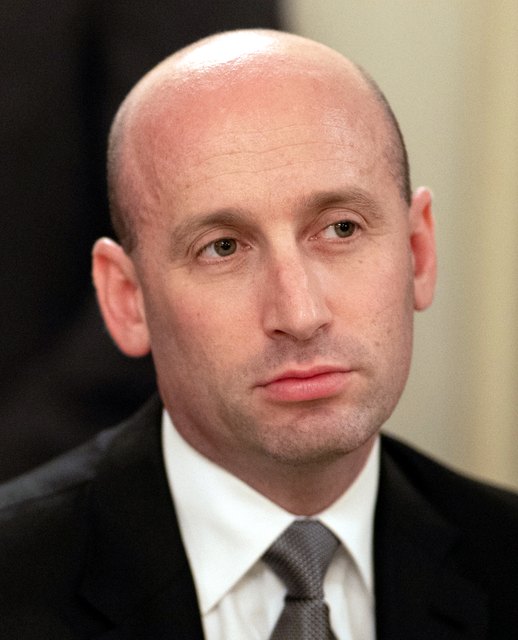
Chaim Azriel Weizmann
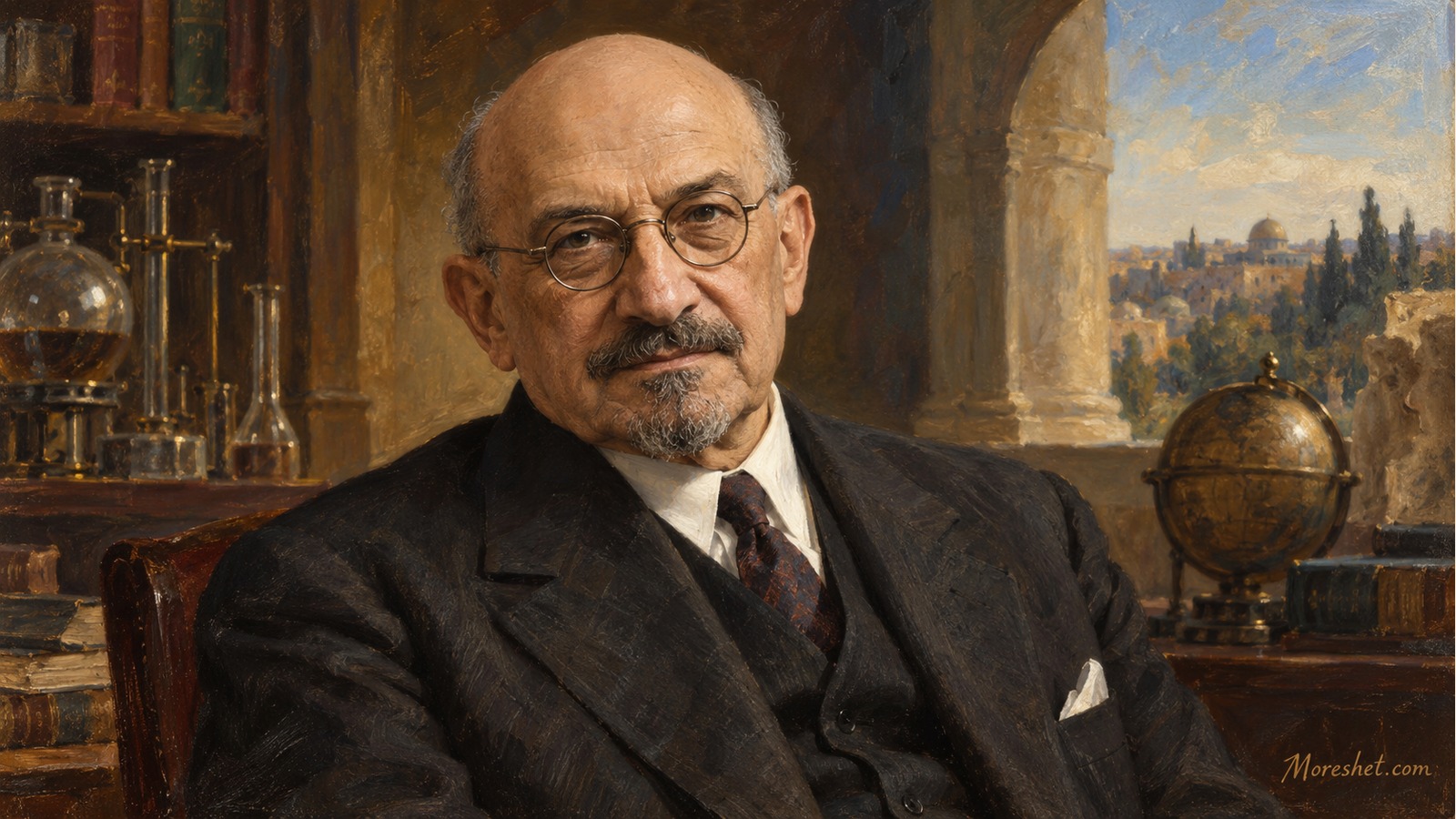
Chaim Weizmann — AI-generated artistic portrait · Moreshet.com
First President of the State of Israel, pioneering chemist and biochemist, Zionist statesman, key figure behind the Balfour Declaration and founder of the Weizmann Institute of Science
Chaim Azriel Weizmann was a scientist, statesman, Zionist leader and the first President of the State of Israel. He was one of the rare figures who influenced Jewish history on two fronts at once: in the laboratory, as a chemist and biochemist whose industrial fermentation process helped produce acetone during the First World War; and in diplomacy, as a Zionist leader who helped turn the Jewish people’s aspiration for a national home in the Land of Israel into a recognized question before the great powers. His name is bound to the Balfour Declaration, the leadership of the Zionist Organization, the Hebrew University of Jerusalem, the Weizmann Institute of Science, and the international recognition of Israel in its first days.
Weizmann was not only Israel’s first president and not only a scientist with patents. He was a bridge between the Jewish world of Eastern Europe, European science, the British Empire and the Jewish state that emerged after the Holocaust. His ability to speak the language of scientists, ministers, diplomats, donors and Zionist activists enabled him to turn a historical vision into political and institutional reality. He believed that a Jewish national home could not be built by declarations alone, but by combining diplomacy, settlement, education, science, institutional work and international responsibility.
Childhood in Motal and a Jewish-Zionist education
Weizmann was born on November 27, 1874, in the town of Motal, then within the Russian Empire and today in Belarus. He was the son of Oizer Weizmann, a timber merchant, and Rachel-Leah Czemerinsky Weizmann, and the third of fifteen children. His childhood home combined Jewish tradition, small-town life, hard work and a deep respect for learning. He began in a traditional cheder, acquired Hebrew and Jewish texts, and later studied at the gymnasium in Pinsk, where he showed particular talent in science and chemistry.
Already in youth, Weizmann was drawn to Zionism and the revival of Hebrew. In Pinsk he was active in young Zionist circles and worked to promote Hebrew as a living language. The combination of science and Jewish nationhood was not accidental for him. He saw knowledge, language and cultural institutions as part of national construction, not merely personal achievements. From an early stage he understood that the Jewish people needed not only refuge, but a living, creative, learning and building center.
Like many gifted young Jews of his generation, he recognized that restrictions on Jewish admission in the Russian Empire narrowed his opportunities. He left for higher education in Germany and Switzerland. The move from Motal and Pinsk to the centers of European science was also a movement of consciousness: from the Jewish town to the modern laboratory, and from Hovevei Zion circles to international Zionist politics.
Scientist in Europe and Britain
Weizmann studied chemistry in Darmstadt, Berlin and at the University of Fribourg in Switzerland, where he received his doctorate in chemistry in 1899. He then worked at the University of Geneva, and in 1904 moved to Britain and joined the University of Manchester. Manchester was then an important industrial and scientific center, and it gave him both a scientific base and an entry point into British society, journalism, politics and Zionist Jewish circles in England.
In Britain he was sometimes known as Charles Weizmann, and he registered many patents in organic and industrial chemistry. His scientific work was not detached from his public activity. The professional recognition he earned as a scientist opened doors that would not have opened to an ordinary political advocate. He was seen as practical, useful, precise and valuable to the British state, and this strengthened his standing as a Zionist spokesman before decision-makers.
In 1906 he married Vera Khatzmann, a physician who had studied in Geneva, and the couple had two sons, Benjamin and Michael. The family lived for many years in Britain, but Weizmann’s public life remained tied to the Zionist movement and the Land of Israel. His younger son, Michael, served as a pilot in the Royal Air Force during the Second World War and was killed in 1942; this personal loss accompanied Weizmann in his later years as a Jewish leader in a time of war and catastrophe.
The Weizmann process and the British war effort
Weizmann’s best-known scientific contribution was the development of a biochemical fermentation process for producing acetone, butanol and ethanol from plant materials through the bacterium Clostridium acetobutylicum, later sometimes called the “Weizmann organism.” Acetone was essential in the production of cordite, an explosive propellant used by the British army and navy during the First World War. When Britain faced an acetone shortage, Weizmann’s work became strategically important.
The process he developed was transferred to industrial-scale production, first in Britain and later also in North America and elsewhere. Weizmann worked with government, naval and munitions authorities, and his name reached Winston Churchill, David Lloyd George and other ministers. Although the Balfour Declaration should not be reduced to a “reward” for his scientific work, his scientific reputation clearly helped him gain a hearing in British governing circles.
More broadly, the Weizmann process made him a distinctive figure in Zionist history: a Jewish leader who came before Britain not only in the name of Jewish suffering or historical right, but also as a scientist who had made a concrete contribution to a vital war effort. This combination of practical usefulness, national vision and diplomatic ability was one of the sources of his influence.
Synthetic Zionism: diplomacy, settlement and culture
Weizmann was one of the leading voices of what became known as “Synthetic Zionism” — an attempt to combine Herzlian political Zionism with practical work in the Land of Israel. He rejected the idea that a declaration from the powers would be enough, but also rejected the view that settlement alone could succeed without international recognition. In his eyes, the Jewish people had to build institutions, agriculture, education, science and economic life in the land, while also securing a political framework to protect the national project.
After Theodor Herzl’s death, Weizmann became one of the important voices against alternative territorial schemes such as the Uganda proposal. For him, a true Jewish national center could arise only in the Land of Israel, because Zionism rested not merely on distress but on historical memory, language, culture and a deep attachment to the land. This outlook appeared in his conversations with Arthur James Balfour, in which he stressed that Jerusalem could not be exchanged for another place.
Weizmann also saw institutions of higher learning as essential to national revival. He worked for the establishment of a Hebrew university in Jerusalem before the First World War, participated in the laying of the cornerstone on Mount Scopus in 1918, and was one of the central figures in the opening of the Hebrew University in 1925. In his eyes, a future Jewish state needed not only land and government, but science, an academic Hebrew language, research and open education.
The Balfour Declaration and Zionism as a recognized political force
During the First World War, Weizmann became the central mediator between the Zionist movement and British decision-makers. He cultivated relationships with Balfour, Lloyd George, Herbert Samuel, Mark Sykes, the Rothschild family and others. He knew how to present Zionism not merely as a movement born of Jewish suffering, but as a national movement with historical roots, moral force and strategic usefulness to Britain in the Middle East.
These efforts contributed to the Balfour Declaration of November 2, 1917, in which the British government stated that it viewed with favor the establishment in Palestine of a national home for the Jewish people, while safeguarding the rights of non-Jewish communities in the land and the rights of Jews elsewhere. The declaration was short and cautious, but its meaning was enormous: for the first time, a major power recognized the Jewish national aspiration in the Land of Israel.
Weizmann himself was not satisfied with every word of the declaration. He wanted a clearer commitment and understood the ambiguity inside it. Nevertheless, he saw it as a historic achievement of the first order. The declaration did not create the Jewish state by itself, but it opened a diplomatic path that led to the British Mandate, broader international recognition, and the establishment of Zionism as an official actor in world politics.
The Zionist Commission, the Hebrew University and building in the land
In 1918 Weizmann headed the Zionist Commission sent to the Land of Israel after the British conquest. The delegation’s role was to assist the Jewish Yishuv in health, education, welfare and settlement, and to create a relationship between the Jewish community and the British authorities. Weizmann met Jewish leaders, British officers and Arab notables, trying to lay practical foundations for the national home described in the Balfour Declaration.
During this visit he took part in the cornerstone ceremony for the Hebrew University on Mount Scopus. The moment symbolized his deeper view: the return to Zion was not only immigration or politics, but the creation of a spiritual and scientific center linking Jewish tradition, modern Hebrew and universal knowledge. For Weizmann, the Hebrew University proved that Zionism was not merely a political claim, but a cultural project of a people returning to create in its language and land.
Weizmann also tried to advance Jewish-Arab understanding. The Weizmann-Faisal Agreement of 1919, signed with Emir Faisal, represented an early attempt at cooperation between the Zionist movement and Arab nationalism. The agreement was never implemented because of regional political changes, but it shows that Weizmann already understood that the Zionist project would have to confront the question of relations between Jews and Arabs in the land and the region.
President of the Zionist Organization and the Jewish Agency
In 1920 Weizmann was elected president of the World Zionist Organization. He served in that role from 1921 to 1931 and again from 1935 to 1946, and for an entire generation he was the diplomatic face of Zionism in the world. He worked with governments, donors, Jewish communities and international institutions, raising political and financial support for the building of the national home.
Weizmann was involved in shaping the British Mandate, establishing Keren Hayesod, fundraising in the United States and Europe, and expanding the Jewish Agency as a framework intended to mobilize even Jews who did not define themselves as Zionists for the work of building the land. He believed Zionism could not remain the property of one party or faction; it had to become a broad Jewish enterprise.
During those years he faced difficult disputes inside the Zionist movement. Some accused him of being too moderate toward Britain; others saw him as a necessary diplomat who preserved Zionism’s standing with the power that governed Palestine. Disagreements with Louis Brandeis, Ze’ev Jabotinsky and other leaders exposed tensions among different visions of building the land. Even when his political power weakened, Weizmann remained one of the figures most identified with the international legitimacy of Zionism.
The 1930s, Nazism and the question of partition
The rise of Nazism in Europe confronted Weizmann and the Zionist movement with a reality far more severe than anything they had known before. He understood the danger facing European Jewry and the urgency of expanding immigration to the Land of Israel. Against British restrictions on immigration and settlement, he continued to work through diplomatic channels, though he often encountered closed policy, misunderstanding and imperial calculations.
In the 1930s Weizmann supported the idea of partition as a basis for negotiation, out of painful recognition of the limits of political reality. The Peel Commission proposed partition in 1937, for the first time recommending a Jewish state and an Arab state. Weizmann did not see this as the full realization of the Zionist dream, but he understood that recognition of Jewish sovereignty, even in a limited territory, could be a historic turning point.
His moderate positions drew sharp criticism, especially from those demanding maximal claims or a harder struggle against Britain. Yet Weizmann acted from a statesman’s view: not every historical justice is realized at once, and national survival sometimes requires accepting a partial framework in order to save lives and build a future.
The Second World War, the Holocaust and the struggle for Jewish recognition
At the outbreak of the Second World War, Weizmann declared that the Jewish people stood with Britain and the democracies against Nazi Germany. He worked to integrate the Jews of Palestine into the Allied war effort and supported the creation of a Jewish fighting force within the British Army. These efforts eventually contributed to the formation of the Jewish Brigade, which fought with the Allies.
During the Holocaust, Weizmann tried to advance proposals for rescuing Jews, opening the gates of Palestine, transferring Jewish property for the rehabilitation of survivors, and even supporting ideas for bombing extermination camps once the reports of mass murder became clearer. Not all his efforts succeeded, and some were blocked by British refusal, wartime limitations and political constraints. This chapter in his life also shows the limits of a Jewish diplomat’s power, even one with connections and influence.
Toward the end of the war and after it, his demand for a Jewish state became sharper. For Weizmann, the Holocaust did not create the Jewish people’s right to the Land of Israel, but it proved in the most terrible way the price of Jewish life without sovereignty, without defensive power and without an open gate for those seeking refuge.
The road to the State of Israel and the United States
After the United Nations voted in 1947 to partition Palestine, a tremendous diplomatic effort was needed to secure support and recognition for the Jewish state about to be born. Weizmann’s internal political power in the Zionist movement was no longer what it had once been, but his international prestige remained extraordinary. His relationships with world leaders, especially President Harry Truman of the United States, were an important asset.
In early 1948 Weizmann worked to persuade Truman to support the establishment of the Jewish state and to recognize it after its declaration. He helped present to the American administration the importance of the historical decision. When Israel declared independence on May 14, 1948, the United States recognized it very quickly. That immediate recognition was the result of many efforts, but Weizmann’s stature and personal contacts contributed to it.
After independence, Weizmann was elected President of the Provisional State Council, and on February 17, 1949, the First Knesset elected him the first President of the State of Israel. The man who had spent decades seeking political recognition for the Jewish people now became the first official symbol of renewed Jewish sovereignty.
The first president and the institution of the presidency
Weizmann’s presidency was relatively short and lasted until his death in 1952. The Israeli presidency was still being shaped, and its powers were limited. Weizmann, accustomed to being a central diplomatic actor on the international stage, sometimes struggled with the representative nature of the role. Still, his election carried deep meaning: the young state honored one of the people who had brought it to the threshold of existence.
As president, Weizmann lived in his home in Rehovot, near the scientific institute he had founded. The house became a bridge between the new state and the scientific-Zionist vision he had carried throughout his life. He received official guests, met Prime Minister David Ben-Gurion, and tried to contribute from his stature to the national agenda, even when the boundaries of authority were narrow.
Weizmann died in Rehovot on November 9, 1952, and was buried, at his request, in the garden of his home on the grounds of the Weizmann Institute of Science. His burial there symbolizes the deep unity between his political life and the scientific enterprise he created: Israel’s first president rests beside the institution meant to express his faith in science as a force of life, creativity and national construction.
The Weizmann Institute of Science and Israel’s scientific legacy
In 1934 Weizmann founded the Daniel Sieff Research Institute in Rehovot, named in memory of the late son of Israel and Rebecca Sieff, major supporters of the project. In 1949 the institute was expanded and renamed the Weizmann Institute of Science in his honor. Over time it became one of Israel’s most important research institutions and an internationally recognized name in life sciences, chemistry, physics, mathematics, computer science and other fields.
The founding of the institute was not merely an institutional act. It expressed Weizmann’s belief that Zionism had to build a world-class scientific center in the Land of Israel. He believed science was not a luxury for an already established society, but a condition for building a modern, independent and creative state. In this sense, the Weizmann Institute is a direct continuation of his Zionist outlook: Jewish sovereignty should rest on knowledge, research, invention and openness to the world.
Alongside the Hebrew University, the Weizmann Institute marks Weizmann’s contribution to the infrastructure of higher education and research in Israel. That contribution continues to matter generations after his death, because a small country facing large security, economic and social challenges depends especially on scientific and human capital.
Why this legacy belongs in Moreshet
Chaim Azriel Weizmann merits inclusion in Moreshet because he was one of the figures who helped turn the dream of Zionism into a real political, institutional and scientific framework. He contributed to the achievement of the Balfour Declaration, led the Zionist Organization, worked to secure international recognition for the Jewish national home, helped establish the Hebrew University, founded the Weizmann Institute of Science, and became the first President of the State of Israel.
Moreshet.com documents Weizmann because Jewish and Israeli heritage is built not only in battles and speeches, but also in laboratories, universities, diplomatic letters, research institutions and the ability to turn historical memory into a living state. Chaim Azriel Weizmann’s place in Moreshet rests on the extraordinary combination of science, Zionism, diplomacy and public service, and on the continuing influence of his work on Jewish life, the State of Israel and Israeli science.