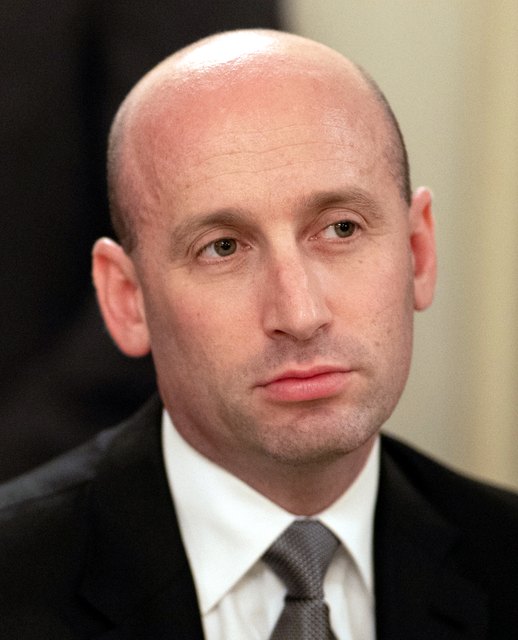
Nahum Goldmann
A Jewish statesman without a state, co-founder of the World Jewish Congress, central architect of postwar restitution, and builder of enduring ties between Israel and the Diaspora
Nahum Goldmann (July 10, 1895–August 29, 1982) was one of the most consequential Jewish diplomats of the twentieth century. He led no government and rarely spoke for only one country. His influence came from a different source: an exceptional ability to unite Jewish organizations, gain access to national leaders, and convert the needs of a dispersed people into diplomatic initiatives and durable institutions.
As a principal founder and longtime president of the World Jewish Congress, president of the World Zionist Organization, and a central figure in the negotiations for West German reparations, Goldmann helped shape relations among Israel, world Jewry, and the international community. His legacy also lives in institutions devoted to Jewish knowledge, Holocaust restitution, cultural renewal, and the connection between Israel and the Diaspora—including the Encyclopaedia Judaica, the Claims Conference, the Memorial Foundation for Jewish Culture, and the museum originally known as Beth Hatefutsoth.
From Vishnevo to the Zionist movement
Goldmann was born in Vishnevo in the Russian Empire, now Vishnyeva in Belarus, to Rebecca and Solomon Zvi Goldmann. His father was an ardent Zionist, and his paternal uncle was the Hebrew author and publisher Ben-Avigdor. The family moved to Frankfurt when Nahum was a child. He attended the liberal Musterschule while studying Hebrew, Judaism, and Jewish history at home. Leading Zionists and intellectuals visited the family, exposing him early to the idea that Jewish culture and political action could reinforce one another.
In 1911, at the age of sixteen, he accompanied his father to the Tenth Zionist Congress in Basel. Two years later he spent several months in Palestine. He recorded his impressions of the small but determined Jewish community in Erez-Israel: Reisebriefe aus Palästina, published in 1914. The visit gave his Zionism a practical dimension: the Jewish national project was not merely a European political theory but a society being built through immigration, labor, education, and communal institutions.
Goldmann studied law, history, and philosophy at Heidelberg, Marburg, and Berlin. The First World War interrupted his education. During the conflict, he worked for the German Nachrichtenstelle für den Orient, an intelligence and propaganda bureau associated with the Foreign Office. While there, he also tried to cultivate German support for Zionist aims. After the war, he completed his studies and received a doctorate in law in 1921.
The Encyclopaedia Judaica and the preservation of Jewish knowledge
In Berlin in 1922, Goldmann and the scholar Jacob Klatzkin founded the Eschkol Publishing Society. Its most ambitious undertaking was the Encyclopaedia Judaica, conceived as a systematic account of Jewish history, religion, literature, communities, and scholarship. Between 1928 and 1934, ten German volumes and two Hebrew volumes appeared, drawing on the work of leading Jewish scholars of the period.
The Nazi rise to power halted the project, but not the idea behind it. In the 1960s, Goldmann helped revive the vision of a comprehensive Jewish encyclopedia in English. The major English-language Encyclopaedia Judaica, published in 1971, carried forward the broader ambition of making Jewish learning accessible to readers and institutions around the world. Goldmann understood the preservation and transmission of knowledge as a form of national reconstruction—especially after the destruction of European Jewry and many of its great centers of scholarship.
Creating a diplomatic voice for world Jewry
The League of Nations and the World Jewish Congress
During the 1920s, Goldmann became a prominent figure in German and international Zionism. He attended Zionist congresses from 1920, joined the Zionist General Council in 1927, and participated in political negotiations with Britain following the Passfield White Paper. In 1934, he became the Zionist Organization's representative to the League of Nations in Geneva and a member of the Zionist Executive. He used these positions to press the international community to uphold the commitments to a Jewish national home contained in the Balfour Declaration and the Mandate for Palestine.
The rise of Nazism convinced Goldmann that separate Jewish communities needed a permanent international framework through which to defend their rights. With Rabbi Stephen S. Wise and other leaders, he became one of the principal architects of the World Jewish Congress, founded in Geneva in 1936. Goldmann initially chaired its executive and later served as its president from 1949 to 1977. The organization brought together communities and national Jewish bodies to combat antisemitism, defend civil and religious rights, and present Jewish concerns to governments and international institutions.
His activities made him a target of the Nazi regime. The Gestapo sought his arrest, and Germany stripped him of his citizenship in 1935. Through French diplomatic assistance, he obtained Honduran citizenship and served for a period as a Honduran consul in Geneva. In 1940, he succeeded in bringing his wife, Alice, and their two sons to the United States. He became an American citizen in 1945, received Israeli citizenship in 1962, and later became a Swiss citizen, while continuing to divide his life among major centers of Jewish affairs in America, Israel, and Europe.
Efforts during the Holocaust
Goldmann worked to alert governments to the Nazi danger and to find refuge for European Jews. He petitioned political and religious leaders, represented the World Jewish Congress as an observer at the failed Evian Conference of 1938, and advocated wider immigration opportunities. After moving to the United States, he participated in rescue efforts, sought entry permits for Jewish intellectuals trapped in occupied Europe, and pressed for changes to restrictive refugee policies.
These efforts did not produce the necessary change in the face of governments unwilling to open their borders. In his memoirs, Goldmann acknowledged the painful limitations and failures of the Jewish leadership during the catastrophe, expressly including himself in that judgment. Even before the war ended, however, he began preparing for the rescue and rehabilitation of the survivors. In 1945, he helped create a joint framework involving the American Jewish Joint Distribution Committee and the Jewish Agency to assist the surviving remnant of European Jewry.
Diplomacy in the campaign for Jewish statehood
Goldmann supported the partition of Palestine and the establishment of a viable Jewish state, even if sovereignty had to be achieved in only part of the land. In 1942, he was among the organizers of the Zionist conference at New York's Biltmore Hotel, where the movement adopted a program calling for unrestricted Jewish immigration and the establishment of a Jewish commonwealth in Palestine.
His preferred tools were personal diplomacy, political negotiation, and coalition-building. After Britain advanced the Morrison–Grady Plan in 1946, Goldmann brought a Jewish Agency counterproposal to Washington. The initiative, which became known as the Goldmann Plan, helped build American opposition to the British proposal and supported President Harry Truman's demand for the immediate admission of 100,000 Jewish displaced persons to Palestine.
When the United Nations Special Committee on Palestine recommended partition, Goldmann joined the diplomatic campaign at the General Assembly. He met officials from the United States, the UN Secretariat, European governments, and South American states, and also sought to use Vatican contacts to influence Catholic countries. He was one participant in a broad Zionist effort, but his extensive relationships and negotiating experience contributed significantly to the coalition behind the UN partition resolution of November 29, 1947.
From 1951 to 1956, as chairman of the Jewish Agency Executive, Goldmann was involved in financing mass immigration to the new state and the absorption of newcomers. From 1956 to 1968, he served as president of the World Zionist Organization. In these roles, he helped connect the immense needs of a young Israel with the financial resources, political influence, and organized support of Jewish communities abroad.
The Claims Conference and the reparations agreement
Goldmann's most important diplomatic and institutional achievement was his role in securing material restitution from West Germany for Jewish property stolen under Nazi rule and for part of the immense material damage inflicted by the Holocaust. As early as 1944, he promoted a resolution at a World Jewish Congress gathering in Atlantic City demanding that postwar Germany compensate persecuted Jews and the Jewish people.
In 1951, Goldmann convened representatives of 23 major Jewish organizations in New York. The meeting led to the establishment of the Conference on Jewish Material Claims Against Germany, commonly known as the Claims Conference. It was designed to represent survivors and Jewish organizations alongside the separate negotiations conducted by the State of Israel. Goldmann also met secretly with West German Chancellor Konrad Adenauer and helped establish the basis for a German acknowledgment of moral responsibility and an obligation to provide material compensation.
The Luxembourg Agreements, signed in September 1952, included a reparations agreement between West Germany and Israel as well as protocols with the Claims Conference. No financial settlement could restore the murdered or repair the crimes of the Holocaust. The agreements nevertheless had far-reaching practical consequences. Reparations supplied Israel with goods and resources used in infrastructure, economic development, and the absorption of large waves of immigrants. The Claims Conference, meanwhile, developed compensation, welfare, and assistance programs for survivors.
Prime Minister David Ben-Gurion wrote to Goldmann after the agreement and emphasized that his wisdom, energy, tact, and courage had played a decisive role in the negotiations. The achievement was also unprecedented in its institutional form: the sovereign State of Israel and organized Jewish communities throughout the world worked in parallel to pursue claims against a country accepting responsibility for the crimes of its former regime. Goldmann helped transform a broad moral demand into mechanisms that continued to affect survivors and their families for generations.
Rebuilding Jewish culture and strengthening the Diaspora
Goldmann did not believe that the creation of Israel made Jewish life elsewhere obsolete. He preferred the term “Diaspora” to “exile,” viewing Jewish communities around the world as continuing and creative parts of the Jewish people. In his conception, Israel needed the support of world Jewry, while the Diaspora needed a vital Israeli center, strong Jewish education, and institutions capable of sustaining identity and culture.
He translated that outlook into organizational work. Goldmann helped establish the Conference of Presidents of Major American Jewish Organizations, strengthening the ability of national Jewish bodies to coordinate policy and represent shared concerns. Beginning in the 1960s, he was also an important international advocate for Soviet Jewry. The World Jewish Congress convened a conference in Paris on the subject in 1960 at his initiative, and he continued the campaign through the second international conference on Soviet Jewry in Brussels in 1976. That gathering called on the Soviet Union to honor human rights, permit Jewish cultural and religious life, and recognize the right of Jews to reunite with their people in Israel.
In 1964, Goldmann helped found the Memorial Foundation for Jewish Culture. Its purpose was to cultivate a new generation of Jewish scholars, educators, artists, communal leaders, and Torah scholars after the Holocaust had destroyed so many of Europe's cultural and intellectual centers. Through grants and fellowships for individuals and institutions, the foundation helped renew Jewish learning, cultural creation, and leadership across many countries. It embodied Goldmann's conviction that restitution should serve not only as compensation for material loss but also as an investment in the Jewish future.
Another institution closely associated with his vision was Beth Hatefutsoth, the Museum of the Jewish Diaspora at Tel Aviv University, which opened in 1978 and bore his name. Now known as ANU—Museum of the Jewish People, it presented the histories of Jewish communities not as isolated peripheral stories but as parts of a shared civilization shaped by faith, family, migration, creativity, and renewal. The museum gave public and educational form to Goldmann's belief in a living partnership between Israel and world Jewry.
A persistent search for regional accommodation
Goldmann's commitment to Zionism and Israel's security was accompanied by the belief that the state's long-term future required an agreement with its neighbors. As early as 1948, he proposed a confederative arrangement between Israel and Arab states, an idea he revisited during the 1950s. He maintained unofficial contacts with leaders including Yugoslav President Josip Broz Tito and King Hassan II of Morocco, seeking channels of communication at times when formal diplomatic routes were closed.
In 1970, Egyptian President Gamal Abdel Nasser invited Goldmann to meet in Cairo. Because Goldmann was an Israeli citizen, he sought permission from the Israeli government; permission was withheld, and the meeting did not take place. The invitation nevertheless reflected his unusual standing as a Jewish leader outside government whom foreign statesmen could view as a possible interlocutor. His diplomacy rested on the conviction that military success could not substitute indefinitely for recognition, negotiation, and stable political agreements.
Books, memory, and an institutional legacy
Goldmann recorded his experiences in memoirs and works of political reflection. His principal publications include:
- Erez-Israel: Reisebriefe aus Palästina (1914)
- The Autobiography of Nahum Goldmann: Sixty Years of Jewish Life (1969)
- Staatsmann ohne Staat, or Statesman Without a State (1970)
- The Jewish Paradox (1978)
- Mein Leben als deutscher Jude, or My Life as a German Jew (1982)
His writings provide an insider's view of European Jewish life, Zionist diplomacy, the Holocaust, Israel's establishment, and the evolving relationship between the state and the Diaspora. They also express the defining tension of his career: he was a Zionist who worked for Jewish sovereignty but refused to regard the state as a replacement for the worldwide Jewish people; a political negotiator who believed that culture, memory, and education were themselves forms of national strength.
Goldmann died in Bad Reichenhall, West Germany, on August 29, 1982. He was buried on Mount Herzl in Jerusalem in the section reserved for leaders of the World Zionist Organization.
Why Nahum Goldmann's legacy belongs in Moreshet
Nahum Goldmann merits a central place in Moreshet because his influence cannot be reduced to a single office. He helped give world Jewry an organized diplomatic voice, contributed to the international campaign that secured recognition for a Jewish state, connected Israel with Diaspora communities, and turned the demand for post-Holocaust restitution into institutions that materially assisted both Israel and survivors.
The Encyclopaedia Judaica, World Jewish Congress, Claims Conference, Memorial Foundation for Jewish Culture, and Beth Hatefutsoth demonstrate the range of his work: scholarship, representation, restitution, education, culture, and historical memory. These were not merely milestones in one man's career. They became part of the infrastructure through which Jewish life was rebuilt after the Holocaust and sustained across national borders.
Preserving his story on Moreshet.com also shows how diplomacy and institution-building can affect millions of lives without direct governmental power. Goldmann's legacy remains visible in organizations representing Jewish communities, support for Holocaust survivors, the study and presentation of Jewish civilization, and the continuing conversation about the relationship between Israel and the Jewish people worldwide.