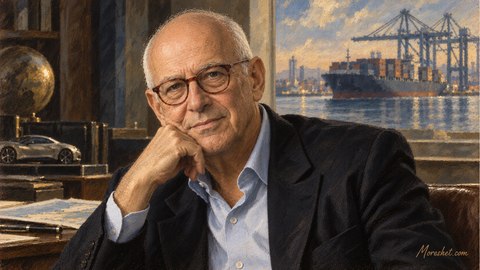
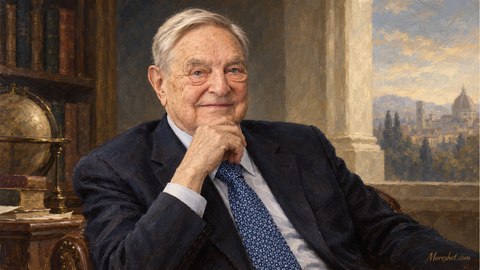
Michael Milken
The Jewish-American financier who reshaped high-yield bonds and directed major philanthropic resources toward medicine and education
Michael Robert Milken, born July 4, 1946, in Encino, California, is a Jewish-American businessman, financier, and philanthropist. He is best known for helping develop the market for high-yield bonds, often called “junk bonds,” but his significance extends well beyond finance. After making it easier and faster for companies and entrepreneurs to raise capital, he devoted much of his later life to medical research, public health, education, and social innovation.
Milken grew up in a middle-class Jewish family. He graduated from the University of California, Berkeley, in 1968 with highest honors and was elected to Phi Beta Kappa, then earned an MBA from the Wharton School of the University of Pennsylvania. As a student, he became interested in credit research suggesting that a diversified portfolio of non-investment-grade bonds could produce stronger risk-adjusted returns than a portfolio restricted to highly rated debt.
Building a New Market for Corporate Finance
In 1969, Milken began working at Drexel Harriman Ripley. After completing his MBA, he became director of low-grade bond research and was eventually given capital to trade. Following the mergers that produced Drexel Burnham, he persuaded the firm to establish a dedicated high-yield bond operation. In 1978, he moved the operation to Century City in Los Angeles and expanded it into a broad network of investors, companies, and financial institutions.
Milken’s central innovation was not simply trading riskier bonds. He helped create an infrastructure that allowed them to become a source of financing for companies unable to obtain credit on conventional terms. He developed relationships with a large base of high-yield bond buyers, allowing substantial sums to be raised quickly. This capacity helped finance leveraged acquisitions, corporate reorganizations, and the movement of capital from established businesses into ventures where investors believed it could be used more productively.
By the 1980s, this activity had become one of the most powerful forces in American finance. Supporters viewed it as a way to improve the allocation of capital and give newer or weaker companies access to financing; critics focused on the risks and trading practices of the period. Regardless of the debate surrounding the era, the market Milken helped build became a lasting part of modern finance and changed how companies, investors, and institutions assess risk and return.
Legal Crisis and a Change of Direction
In the late 1980s, Milken became the central figure in wide-ranging investigations into securities trading. He was indicted in 1989 and, in 1990, pleaded guilty in a negotiated settlement to six securities and tax-related offenses. He was sentenced to ten years in prison, but the sentence was later reduced, and he served 22 months. He paid substantial fines and settlements and accepted a lifetime ban from the securities industry. In 2020, he received a full presidential pardon.
This episode is essential to an accurate account of his life: Milken’s influence arose from both his financial innovation and the serious legal consequences associated with his activities. After his release, he increasingly turned toward public-interest work and philanthropy, directing resources toward medical research, public health, and education.
Philanthropy, Medicine, and Public Health
Milken is a co-founder of the Milken Family Foundation, established in 1982 to support education and medical research, and chairman of the Milken Institute, which conducts research and convenes discussions on economics, health, public policy, and innovation. The institute’s global conference brings together thousands of leaders and decision-makers from many countries, creating a setting for cooperation among governments, researchers, business leaders, and social organizations. Its work has also reached Israel, including through an economic research center operating within the Jerusalem Institute for Policy Research.
Soon after his release from prison, Milken was diagnosed with prostate cancer. In 1993, he founded the Prostate Cancer Foundation. The foundation became a major philanthropic source for prostate cancer research, supporting scientists and medical studies while promoting public awareness. Its partnership with Major League Baseball through the Home Run Challenge connects sport, public education, and fundraising for research.
In 2003, Milken founded FasterCures, an organization intended to make the path from medical discovery to available treatment faster and more efficient. Initiatives including TRAIN, Partnering for Cures, and the Philanthropy Advisory Service have sought to connect researchers, donors, companies, and patients while reducing delays and fragmentation in the study of serious diseases. This work broadened his philanthropic focus from a single disease to the systems through which research, development, and access to treatment take place.
Milken-related gifts have also supported the expansion of public-health research and training. In 2014, the Milken Institute School of Public Health at George Washington University was named in recognition of $80 million in gifts, designated for research and scholarships. The goal was not only to improve treatment for patients, but also to strengthen professional training and society’s ability to respond to large-scale health challenges.
Education, Investment, and Social Initiatives
In 1996, Michael Milken and his brother Lowell founded Knowledge Universe and Knowledge Learning Corporation, the parent company of KinderCare Learning Centers. Milken served as chairman of Knowledge Universe until its sale in 2015. He also invested in K12 Inc., which operated in online education. These activities reflected his belief that technology, management, and private capital could expand access to educational services and change how learning is delivered to students and families.
Beyond companies and institutions, Milken has supported initiatives aimed at encouraging research, entrepreneurship, and solutions to public problems. The Milken Center for Advancing the American Dream in Washington presents the stories of artists, entrepreneurs, and innovators in health and education and places them within a broader discussion of opportunity, work, and innovation in American society.
Why Michael Milken’s Legacy Belongs in Moreshet
Michael Milken merits inclusion in Moreshet because he worked across three spheres whose effects extend far beyond his own career: he changed the structure of corporate finance, helped establish institutions devoted to education and research, and directed substantial resources toward serious disease and public health. His financial work reshaped the high-yield bond market and the ways companies raise capital; his philanthropy created foundations, research organizations, and programs that have affected scientists, patients, educators, and policy-makers.
Although his identity and work are rooted in Jewish-American life, his institutions and initiatives operate in international settings and have contributed to discussions of research, economics, and health that include Israel and the wider world. For Moreshet, his story matters because it shows how professional experience, financial resources, and institutional relationships can be transformed into long-term public infrastructure. Moreshet.com preserves him as a figure whose life connects financial entrepreneurship with social responsibility and medical research—fields whose consequences are felt in the lives of many people.