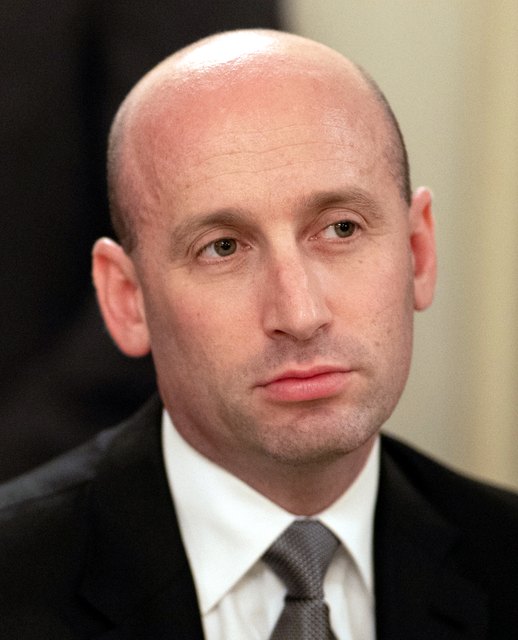
Avi Gil
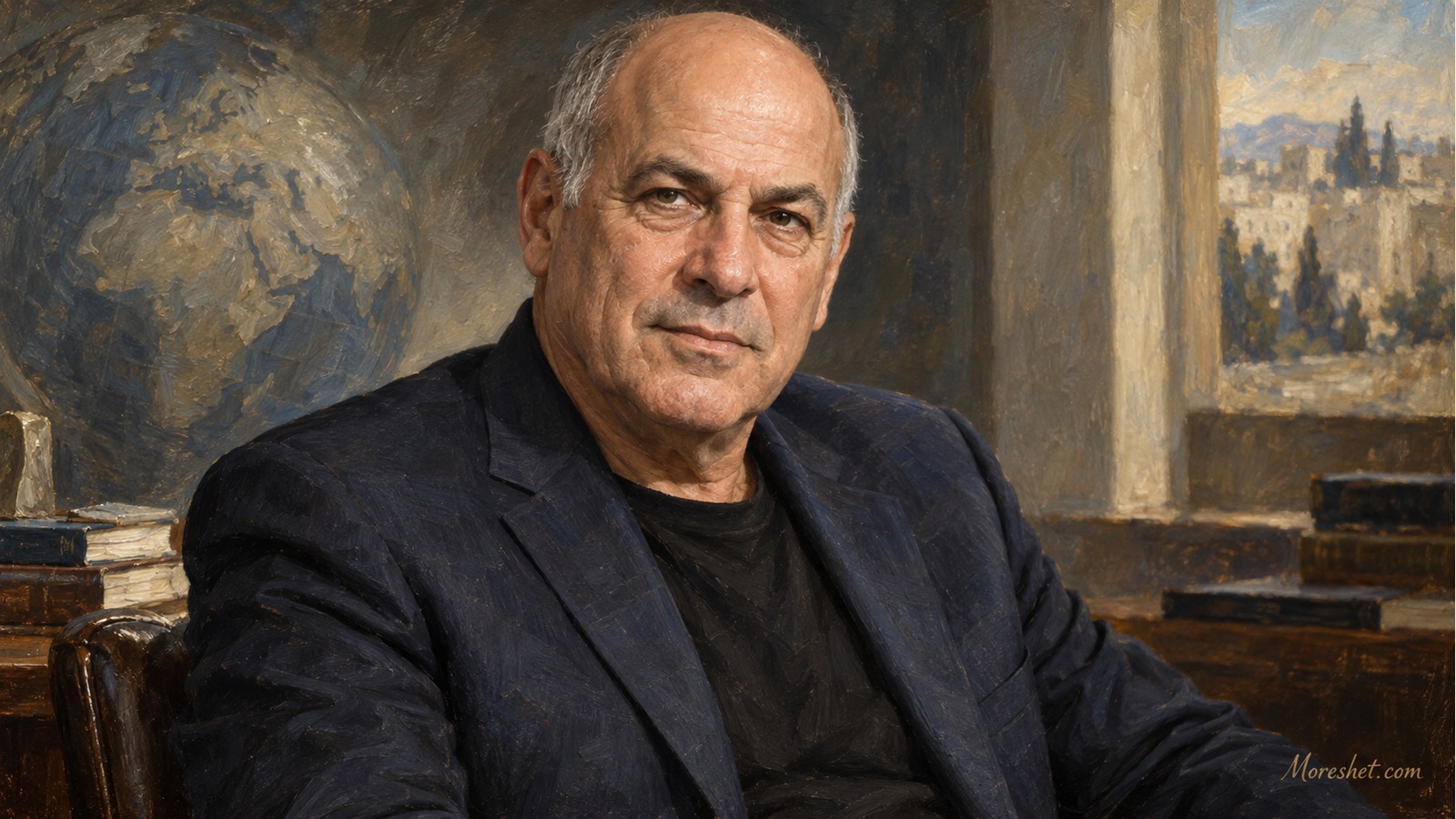
Avi Gil — AI-generated artistic portrait · Moreshet.com
Israeli diplomat, former Director General of the Ministry of Foreign Affairs, close adviser to Shimon Peres, policy thinker, author and senior fellow at the Jewish People Policy Institute, active at key intersections of diplomacy, peace efforts and Israel-Diaspora strategy
Avi Gil is an Israeli diplomat, policy adviser, author, former Director General of Israel’s Ministry of Foreign Affairs and a senior fellow at the Jewish People Policy Institute. For decades he worked at central junctions of Israeli foreign policy: in the foreign service, in Shimon Peres’s office, in the Prime Minister’s Office, in the Ministry of Regional Cooperation, at the Peres Center for Peace, in the Israeli Presidential Conferences and in long-term policy planning for the Jewish people. His contribution is not measured mainly by public visibility, but by a different kind of influence: behind-the-scenes work, agenda shaping, preparation of policy, formulation of ideas, leadership support and the translation of diplomatic vision into institutional practice.
Gil is especially identified with Shimon Peres and with the Israeli effort to imagine a different regional horizon: peace with neighbors, Middle Eastern cooperation, strong ties with world Jewry, and the understanding that Israel’s future depends not only on military power but also on diplomacy, ideas, economics, culture and international relationships. In his later work as a researcher and author, he continued to explore these questions from the perspective of someone who had been inside decision-making rooms and could describe how policy is born, fails, develops and leaves traces.
Haifa, education and a path into public service
Avi Gil was born in Haifa on January 11, 1955. The city of his birth — a port city, a mixed city, an industrial city, a workers’ city and a gateway to the world — fits much of his later life. His career would develop around connections: between Israel and the world, Jerusalem and Washington, policy and implementation, Zionism and Diaspora Jewry, and diplomatic vision and institutional mechanics.
He received graduate education in Israel and the United States. He holds a master’s degree in political science from the Hebrew University of Jerusalem and a master’s degree in public administration from Harvard University, through the Wexner Foundation program. The combination of political science and public administration is important for understanding him: Gil was not only a diplomat of ceremony and protocol, but a system thinker who understood institutions, decision-making processes, power relations, policy planning and execution.
That education gave him a double language: an internal Israeli language of security, government, parties and ministries, and an international language of diplomacy, public policy and strategic analysis. Later in his career, the ability to move between those languages became one of his central assets.
Early career in the Foreign Ministry
Gil spent most of his professional career in Israel’s Ministry of Foreign Affairs. He began in 1983 as second secretary at Israel’s embassy in Kathmandu. The first foreign-service post was relatively modest, but it placed him inside a world in which a small country must manage presence, relationships, image and interests in an arena far larger than its physical size.
In the Israeli foreign service, Gil learned the craft of practical diplomacy: preparing policy material, reading political environments, understanding foreign actors, coordinating among government bodies, writing precisely and preserving continuity between policy decision and implementation. Diplomacy of this kind is not always visible to the public, but it is essential for a country whose room for action depends heavily on alliances, understandings, channels of conversation and persuasive explanations.
In 1988 he began working in the office of Foreign Minister Shimon Peres. From that point, their paths remained closely linked for many years. The relationship was professional, political and personal: Gil accompanied Peres in official and public roles, served as adviser, manager, content director and confidant, and was involved in efforts through which Israel tried to redefine its regional and international position.
Alongside Shimon Peres: trust, policy and vision
Few people knew Shimon Peres from close range over time as Avi Gil did. He worked with him in the foreign minister’s office, accompanied him during his time as prime minister, worked alongside him at the Peres Center for Peace, and later helped shape the Presidential Conferences. Their connection was built on long trust and on proximity to Peres’s world of ideas: peace, technology, regional cooperation, world Jewry and Israel’s future as a creative society rather than only a military fortress.
Gil was not merely an administrative aide. He was someone able to translate a leader’s idea into policy, a meeting, a document, an agenda and a process. A person who works closely with a senior statesman at decisive moments is not just a witness; he helps shape the way ideas move from thought into action. In that sense, Gil was part of the implementation circle of one of the central figures in Israeli and Jewish politics of the late 20th and early 21st centuries.
His closeness to Peres did not prevent a sober view. In his later writing about Peres, he described a complex figure: a leader of extraordinary vision, energy and optimism, but also a political actor working amid rivalries, limits, failures and compromise. Precisely because he was close, Gil’s testimony matters. It gives an inside view of the man, the system and the possibility — and difficulty — of turning diplomatic vision into reality.
Peace efforts and regional policy
Gil was involved in Israel’s policymaking and peace efforts, including processes that led to the Oslo Accords and the peace treaty with Jordan. He worked in a period when Israel tried to move beyond conflict management alone toward an attempt to build a new regional framework. Even when the process became deeply contested and many hopes were not fulfilled, its historical importance remains large: it changed diplomatic language, opened channels, created new expectations and redefined discussions of borders, security and mutual recognition.
From 1995 to 1996, Gil served as chief of staff to the prime minister during Shimon Peres’s premiership after the assassination of Yitzhak Rabin. It was a short but decisive period in which the Israeli government had to face national grief, terrorism, elections, the continuation of a diplomatic process and severe public tension. To run the prime minister’s office in such a period required personal trust, composure, political understanding and the ability to coordinate between state systems.
He later served as Director General of the Ministry of Regional Cooperation from 1999 to 2001. The existence of such a ministry itself expressed the idea of a new Middle East: an attempt to build regional links in economics, infrastructure, culture and policy. Even when the regional reality grew more difficult, the role reveals where Gil stood: in the space between a peace vision and a government mechanism trying to turn it into action.
Director General of the Ministry of Foreign Affairs
From 2001 to 2002, Avi Gil served as Director General of Israel’s Ministry of Foreign Affairs. He entered the post during an especially challenging period: the Second Intifada, a deep crisis of trust between Israel and the Palestinians, growing international pressure, struggles over Israel’s global image and strategic changes after the September 11 attacks in the United States. The Foreign Ministry was required to defend Israel’s positions, preserve diplomatic relationships, explain the terrorist threat and navigate between security needs and international legitimacy.
The director general of the Foreign Ministry is not only a manager. The role combines responsibility for Israel’s global diplomatic network, contact with embassies, preparation of policy, coordination with the prime minister and foreign minister, management of the professional service and leadership of responses to changing events. Gil brought to the post accumulated experience from field diplomacy, policy offices and regional processes.
His tenure as director general completed a professional path that began at a junior diplomatic level and reached the top professional position in the Foreign Ministry. It also reflected Peres’s trust in him and recognition of his ability to hold policy, organization, communications and diplomacy together in a time of crisis.
The Peres Center, Presidential Conferences and public forums
After his government service, Gil continued to work in spaces where policy, ideas and public life meet. He served as deputy director general of the Peres Center for Peace, an institution created to advance cooperation, dialogue and regional initiatives. This continued his involvement with a question that occupied Peres for years: how to build not only an agreement, but also civic, economic and cultural foundations for peace.
From 2009 to 2014, Gil served as director of content for the five Israeli Presidential Conferences, Facing Tomorrow. These conferences, held during Peres’s presidency, sought to turn Israel into a global meeting point for discussions of the future, technology, science, society, Jewish life and policy. The content role was substantive: not simply organizing an event, but building a conversation among leaders, thinkers, scientists, entrepreneurs and public figures around the future of Israel, the Jewish people and the world.
Gil also served as content director of the Global Forum of the National Library of Israel from its inception in 2014. Here too, the same professional instinct is visible: building a space for conversation among institutions, ideas and an international audience. The National Library is not only an archival institution; it is a place of Jewish, Hebrew and Israeli memory. Gil’s connection to such a forum reflects his natural movement from state diplomacy to the diplomacy of culture, ideas and identity.
The Jewish People Policy Institute and strategic thinking
Since 2003, Gil has served as a senior fellow at the Jewish People Policy Institute, JPPI. The institute deals with long-term policy planning concerning the future of the Jewish people, the State of Israel, Diaspora Jewry, antisemitism, demography, identity, Israel-Diaspora relations and Israel’s place in the world order. For Gil, this was a natural continuation of foreign service: a move from managing immediate diplomatic events to long-range thinking about the condition of the Jewish people in a changing world.
In his work at JPPI, Gil has written about the world order, Israel-United States relations, the diplomatic process, Israel and American Jewry, the future of Israeli democracy, the geopolitical effects of the COVID-19 pandemic and Israel’s position in a polarized world. His articles are not detached academic writing; they come from the perspective of a person who has known governments, leaders, negotiations and the limits of power.
The importance of this work lies in the connection between personal experience and policy analysis. Gil looks at the Jewish people not only as a religious or historical community, but as a broad strategic entity: state, Diaspora, alliances, values, institutions, adversaries, crises and opportunities. That perspective is essential to contemporary Jewish heritage because it asks not only what happened, but what should be done so that the Jewish people and Israel continue to exist with security and meaning.
Writing on Shimon Peres and Israeli diplomacy
Gil’s Hebrew book The Peres Formula: From the Diary of a Confidant, published in 2018, offered a personal inside view of Shimon Peres. In 2020, an expanded English version appeared as Shimon Peres: An Insider’s Account of the Man and the Struggle for a New Middle East. Based on diaries, memory and close acquaintance, the book allows readers to understand Peres not only as a symbol, but as a person acting within a hard political reality, between hope for peace and internal and external struggles.
The book’s distinctive value is that it places the reader inside rooms of negotiation and hesitation: secret talks, fear of leaks, battles over credit, tension among leaders, and the gradual process by which an idea that seemed almost impossible became a diplomatic path. Historically, Gil’s book contributes to the documentation of one of the most important chapters in Israeli history: the period in which the state tried to redefine its relationship with the Palestinians and its regional surroundings.
Alongside the book on Peres, Gil has published additional Hebrew works, including Toronto Junction, Guy and the Shah, Where Is the Head and Hope of the Leviathan: A Deep State Story. This writing reflects a natural move from system insider to author seeking to process experience, ideas and political imagination into books and public discussion.
Quiet influence on diplomatic heritage
Avi Gil is not the kind of figure whose legacy is built on mass charisma or a single elected office. His influence belongs to another layer of history: advisers, directors general, content architects, diplomats and policy formulators who connect vision with institution. Such people are not always on the stage, but without their work it is difficult to turn ideas into policy, conferences into meaningful conversation, and personal leadership into lasting legacy.
In that sense, Gil represents an important Israeli tradition of professional public service. He worked within a complex policy system, accompanied sensitive processes, served beside one of the most important leaders in Israel’s history, and remained active after his formal posts as writer, researcher and adviser. His contribution lies both in what he helped do and in what he documented: he helped shape diplomatic chapters and then helped explain them to later generations.
The historical value of his career also lies in the connection between Israel and world Jewry. Through his work in the Foreign Ministry, JPPI, the Presidential Conferences and the National Library forum, he repeatedly engaged the question of how the State of Israel speaks to the world and to the Jewish people. This is a central question in modern Jewish heritage: how an ancient people, restored to sovereignty, defines its place within a changing world order.
Why this legacy belongs in Moreshet
Avi Gil merits inclusion in Moreshet because he represents the depth layer of Israeli diplomacy and policymaking: the public servants, advisers and researchers who work at decision points and help shape how Israel understands itself, its neighbors, world Jewry and its place in the international arena. His work in the Foreign Ministry, Shimon Peres’s office, the Ministry of Regional Cooperation, the Peres Center for Peace, the Presidential Conferences and the Jewish People Policy Institute created a continuous record of service, thought and documentation.
Moreshet.com documents Gil because Jewish and Israeli heritage is built not only by visible leaders, but also by the people in the rooms where ideas become documents, negotiations, policies and institutions. Avi Gil’s place in Moreshet rests on his contribution to Israeli diplomacy, peace efforts, thinking about the future of the Jewish people, and the internal documentation of Shimon Peres’s path — a figure who deeply influenced Israel, Zionism and the diplomatic imagination of the Middle East.