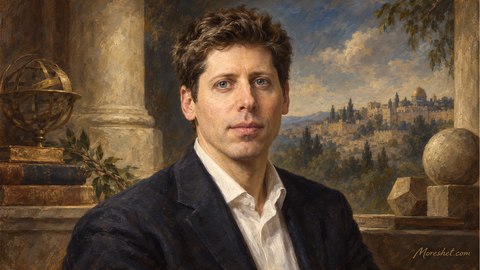
Emmy Noether
The mathematician who reshaped algebra and linked symmetry with conservation laws
Emmy Noether (1882–1935) gave mathematics and physics ways of thinking that remained fundamental long after her death. In algebra, she sought the common structures beneath different calculations. In physics, she proved a profound connection between symmetries and conservation laws. Her influence survives both in named theorems and in the language researchers use to frame problems.
Creating a place in academic life
Noether was born into a Jewish family in Erlangen; her father Max was a mathematician. When women faced severe university restrictions, she initially attended lectures by special permission. She completed her doctorate in 1907 and was later invited to Göttingen by David Hilbert and Felix Klein. For years, her academic standing and compensation failed to reflect her contribution. Dismissed under Nazi anti-Jewish policies in 1933, she moved to Bryn Mawr in the United States and continued teaching and research.
An idea that reorganized algebra
Her work on rings and ideals helped shift algebra from individual calculations toward the study of structures. The finiteness conditions named after her make potentially unwieldy systems mathematically manageable. Students and colleagues carried her methods into number theory, geometry and other fields.
Why symmetry matters
In 1918 Noether published her work on invariants. Under appropriate conditions, a continuous symmetry of the action describing a physical system corresponds to a conserved quantity. Independence from time, for example, is associated with conservation of energy. Her theorems supplied a unifying foundation and became essential tools in physical theory. They offered not simply one solution, but a way to recognize relationships among many problems.
Why this legacy belongs in Moreshet
Moreshet includes Noether for an exceptional contribution to the foundations of science. Moreshet.com also situates her life within the history of Jewish scholars displaced from Europe and women who opened paths in academia. Above all, her legacy is an intellectual gift: concepts powerful enough to help generations of researchers understand increasingly complex questions.