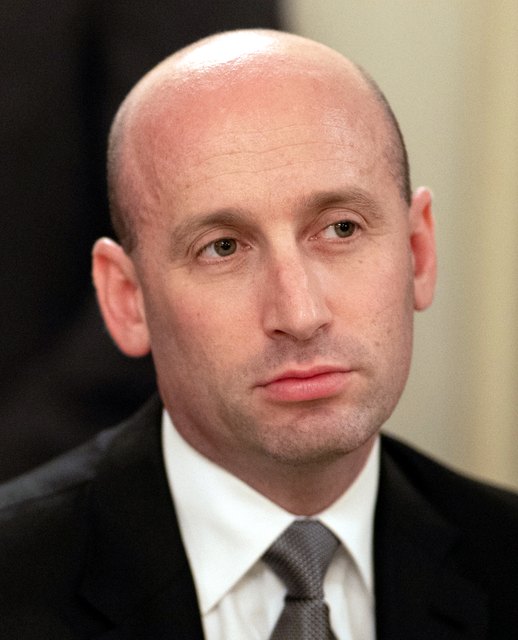
Michael Oren
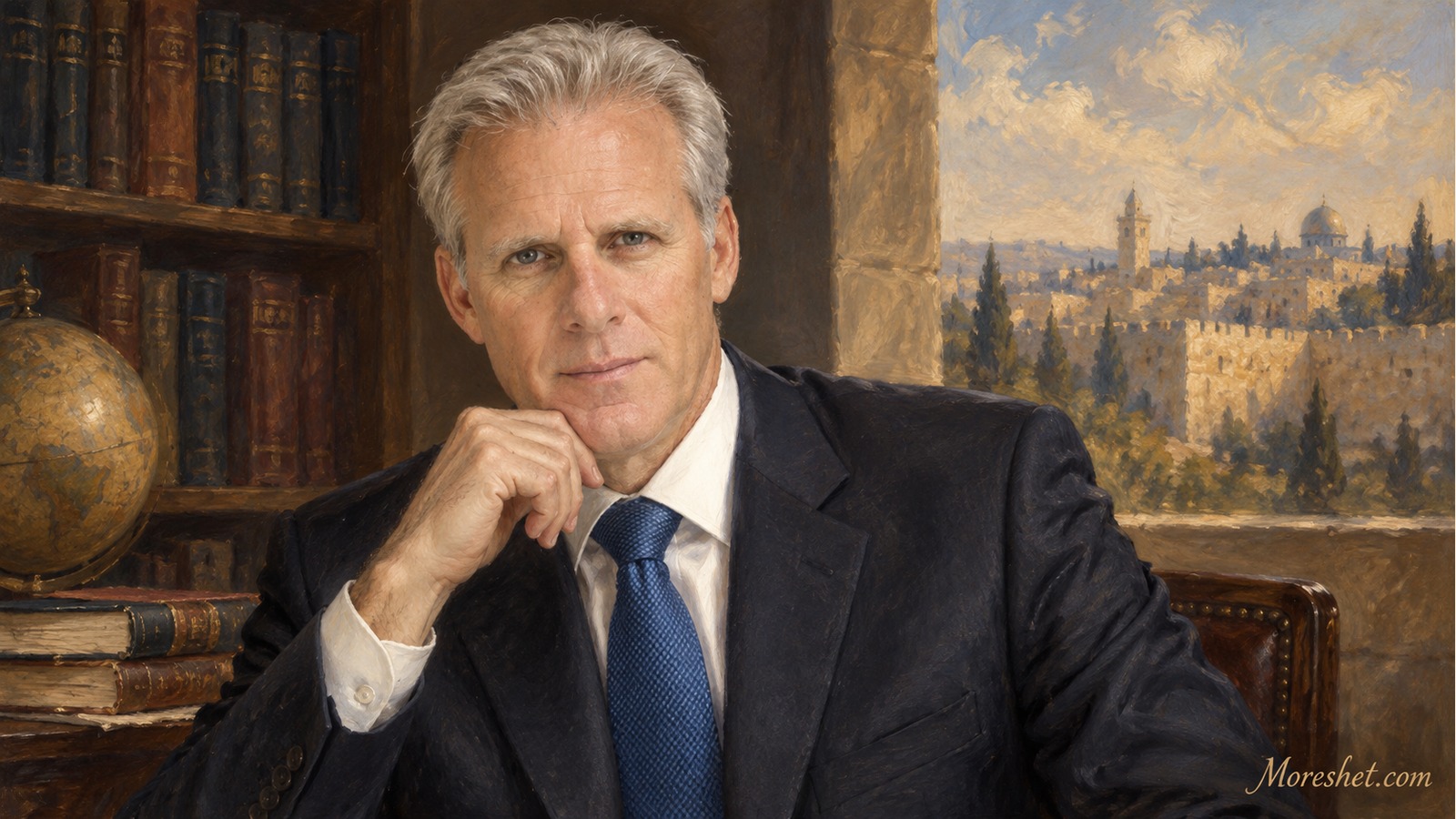
Michael Oren — AI-generated artistic portrait · Moreshet.com
The historian, author, and diplomat who interpreted Israel to America—and America to Israel
Michael Oren is an Israeli historian, author, diplomat, and former public official whose career has joined scholarship on the modern Middle East with military service, diplomacy, teaching, and political life. He served as Israel’s ambassador to the United States from 2009 to 2013, represented Kulanu in the 20th Knesset, and later became deputy minister for public diplomacy in the Prime Minister’s Office. His books have brought the history of Israel’s wars and America’s long engagement with the Middle East to an international readership.
Oren’s distinctive perspective was formed on both sides of the American-Israeli relationship. Raised as a Jewish American, he chose aliyah and service in Israel; as an Israeli soldier and historian, he retained a close understanding of American society and institutions. That combination enabled him to interpret Israel’s security concerns and historical experience abroad while explaining American politics and culture to audiences in Israel.
From an American Jewish upbringing to aliyah
Oren was born Michael Scott Bornstein on May 20, 1955, and grew up in West Orange, New Jersey, in a Zionist Jewish home. His father, Lester Milton Bornstein, was a hospital administrator and former U.S. Army officer who took part in the Normandy invasion, the Battle of the Bulge, and the Korean War. His father’s wartime memories would later provide part of the emotional and historical background for Oren’s fiction.
As a teenager, Oren participated in Jewish and Zionist youth activities. At 15 he first traveled to Israel with Habonim Dror and worked at Kibbutz Gan Shmuel. The encounter helped turn Israel from an inherited ideal into a personal destination. He returned in subsequent years, and at the 1977 Maccabiah Games he won two gold medals and a silver in rowing—an achievement that placed his athletic career within one of the Jewish world’s most enduring international institutions.
Oren studied at Columbia University and earned a master’s degree through its School of International and Public Affairs. He later completed graduate study and a doctorate in Near Eastern studies at Princeton University. His doctoral research, eventually published as The Origins of the Second Arab-Israeli War, examined Israel, Egypt, and the great powers in the years leading to the 1956 Sinai War. It established themes that would recur throughout his work: the interaction of diplomacy, military power, political judgment, and regional history.
Military service and Zionist responsibility
In 1979, Oren immigrated to Israel, became an Israeli citizen, and changed his surname from Bornstein to Oren. He enlisted in the Israel Defense Forces as a lone soldier and served as a paratrooper. During the First Lebanon War, his unit was caught in a Syrian ambush and suffered heavy casualties. He continued to perform reserve duty and later served in liaison and public-information roles, including as Israel’s liaison officer to the U.S. Sixth Fleet during the Gulf War and as an officer in the IDF Spokesperson’s Unit during later conflicts.
After his regular service, Oren worked on behalf of Nativ to make contact with Zionist activists in the Soviet Union. This placed him within Israel’s wider effort to sustain ties with Jews living under Soviet rule and to support their connection with Israel. He also advised an Israeli delegation to the United Nations and worked on interreligious affairs in the Ministry of Religious Affairs during Yitzhak Rabin’s government. These assignments gave him experience at the meeting point of Israeli statecraft, Jewish peoplehood, and international institutions well before his appointment as an ambassador.
A historian who brought pivotal events to a wide readership
Oren’s best-known historical work is Six Days of War: June 1967 and the Making of the Modern Middle East, published in 2002. The book reconstructs the approach to the Six-Day War, the fighting itself, and the political and territorial transformation that followed. Rather than treating the conflict solely as a sequence of battles, Oren integrated diplomatic records, decisions by Arab and Israeli leaders, and the roles of the United States, the Soviet Union, and other outside powers.
Six Days of War became a New York Times bestseller and received both the National Jewish Book Award and the Los Angeles Times Book Prize for History. Its importance to Jewish and Israeli historical memory lies in its ability to make one of Israel’s defining turning points accessible to readers far beyond the country. It also gave generations born after 1967 a detailed framework for understanding why the war’s consequences remain central to Israel’s security, diplomacy, and internal debate.
In Power, Faith, and Fantasy: America in the Middle East, 1776 to the Present, Oren widened the lens to more than two centuries of American involvement in the region. He explored the influence of trade, missionaries, religious imagination, diplomacy, and military power on U.S. policy. The book also became a New York Times bestseller. Its long historical view helps explain the American-Israeli alliance as part of a much older relationship between the United States and the Middle East rather than as an isolated product of modern politics.
Teaching, essays, and public interpretation
Oren taught or held visiting appointments at institutions including the Hebrew University of Jerusalem, Ben-Gurion University, Harvard, Yale, and Georgetown. He was associated with Jerusalem’s Shalem Center and published essays and commentary in major newspapers and journals. As a Middle East analyst for CNN and CBS, he carried historical interpretation beyond universities, translating complex regional events for audiences encountering them through daily news.
Representing Israel in Washington
Oren was appointed Israel’s ambassador to the United States in 2009. He relinquished his American citizenship to assume the post and served until 2013. His tenure coincided with a sensitive period in relations between the Israeli government and the administration of President Barack Obama, encompassing policy disputes and negotiations involving Iran, the Israeli-Palestinian conflict, Gaza, and American security assistance.
His work extended beyond formal meetings with administration and congressional officials. Oren lectured on university campuses, appeared frequently in American media, and sought relationships with communities not always reached by conventional Israeli diplomacy. Embassy initiatives during his tenure engaged Irish-American, Latino, and LGBT leaders as well as Chinese representatives, and the embassy hosted an iftar dinner as part of its outreach to American Muslims. He also publicly explained Israel’s need for protection against rocket attacks while Congress considered support for the Iron Dome defense system.
Oren later recorded his experience in Ally: My Journey Across the American-Israeli Divide, a 2015 New York Times bestseller. The memoir described both the depth of the alliance and the disagreements that emerged during his years in Washington. More broadly, it presented diplomacy as continuous translation: communicating Israeli strategic concerns to American institutions while helping Israeli decision-makers understand the political assumptions and culture of the United States.
Service in the Knesset
Oren joined Moshe Kahlon’s Kulanu party before the 2015 election and entered the 20th Knesset. He served on the Foreign Affairs and Defense Committee, bringing his experience as a historian, soldier, and ambassador to parliamentary work. In 2016 he became deputy minister for public diplomacy in the Prime Minister’s Office. He completed his Knesset term in 2019 and did not stand for election to the next Knesset.
One concrete expression of his commitment to the Zionist story was his role in advancing Yom HaAliyah, or Aliyah Day, as an Israeli national observance. Enacted in 2016 with support from legislators across party lines, the law created an annual occasion to recognize the contribution of immigrants to the State of Israel. For Oren—himself an immigrant who became an Israeli soldier, diplomat, and legislator—the initiative connected personal experience with a central principle of Jewish national life: that aliyah is not only part of Israel’s founding history but an ongoing source of social and cultural renewal.
His later civic activity has included initiatives concerned with Israel’s relationship with American Jewry and assistance for Border Police personnel and their families. These efforts continued two themes present throughout his public life: responsibility toward those who serve the state and the cultivation of durable ties between Israel and Jewish communities abroad.
History, memory, and fiction
Oren has also used fiction to explore subjects that historical scholarship cannot always reach. Sand Devil is a trilogy of novellas set in the Negev, while Reunion follows American veterans who return to the Belgian Ardennes decades after the Second World War. Drawing in part on the world of his father’s wartime stories, the novel considers how memory, guilt, loyalty, and friendship accompany soldiers into old age.
His later fiction includes The Night Archer and Other Stories, To All Who Call in Truth, and Swann’s War. In 2023 he published Israel 2048 in Hebrew, English, and Arabic, setting out a vision for Israel in the centennial year of its independence. Across history, memoir, essays, and fiction, Oren has repeatedly examined how individuals and nations remember their past and imagine their future.
Why Michael Oren’s legacy belongs in Moreshet
Michael Oren merits inclusion in Moreshet because his work occupies several arenas in which Israeli memory and Jewish identity are shaped. He made aliyah and served in Israel, researched the wars that transformed the country, taught the history of the region, represented Israel to its most important ally, and helped establish a national day recognizing the contribution of immigrants. His studies of 1956, 1967, and America’s involvement in the Middle East give readers tools to understand how past decisions by leaders and great powers continue to affect Israeli and Jewish life.
Moreshet and Moreshet.com preserve his story because it demonstrates how historical knowledge can move from the archive and classroom into diplomacy, journalism, and legislation. His contribution lies not in one office alone, but in connecting American Jewry with Israel, academic research with public understanding, and the memory of Israel’s formative struggles with discussion of its future. That sustained work of service, scholarship, writing, and interpretation has influenced how Israel is studied and explained both at home and abroad.