Julie Shlez
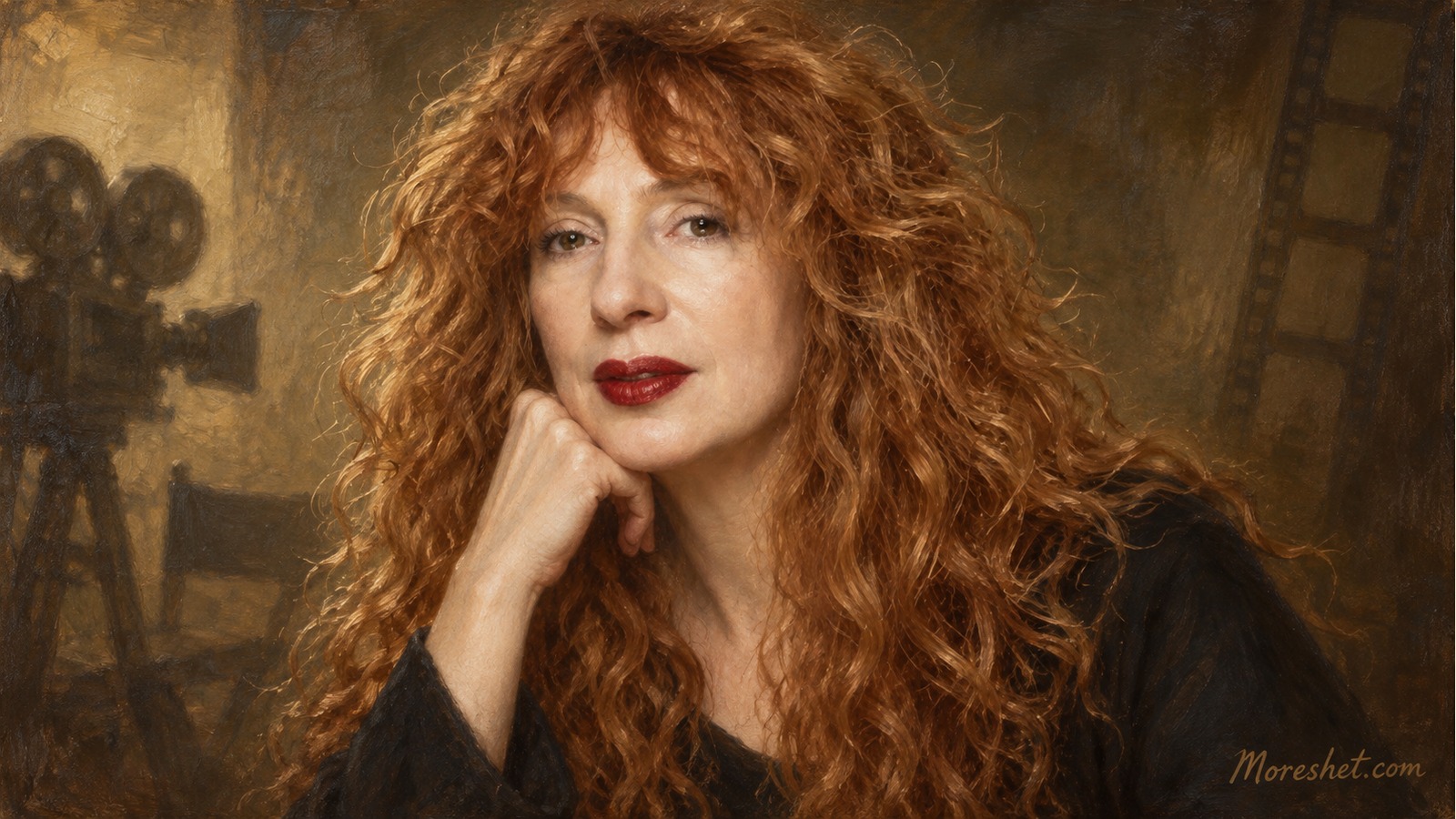
Julie Shlez — AI-generated artistic portrait · Moreshet.com
An Israeli filmmaker who brought overlooked communities, social struggles and difficult public questions to the screen
Julie Shlez, born on November 29, 1960, is an Israeli film and television director. Her work moves between documentary, narrative cinema and television, with a sustained interest in people whose lives are shaped by social, economic and legal forces. She has filmed caravan residents near Acre, women workers fighting to preserve their factory in Mitzpe Ramon, families negotiating painful histories and individuals caught in demanding criminal cases. Across these subjects, Shlez combines close human attention with an examination of the institutions and circumstances surrounding her protagonists.
From social documentary to narrative cinema
Shlez graduated from the film department at Beit Zvi School of the Performing Arts. In 1993, she directed the documentary Sangeen, which followed residents of a caravan site near Acre and explored the distinctive stories of the community living there. By focusing on the residents' daily lives and experiences, the film gave visibility to a community rarely placed at the center of Israeli cinema. It received the Wolgin Award at the Jerusalem Film Festival.
In 1995, Shlez directed Baba Luba, a documentary following singer Danny Bassan on a journey to Brazil in search of his biological father. The film used a personal search to explore broader questions of paternity, parenthood, family and belonging. It won an Ophir Award in the documentary category, establishing Shlez as a director capable of turning intimate experience into a compelling social and emotional inquiry.
Her breakthrough with a broad audience came in 1997 with the narrative film Afula Express. The story follows David, played by Tzvika Hadar, as he pursues his dream of becoming a famous magician, alongside Batya, played by Esti Zakheim. The film's combination of personal aspiration, relationships and everyday Israeli reality resonated strongly with audiences and critics. At that year's Ophir Awards, it won six prizes, including Best Director for Shlez. It also received the Wolgin Award at the Jerusalem Film Festival, opened the Berlin Film Festival and appeared at festivals in the Czech Republic, the United States and other countries. A distinctly Israeli story thus reached an international audience.
Documenting work, community and public life
In 2002, Shlez co-directed with Doron Tsabari the six-part documentary series Dromah (The Seamstress from Mitzpeh). The series followed women workers at a Mitzpe Ramon sewing factory as they fought against its closure. Through interviews and sustained observation, it brought viewers into the lives of working women confronting the possible loss of their jobs and economic security. The series won the Israeli Television Academy Award for Best Documentary Series.
Shlez also directed special documentary programs for the investigative television program Uvda, including If You Can Hear Me, Answer, about the murder of Hanit Kikos, as well as Hebron, Line 16 and The Myrtles. These works extended her interest in stories with a strong public and moral dimension. They treated investigative television not simply as a vehicle for information, but as a way to listen to testimony, examine circumstances and give human presence to complicated cases.
In 2004, Shlez was appointed head of the documentary department at Reshet. In this role she contributed not only as a director but also as a professional leader involved in developing and presenting documentary content to a broad Israeli audience. That year she directed the short film The Game of Truth and Lies as part of the project Stories from the Movies. Starring Evelyn Kaplun, it follows two couples who meet to celebrate one woman's birthday, as tensions and unexpected developments emerge during the evening.
During this period, Shlez also played a significant role in creators' struggles with cable companies, including the campaign by creators against HOT. Her involvement reflected a commitment to the professional conditions that allow Israeli artists to work, earn a living and reach the public.
Family, comedy and dramatic conflict
In 2005, Shlez directed Forced to Be Happy, starring Rivka Michaeli, Tal Friedman and Keren Mor. The film follows a family haunted by the long-term conflict between its parents. Simcha, played by Sigalit Fuchs, tries to lead the family toward a better future through an unusual reality television program. Although the film did not achieve commercial success in Israeli cinemas, it received five Ophir Awards, recognition of the work of its director, cast and creative team.
In 2015, Shlez served on the jury of the Haifa International Film Festival, contributing her professional experience to the evaluation of other filmmakers' work and to Israel's broader cinematic conversation.
Revisiting the Hanit Kikos case
In 2021, Shlez released the documentary Why Did I Say I Did, returning to the case of Hanit Kikos and focusing on the process that led to the conviction of Suliman al-Abid for her murder. Rather than simply retelling the events, the film examines the decision-making process and the functioning of law-enforcement and judicial institutions in the case. It continues Shlez's longstanding engagement with individual voices within large systems, and with questions of responsibility, memory and justice. The film participated in the Jerusalem Film Festival and received critical acclaim.
Why this legacy belongs in Moreshet
Julie Shlez merits inclusion in the archive because her films preserve important aspects of Israeli life through the experiences of people and communities who require careful listening: caravan residents, families coping with conflict, women workers in Mitzpe Ramon and individuals caught in public and legal controversies. She has worked in both popular narrative cinema, reaching wide audiences through Afula Express, and documentary filmmaking, where she has created space for social struggles and questions of identity, parenthood and justice.
The combination of filmmaking, professional leadership and advocacy for creators makes her an important figure in Israel's cultural heritage. A profile of Shlez in Moreshet and Moreshet.com preserves more than a list of films and awards. It records the contribution of an Israeli director to public conversation: her ability to illuminate communities, bring social struggles into view and examine the systems that shape people's lives.