Gidi Weitz
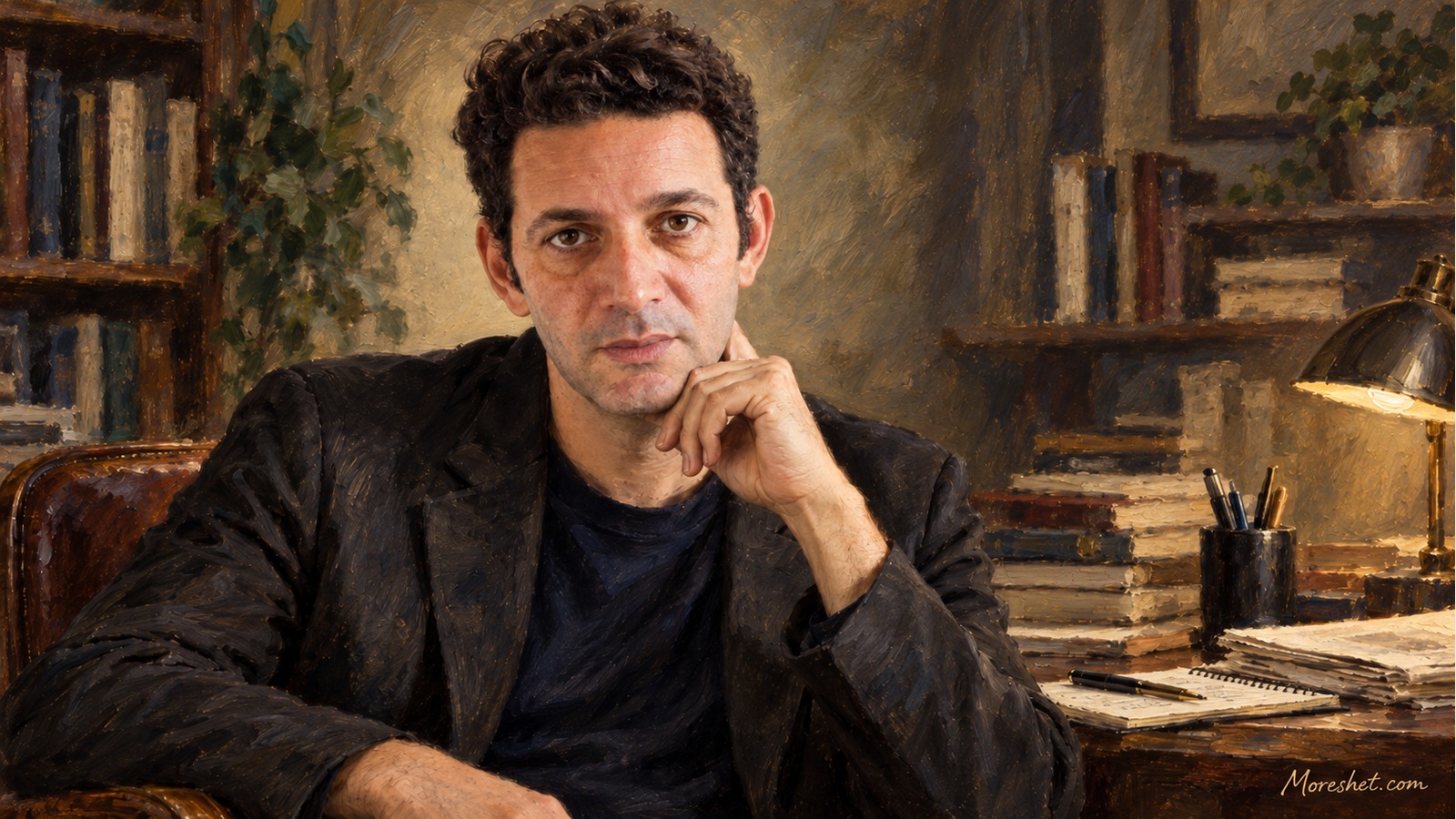
Gidi Weitz — AI-generated artistic portrait · Moreshet.com
An investigative journalist who strengthened public accountability in Israel
Gideon “Gidi” Weitz, born on March 19, 1975, is an Israeli journalist known for investigative reporting on public corruption, relations between wealth and power, and the accountability of public institutions and officeholders. Over the course of his career, he worked in several of Israel’s leading newsrooms, founded and headed the investigative department at Haaretz, and received both the Knight of Quality Government award and the Sokolov Award for written journalism.
Entering journalism
Weitz is the son of historian Yehiam Weitz. He was named after his father’s friend, Gideon “Gidi” Dvorksy, a recipient of the Medal of Valor who was killed in the Yom Kippur War. This connection to personal memory, Israeli history, and public service forms part of his background, but his professional reputation was built through his own work as a reporter and investigator.
In 1994, Weitz began his military service as a writer for the Israel Defense Forces weekly magazine BaMahane, leaving the publication in 1996. After his military service, he worked for approximately five years at Kol HaIr. In 2002, he joined Yedioth Ahronoth, where he worked as an investigative reporter and wrote for the widely read 7 Days supplement. The experience gave him extensive practice in developing investigations and presenting them to a broad audience.
Building investigative journalism at Haaretz
Weitz joined Haaretz in 2006. In 2010, he established the newspaper’s investigative department and became its head. This was an important institutional contribution: rather than treating investigative reporting as an occasional achievement by an individual journalist, the department gave sustained, organized attention to reporting that examines how decisions by powerful people and institutions affect the public.
Investigative journalism of this kind depends on documents, corroborated accounts, careful source work, and the ability to present complex findings in a form that the public can examine. Through this work, Weitz helped reinforce the Israeli press’s role as a mechanism for oversight of government, business, and other centers of influence.
In 2008, he said that while working at Yedioth Ahronoth he had encountered cases in which investigations were delayed because of the interests of a publisher or editor. His testimony contributed to a broader discussion about the tension between journalistic independence and the ownership and management structures of news organizations, as well as the conditions required for a free and responsible press.
Journalism, documentary film, and public memory
In 2011, Weitz co-created the documentary film A. Kill Them (א' תחסל אותם) with director Levi Zini, producer Mosh Danon, and Nadav Eshed. The film examined the Route 300 affair and was broadcast on Channel 10. It extended his work beyond the written press and demonstrated how investigative reporting can also reach audiences through documentary film.
The Route 300 affair raises enduring questions about authority, governmental responsibility, public trust, and the limits of power. Addressing it through documentary helped preserve the affair’s place in Israeli public memory and made its history accessible to viewers who had not experienced the events directly.
Recognition and public contribution
In 2013, Weitz received the Knight of Quality Government award for his work as a journalist and investigator seeking a public system free of corruption. The award recognized a central feature of investigative journalism: it does more than publish information. It can influence the quality of government, institutional transparency, and citizens’ ability to examine the conduct of those who exercise authority.
In 2015, Weitz received the Sokolov Award in written journalism, one of Israel’s major professional honors for journalists. The award reflected his standing as a journalist associated with sustained, methodical investigative work and with reporting on integrity in public life and the distribution of power.
In October 2015, Weitz reported allegations that the Netanyahu family had received preferential treatment from the Walla! website. The matter later became part of Case 4000. In 2019, the attorney general announced a decision to indict Benjamin Netanyahu on a bribery charge, subject to the legal process and the evidence presented in the case. Weitz’s role in this context was journalistic: raising questions and examining possible relationships among wealthy owners, media organizations, and elected officials. The legal conclusions belong to the judicial process.
Journalistic independence in the public sphere
In December 2021, Weitz was briefly detained by police during an event despite identifying himself as a journalist. He was released several hours later without being questioned. The incident highlighted the tension that can arise between journalists working in public spaces and law-enforcement activity, as well as the importance of recognizing journalism’s role in public life.
Personal life
Weitz shares his life with his partner, director Netta Shoshani, and they have one child together.
Why this legacy belongs in Moreshet
Gidi Weitz merits inclusion in Moreshet because he spent decades making journalism a practical instrument of public accountability. His work at Kol HaIr, Yedioth Ahronoth, and Haaretz, his creation of an investigative department, and his documentary about the Route 300 affair connect reporting, civic scrutiny, and Israeli historical memory.
His Knight of Quality Government award and Sokolov Award document professional recognition, but his deeper significance lies in the public function of his work: bringing information to citizens, subjecting powerful actors to examination, and reinforcing the idea that an independent press is essential to democratic society. For these reasons, and because his career forms part of the history of contemporary Israeli journalism, Moreshet.com preserves his story as part of Israel’s civic and cultural heritage.