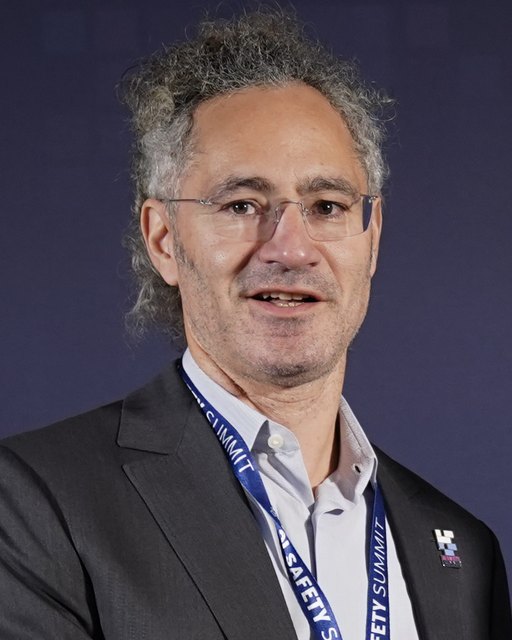
Esther Barak-Landes
Israeli lawyer, entrepreneur and venture investor who helped build technology companies and advance women into positions of economic leadership
Esther Barak-Landes (born September 13, 1965) is an Israeli lawyer, entrepreneur and venture-capital investor whose career has encompassed startup finance, technology incubators, international business partnerships and institutional service. After leaving legal practice for the technology sector, she became involved in identifying founders, structuring investments and helping early-stage companies develop into viable businesses. Over the years, her investment activity has been associated with approximately 70 startups, including companies that reached public markets or were acquired by major international corporations.
Barak-Landes has also worked to increase women's participation in business leadership and investment decision-making. Her involvement with programs for emerging female leaders, a network of women investors, cultural academies and philanthropic initiatives reflects a career built not only around individual companies, but also around the professional and institutional networks that sustain Israeli innovation.
From Jerusalem and the law to technology
Barak-Landes was born and raised in Jerusalem, the second of four children. Her parents are Aharon Barak, who served as president of Israel's Supreme Court, and Elisheva Barak-Ososkin, who served as vice president of the National Labor Court. She attended the Hebrew Gymnasium in Jerusalem's Rehavia neighborhood before studying law at Tel Aviv University.
She earned her law degree in 1992 and spent approximately nine years working as an attorney at a large firm. That training remained relevant after she changed professions: venture investing requires close attention to contracts, ownership, risk, corporate structures and negotiations, as well as an ability to assess how legal and commercial decisions will affect a young company.
In 2000, Barak-Landes moved into the Israeli high-tech sector, initially working at a small startup. The transition took her from advising businesses to participating directly in the decisions that determine which technologies receive capital and how young companies are built. In 2005, she completed an MBA specializing in entrepreneurship at the Interdisciplinary Center Herzliya, now Reichman University. That year, she also helped establish Israel Angels, a club connecting private investors with early-stage ventures.
Investing in Israel's startup economy
Partam High-Tech and a portfolio of growing companies
In 2007, Barak-Landes was appointed to manage Partam High-Tech, the investment company associated with businessman Yigal Ahouvi. During roughly seven years in the role, she led investments in about 30 companies and partnerships. Her work involved evaluating technologies and business models, assessing founding teams, structuring transactions and supporting companies after capital had been committed.
The portfolio in which she participated included several companies that illustrate the international reach of Israeli technology. Online gaming company Playtika was sold for approximately $125 million less than a year after its establishment. Storwize, which developed technology for optimizing data storage, was acquired by IBM in a transaction reported at the time to be worth about $140 million. Prolor Biotech reached the New York public markets, while computational biology company Evogene was listed in Tel Aviv and later in the United States. Other investments included fintech company Payoneer and software company WhiteSmoke.
Such outcomes matter beyond the value of an exit or public offering. Successful startups create employment, train engineers and managers, attract international capital and often produce founders who go on to establish or finance additional businesses. For companies emerging from a relatively small domestic market, experienced investors can provide essential access to corporate partners, prospective customers and global networks.
Nielsen Innovate and the earliest stage of company building
From 2013 to 2017, Barak-Landes managed Nielsen Innovate, a technology incubator established in cooperation with the global Nielsen company. An associated investment fund was reported to manage approximately NIS 100 million. Partners and investors connected with the fund included Yigal Ahouvi, Ronald Lauder, former Citigroup and Time Warner chairman Richard Parsons, and former Estée Lauder president and chief executive Fred Langhammer.
The incubator worked with companies at the beginning of their development, when founders may have promising technology but still lack a mature product, customers, an effective commercial structure or experience raising capital. This environment allowed Barak-Landes to combine her legal, managerial and investment backgrounds. After her period as chief executive, she was also documented as serving as a director and a member of the fund's investment committee.
Creating entrepreneurial networks
In 2019, Barak-Landes established an OpenValley shared workspace in Caesarea with Yossi Ackerman and Ofir Dubovi. The project was designed to provide entrepreneurs with workspace, professional connections and access to a business community outside Israel's principal high-tech centers in Tel Aviv and Herzliya. Initiatives of this kind can help distribute opportunity by connecting founders in additional regions with industrial companies, investors and experienced executives.
She was also an entrepreneurial partner in millionsteps, an initiative promoting technological cooperation between Israel and Japan. These bridges are particularly valuable to Israeli companies, whose growth frequently depends on their ability to enter distant markets, understand different business cultures and develop trusted local partnerships.
In February 2019, Barak-Landes was appointed a senior adviser to Asana Bio Group, a holding company involved in medical cannabis research and development. The group also held Gynica, which focused on cannabis-based developments relating to women's health. In 2023, she established Flora Ventures, a venture fund intended to invest in agritech and food-tech companies. This field connects startup investment with urgent global needs, including food security, agricultural efficiency, resource conservation and more resilient food systems.
Advancing women as leaders and investors
A consistent element of Barak-Landes's public and professional work has been the advancement of women in business and high technology. The obstacles women encounter in these fields are not limited to recruitment. They also concern access to investment capital, board seats, managerial experience, professional networks and opportunities to become investors or company founders.
Barak-Landes served as president of ProWoman, an organization that introduces female students to accomplished women in leadership positions and helps them begin building professional networks. She was also documented as a member of the investment committee of Neomi, an initiative for women investors. Encouraging women to participate on the capital-allocation side of the industry is especially consequential: the people around an investment table influence which ideas receive funding, which markets are taken seriously and which founders are given the opportunity to build companies.
Her contribution in this area lies in linking advocacy with practical structures. Rather than treating equality solely as an aspiration, the initiatives with which she worked offered participants exposure, professional relationships, experience and access to capital—the concrete resources through which lasting career advancement becomes possible.
Institutional and philanthropic service
Barak-Landes has held positions in cultural, financial and philanthropic bodies. She was documented as a member of the governing boards of the Bezalel Academy of Arts and Design and the Jerusalem Academy of Music and Dance. Both institutions have helped educate generations of Israeli artists, designers, musicians and dancers, making their governance significant to the country's cultural development.
She also served as an external director at Makefet and as a member of the investment committee of Migdal Insurance. These responsibilities differ from early-stage venture investment: they involve oversight of institutions managing long-term savings and financial interests on behalf of a broad public. Barak-Landes was additionally documented as a managing director of the philanthropic Ima Foundation, extending her experience in allocating resources from commercial investment to social purposes.
Why this legacy belongs in Moreshet
Esther Barak-Landes merits inclusion in Moreshet because her work demonstrates how capital, management and professional networks can translate Israeli innovation into functioning companies with international reach. She participated in investments across dozens of startups, helped guide companies that reached acquisitions and public markets, managed an early-stage technology incubator and later turned her attention to technologies addressing the future of food and agriculture.
Her relevance to Israeli and Jewish life extends beyond business transactions. By promoting women as executives, entrepreneurs and investors, she worked to broaden participation in centers of economic decision-making. Her service to cultural academies, international cooperation initiatives and a philanthropic foundation also connected Israel's technology economy with the society and institutions around it.
Moreshet and Moreshet.com preserve her story as part of contemporary Israeli heritage because it records the creation of opportunities and professional communities, not merely personal success. Barak-Landes belongs to a generation that helped consolidate Israel's place in the global technology economy while seeking to widen access to leadership, capital and creative endeavor. The enduring results can be seen in companies developed, careers created, founders supported and networks built for those who followed.