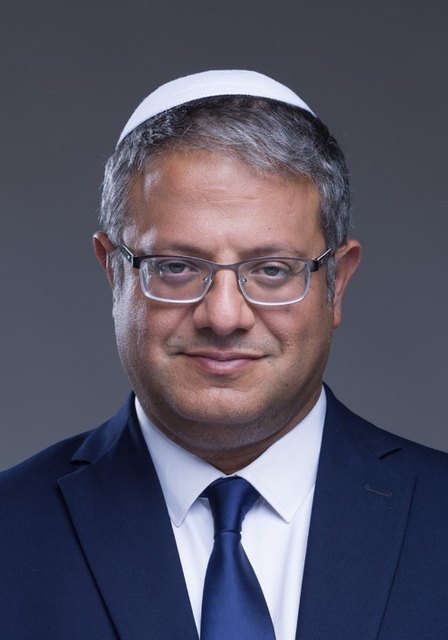
Ernst David Bergmann
Chemist and institution builder who helped establish Israeli scientific capacity
Ernst David Bergmann (1903–1975) was an organic chemist who helped turn the ambition for advanced science in Palestine into laboratories, training and institutions. He combined productive research with leadership at the Sieff Institute, in Israel’s defense research system and at the Hebrew University. His career helps explain how a small society built independent scientific capacity.
From Berlin to Rehovot
Born in Germany into a rabbinical family, Bergmann studied chemistry in Berlin under Wilhelm Schlenk, investigating organic compounds and their reactions. Dismissed under Nazi legislation in 1933, he worked with Chaim Weizmann in London before moving to Palestine in 1934. He became the first scientific director of the Daniel Sieff Institute in Rehovot, the predecessor of the Weizmann Institute of Science.
Creating the conditions for research
Bergmann continued publishing in organic chemistry while building a research environment: equipment, trained colleagues, partnerships and international connections. This required selecting directions that could be sustained over time. He helped connect expertise brought from Europe with the needs of the Jewish community and, later, the new state.
After Israel’s establishment, he participated in building defense research capabilities and served as a scientific adviser to David Ben-Gurion. From 1952 to 1966 he was the first chairman of the Israel Atomic Energy Commission. He also taught organic chemistry at the Hebrew University and trained researchers. The Israel Prize awarded to him in 1968 recognized his contribution to science.
Why this legacy belongs in Moreshet
Moreshet includes Bergmann because scientific heritage is also built by people who make other researchers’ work possible. Moreshet.com records the connection between Jewish scientific knowledge displaced from Europe, original research and institutional development in Israel. His influence extended beyond any one publication or term of office into the capacity of later generations to investigate new questions.