Eli Ohana
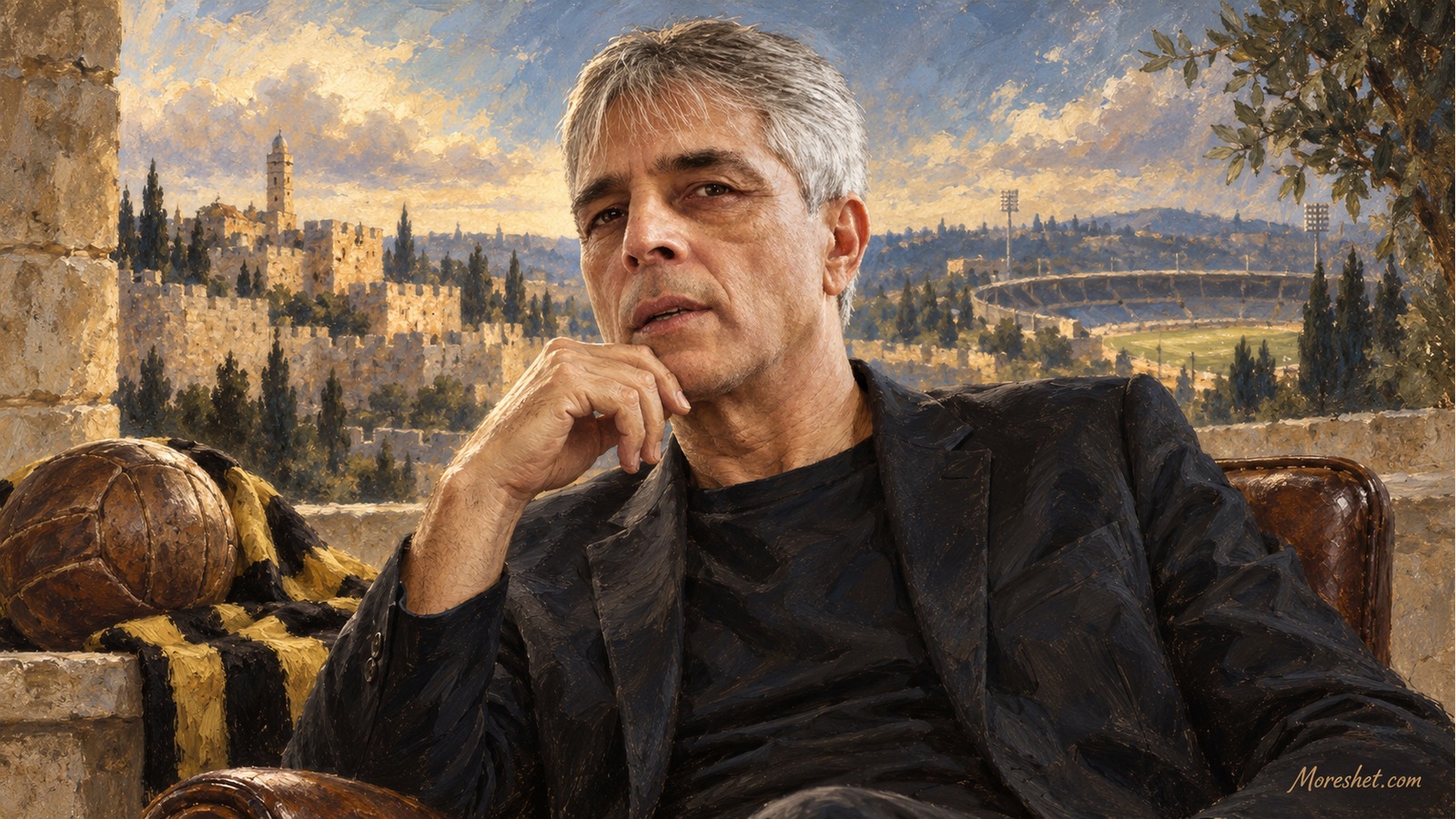
Eli Ohana — AI-generated artistic portrait · Moreshet.com
Beitar Jerusalem icon, European champion with Mechelen and one of Israel’s greatest footballers
Eli Ohana, born in Jerusalem, is one of the most accomplished footballers in Israeli history and one of the figures most closely identified with Beitar Jerusalem. A gifted forward and attacking midfielder, he was known for his pace, creativity and ability to score in decisive moments. He won four Israeli league championships and two State Cups with Beitar, helped Belgian club KV Mechelen win the European Cup Winners’ Cup, and became the first Israeli footballer to win a major European club title. After retiring as a player, he continued to shape Israeli football as a coach, administrator and commentator, becoming part of the country’s shared sporting and cultural memory.
From Jerusalem youth football to the international stage
Ohana was born on February 1, 1964, to a Moroccan-Jewish family that immigrated to Israel in 1955. The family first lived in a transit camp in Haifa, then in Kiryat Shmona, and eventually in Jerusalem’s Kiryat HaYovel neighborhood. His parents, Masoud and Rachel, raised nine children and ran a cafeteria at the Jerusalem office of the Ministry of Health. This background is central to understanding his rise: Ohana did not emerge from an elite sporting system, but from a large immigrant family and a working-class Jerusalem environment. Football became his path to achievement and a source of identification for many others.
At the age of 12, after passing a tryout at Jerusalem’s Gan Sacher, he joined Beitar Jerusalem’s youth team. He began as a midfielder and gradually became a left-sided forward. Under youth coach David Dוידוב, he won a youth championship and was recognized as an exceptional prospect. During the 1980–81 season, when he was only 16, coach Aryeh Radler promoted him to the senior side. Although he scored four goals in his first season, he helped Beitar return to the top division.
Beitar Jerusalem: talent becoming leadership
Ohana’s major breakthrough came in 1983–84. At 20, he scored 14 goals, was named Israeli Footballer of the Year and led Beitar, alongside Uri Malmilian, Avi Cohen, Hanan Azulay and Sami Malka, into the title race. The following season, he scored 16 league goals and decided the State Cup final against Maccabi Haifa, scoring in the 85th minute to give Beitar its third cup. In 1986 he scored again in a final, helping Beitar defeat Shimshon Tel Aviv 2–1.
In 1986–87, Ohana helped Beitar win the first league championship in the club’s history. After returning from Europe, he remained the team’s central attacking force. In 1991–92 he scored 17 goals to help Beitar return to the top division; in 1992–93 he contributed 14 goals to another championship; and in 1996–97 and 1997–98 he helped the club win consecutive league titles. He finished his Beitar career with 345 league appearances and 142 goals, and remains the club’s leading scorer in league play and across all competitions.
Israel’s first major European club champion
In 1987, Ohana moved to KV Mechelen in Belgium. During the 1987–88 season he became part of one of the most important achievements by an Israeli footballer in Europe: Mechelen won the European Cup Winners’ Cup. Ohana scored in the semifinal and assisted the winning goal in the final against Ajax Amsterdam. He thus became the first Israeli to win a major European club title and demonstrated that an Israeli player could be decisive for a leading European side.
The following season he helped Mechelen win the Belgian championship, the club’s first in 41 years, and also won the Joan Gamper Trophy in Barcelona and the European Super Cup. In 1988 he received the Bravo Award, presented to Europe’s outstanding young player, and remains the only Israeli to have won it. After a less successful spell with Sporting Braga, he returned to Israel. His European experience enriched not only his own career but also the public belief that Israeli footballers could compete successfully at the highest international level.
The national team and unforgettable moments
Ohana played 51 matches for Israel over 13 years and scored 17 goals. His defining international moment came in the 1990 World Cup qualifying campaign against Australia. In the return match in Sydney, he rounded the goalkeeper, scored Israel’s opening goal and helped secure a 1–1 draw, sending Israel to a playoff against Colombia. The goal became one of the most recognizable moments in Israeli football. In 2009, it was selected as the most important Israeli goal in history in a poll connected with his induction into the Israeli Football Hall of Fame.
Ohana also represented Israel at the 1981 Maccabiah Games, where the team won a bronze medal. His achievements for club and country made him a symbol of Israeli presence on international sporting stages and gave generations of children the sense that a player from a local neighborhood could reach the center of world football.
Coach, administrator and mentor to the next generation
After retiring as a player, Ohana moved into coaching. He managed Beitar Jerusalem, Bnei Yehuda Tel Aviv and Maccabi Petah Tikva, and in 2006 took charge of Hapoel Kfar Saba. He helped keep the club in the top division during a difficult relegation battle and was named Israel’s Coach of the Year in 2007.
In 2008 he became manager of Israel’s under-19 national team. During his tenure, the team achieved success at the Maccabiah and qualified for the 2014 UEFA European Under-19 Championship. In 2010 he also served as caretaker manager of the senior national team. His work with youth teams extended his contribution beyond personal honors: he helped develop players and strengthen a pathway for the next generation of Israeli football.
Ohana remained connected with Beitar Jerusalem after his playing and coaching careers. From 2017 to 2022 he held senior administrative roles at the club, including chairman and professional director of the senior department. His presence provided continuity between the generation that made Beitar a national football power and the younger players and supporters who grew up with his achievements as part of the club’s identity.
The footballer who became a public figure
Since the late 1990s, Ohana has also worked as a football commentator and media personality, appearing on sports television, match-review programs and discussion panels. His experience as a player and coach allows him to explain the game to a broad audience while addressing the pressures placed on athletes and the meaning of club and national-team loyalty in Israeli society. In 2004 he was chosen to light a torch at Israel’s Independence Day ceremony, recognizing his place in the country’s public life.
His personal story gives his achievements an additional human dimension. He grew up in Jerusalem in a large immigrant family, endured a devastating personal loss in his youth, and built a career spanning playing, coaching, administration and broadcasting. His path made him more than a football star: he became a figure associated with perseverance, opportunity and the ability to turn local talent into lasting public influence.
Why this legacy belongs in Moreshet
Eli Ohana merits inclusion in Moreshet because his achievements document a defining chapter in the development of Israeli sport. He was Beitar Jerusalem’s leading star and all-time leading scorer, an Israeli champion, a European Cup Winners’ Cup winner and a national-team player who decided matches of national significance. His career showed Israelis that their athletes could excel in Europe and play a decisive role in international competition.
His importance extends beyond goals and trophies. The journey of a Jerusalem-born son of Moroccan immigrants to the summit of football offered a model of ambition and achievement to generations of young people, particularly children from immigrant and Mizrahi families who saw him as both extraordinary and close to home. Through his playing career, youth-team work and leadership at Beitar, he influenced players, supporters and entire communities. Moreshet and Moreshet.com preserve his story as part of Israel’s living Jewish heritage: a heritage of talent, effort, belonging and achievements that became part of the public memory.