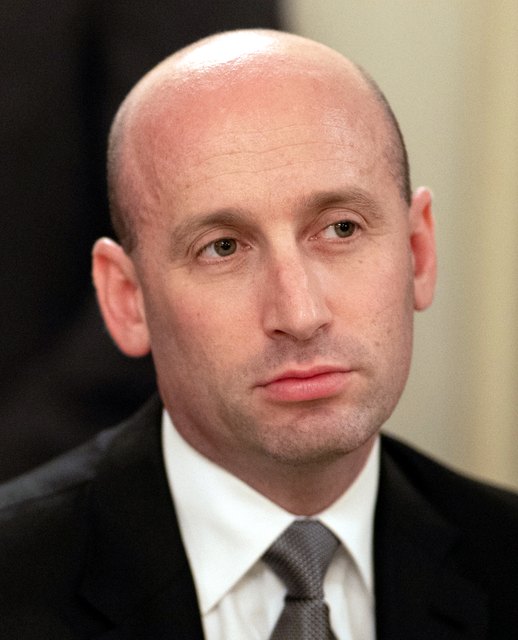
Ehud Barak
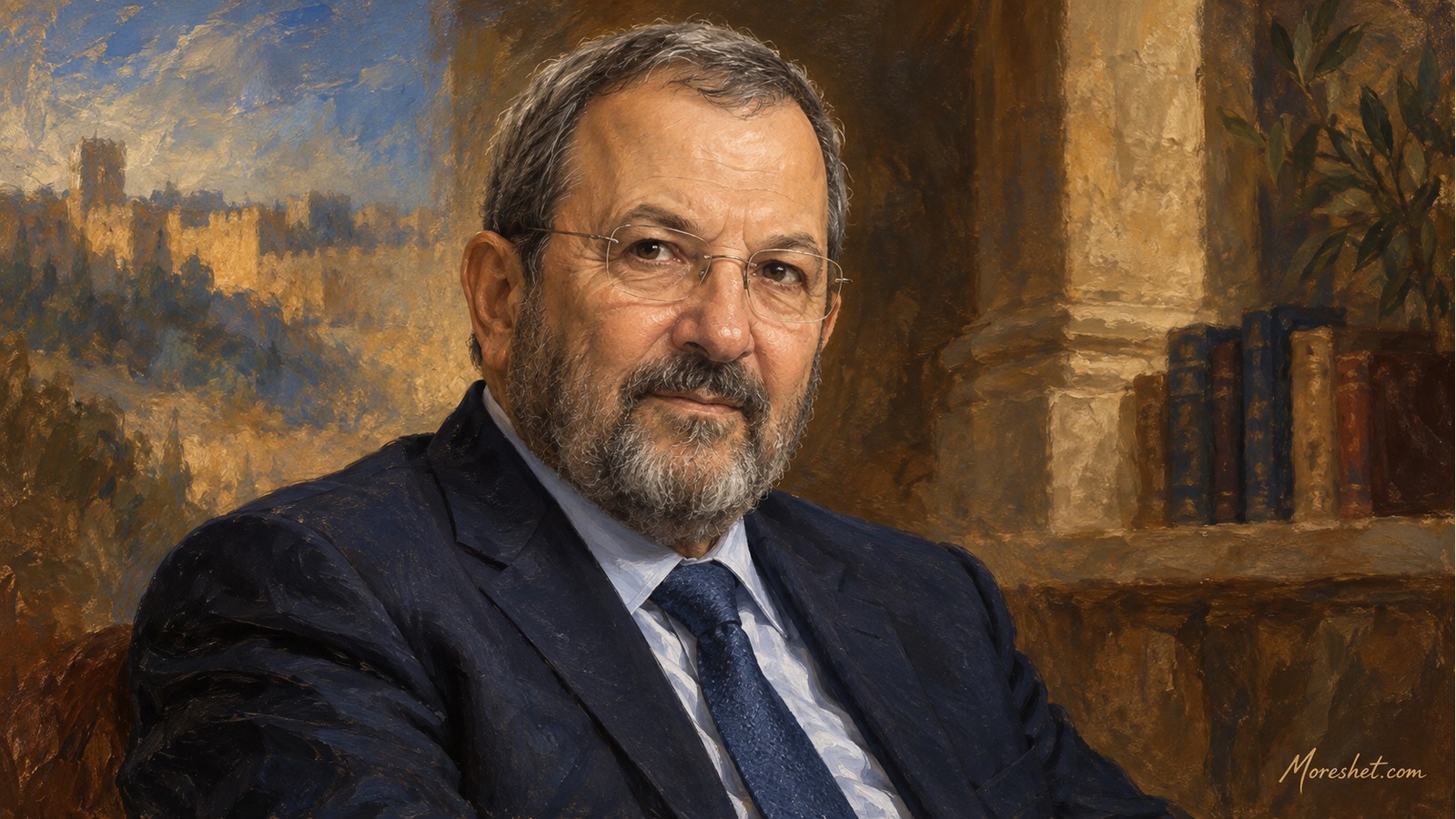
Ehud Barak — AI-generated artistic portrait · Moreshet.com
Israel’s 14th Chief of the General Staff, tenth prime minister, defense minister, commando commander and statesman whose career crossed decisive moments in Israel’s security, Lebanon withdrawal and pursuit of peace
Ehud Barak, born Ehud Brog, is an Israeli soldier-statesman, former prime minister, former minister of defense, former foreign minister and the 14th Chief of the General Staff of the Israel Defense Forces. Across more than five decades, he stood at major junctions in Israeli security and policy: from Sayeret Matkal and daring special operations, through armored and intelligence commands, to the chief of staff’s office during the Oslo process and the peace treaty with Jordan, and finally to the premiership, where he withdrew Israeli forces from southern Lebanon and tried to reach agreements with the Palestinians and Syria.
Barak is one of the defining Israeli figures of the post-founding generation: a kibbutz-born commander from Mishmar HaSharon, one of the most decorated soldiers in IDF history, and later a political leader who governed the country during a short but dramatic period. His importance to Jewish and Israeli heritage lies not only in the offices he held, but in the questions his career embodies: how a small state defends itself in a hostile region, how military force and diplomacy can be combined, how a leader decides on withdrawal, how responsibility is carried in war and peace, and how former leaders continue to argue over the future of the state after leaving office.
Mishmar HaSharon, family roots and early Israeli identity
Ehud Barak was born on February 12, 1942, on Kibbutz Mishmar HaSharon, under the name Ehud Brog. He was the eldest of four children of Esther, née Godin, and Yisrael Mendel Brog. His family story joined Zionist pioneering with the traumas of European Jewry. His paternal grandparents were murdered in Lithuania in 1912, and his father immigrated to Palestine in 1930 and became one of the founders of Mishmar HaSharon. His mother was born in Warsaw to a Chabad Hasidic family, was active in the Gordonia youth movement, immigrated to Palestine in 1936, and lost her parents in the Holocaust at Treblinka.
The kibbutz world in which Barak grew up belonged to Labor Zionism: agriculture, collective responsibility, material modesty and the belief that public contribution formed a person’s civic and national character. At the age of seventeen, instead of completing his final year of high school, he was sent by the kibbutz to work on a tractor in the fields of Moshav Patish in the Negev. The episode is small but revealing. It shows the world from which he came: a society that treated work, discipline, adaptation and service to the collective as part of Zionist education.
Later, Barak acquired a precise scientific education: a bachelor’s degree in physics and mathematics from the Hebrew University of Jerusalem and a master’s degree in systems analysis from Stanford University. The combination of kibbutz life, mathematics, physics, intelligence and special operations helped shape his public image as an analytical problem solver, a cool operational planner and a person inclined to break complicated situations into practical components.
Sayeret Matkal and the making of a commander
Barak enlisted in the IDF on November 8, 1959. After several months he was identified by Avraham Arnan and recruited into the emerging Sayeret Matkal, which would become one of Israel’s most important elite units. He trained as a fighter, attended infantry officers’ course, completed it with distinction and returned to the unit as an operational team commander. In the unit’s early operations, he took part in special intelligence missions deep in enemy territory, including the planting of listening devices in Syria and Egypt.
During the 1960s, Barak developed inside the world of covert IDF operations. He combined personal courage with precise planning, operational discipline and improvisational ability. He attended a commando course in France, continued participating in Sayeret Matkal operations as a reservist after a temporary release from regular service, and rose within the unit’s command structure. During the Six-Day War he commanded a team of veteran Sayeret Matkal reservists attached to armored forces in Sinai and later on the Golan Heights.
During the War of Attrition he also trained in armor and served as a tank company commander in the 401st Armored Brigade on the Suez Canal front. The movement between a small commando unit and armored warfare placed him in two different military worlds: the world of small, secret and exact operations, and the world of large conventional war. Both would become essential to his later career.
Commander of Sayeret Matkal and operations that entered Israeli memory
On April 1, 1971, Barak took command of Sayeret Matkal. During his time as commander he led and participated in several operations that became part of Israel’s security mythology. In May 1972 he commanded the operation to retake Sabena Flight 571, hijacked and brought to Lod Airport. The commandos approached the aircraft disguised as technicians in white overalls, stormed it and freed the hostages. The operation became a symbol of Israel’s ability to combine intelligence, speed, deception and precision.
In June 1972 he commanded Operation Crate, in which Syrian army officers were captured for bargaining purposes. In April 1973 he took part in Operation Spring of Youth in Beirut, in which Israeli forces struck Palestinian terrorist leaders. Barak became known in that operation for disguising himself as a woman, a detail that entered the mythology of his operational career but is not the main point. The main point was the ability to lead Israeli forces into a complex and distant mission in a hostile urban environment, using intelligence, deception and bold execution.
During his service Barak received the Medal of Distinguished Service and four Chief of Staff citations, sharing with Nechemya Cohen the unofficial status of one of the most decorated soldiers in IDF history. The decorations are not merely a list of honors. They express Barak’s place in shaping the Israeli image of the soldier-commander: a field officer, planner of operations, ready for personal risk, yet also someone who sees military action as part of a wider national-security system.
The Yom Kippur War, armor and senior command
In August 1973 Barak traveled with his family to Stanford University in the United States, and before leaving he Hebraized his surname from Brog to Barak. When the Yom Kippur War broke out two months later, he returned to Israel and commanded an improvised tank battalion, Battalion 100, formed quickly upon his arrival. The battalion fought on the Egyptian front and helped rescue soldiers and casualties in the battles around the Chinese Farm.
After the war Barak was promoted to colonel and commanded the 401st Armored Brigade and the tank commanders’ course. He later held positions in Military Intelligence, was among the planners of the Entebbe rescue operation, and during the operation itself was sent to Kenya to supervise arrangements for refueling the aircraft on their way back from Uganda. His role in Entebbe again shows the area in which he operated: not only the fighter at the front, but the planner and coordinator whose work enables a mission to succeed.
In 1978 he completed his master’s degree at Stanford with distinction, returned to Israel and was promoted to brigadier general. He commanded the Pillar of Fire reserve armored division and then the Sinai Division. In this stage he moved gradually from command of small and special units toward large forces, maneuver, systems planning and senior general staff work.
Major general, head of Military Intelligence and deputy chief of staff
On December 1, 1981, Barak was promoted to major general and appointed head of the IDF Planning Directorate. During the First Lebanon War he also served as deputy commander of the northern corps. In 1983 he became head of the Military Intelligence Directorate, one of Israel’s most sensitive systems: the institution charged with understanding enemy intentions, the regional arena, the limits of power and hidden risks before they erupt.
In 1986 he was appointed head of Central Command. During his command, the special counterterrorism unit Duvdevan was established for operations in Judea and Samaria. Barak then became deputy chief of staff. During these years he was involved in planning Operation Show of Force in 1988, in which Abu Jihad was killed in Tunisia, and remained a central figure in deep operations and thinking about Israeli responses to distant threats.
During the 1991 Gulf War, when Iraqi Scud missiles struck Israel’s civilian rear, Barak dealt with IDF operational options and coordination with the United States and Jordan. Israel ultimately refrained from military action in Iraq, but the period highlighted a challenge that became central to Israeli security: how to deal with a distant threat, domestic public pressure and the wider considerations of alliances and international strategy.
The 14th Chief of the General Staff
On April 1, 1991, Barak was appointed the 14th Chief of the General Staff of the IDF, with the rank of lieutenant general. His tenure stood between war and peace: continued fighting against Palestinian terrorism and Hezbollah in southern Lebanon on one side, and unprecedented diplomatic processes on the other, especially the Oslo Accords with the Palestinians and the peace treaty with Jordan.
As chief of staff, Barak was responsible for implementing security aspects of Oslo I, including the withdrawal of IDF forces from Gaza and Jericho. He was also involved in shaping the military aspects of the Israel-Jordan peace treaty, and in 1994 met in Washington with Syrian Chief of Staff Hikmat Shihabi and Syrian ambassador Walid Muallem. This made him the first Israeli chief of staff to meet his Syrian counterpart, a step that symbolized the possibility that the military dimension itself could become part of diplomacy.
His term also included difficult events, among them the Tze’elim Bet training disaster, Operation Accountability in southern Lebanon, the response to the Cave of the Patriarchs massacre, the capture of Mustafa Dirani and the failed rescue attempt of kidnapped soldier Nachshon Wachsman. Together these events show the permanent tension of the Israeli chief of staff’s role: preparing the army for war, fighting terrorism, supporting diplomacy, carrying responsibility for soldiers and civilians, and standing under severe public criticism.
From army to politics: interior, foreign affairs and Labor leadership
Barak completed his term as chief of staff at the beginning of 1995, left the IDF in March, and after a short cooling-off period was appointed minister of the interior by Prime Minister Yitzhak Rabin in July 1995. After Rabin’s assassination, Shimon Peres appointed him foreign minister. In that role Barak took part in the Barcelona Conference, signed the Barcelona Declaration on behalf of Israel, held contacts with representatives of Arab states and visited Morocco, where he met King Hassan II and leaders of the local Jewish community.
In 1996 he was elected to the Knesset on the Labor Party list, and in 1997 he was elected party chairman. That year, before a special Labor Party conference in the development town of Netivot, he apologized in the name of the Labor Party and Mapai for mistakes he said had been made in the absorption of Jews from Middle Eastern and North African communities. The statement was an attempt to address one of Israel’s deep social wounds: the relationship between the historic Labor movement and Mizrahi Jews.
Barak’s move from the army into politics was not simple. He brought with him an image of security professionalism and decision-making ability, but politics also required trust-building, coalitions, listening, compromise and sustained work inside a divided society. The tension between the operational man and the political system would accompany his public career.
Prime minister: Lebanon withdrawal and the search for a comprehensive agreement
In May 1999 Barak won the direct election for prime minister, leading the One Israel list composed of Labor, Gesher and Meimad. He defeated Benjamin Netanyahu by a clear margin, and on July 6, 1999, his government was sworn in. In addition to serving as prime minister, he also held the defense portfolio. His term was the shortest of any Israeli prime minister, but one of the most intense.
His clearest security-policy achievement as prime minister was the withdrawal of the IDF from southern Lebanon on May 24, 2000, after twenty-two years in the security zone. The decision ended a long and painful chapter in IDF and Israeli social history, and deeply affected soldiers’ families, the Four Mothers movement, residents of northern Israel and the security establishment. Even those who criticized the way the withdrawal was carried out recognized that it changed Israeli public attitudes toward the cost of remaining in Lebanon.
At the same time, Barak tried to reach diplomatic agreements with Syria and the Palestinians. In January 2000, talks with Syria were held at Shepherdstown under American mediation, but ended without agreement. In the summer of 2000, Barak participated in the Camp David Summit with Yasser Arafat and U.S. President Bill Clinton, in an attempt to reach a permanent Israeli-Palestinian agreement. The talks failed, and the Second Intifada erupted afterward. In his legacy, Barak remains associated both with the willingness to go far in negotiations and with the heavy cost of the process’s failure and the violence that followed.
The Second Intifada, October 2000 and electoral defeat
The end of Barak’s premiership was marked by deep crisis. After the failure of Camp David and Ariel Sharon’s visit to the Temple Mount, the Second Intifada began. Israel faced terror attacks, shootings, the Ramallah lynching, the Madhat Yusuf affair, the collapse of trust between Israel and the Palestinian Authority, and a rapidly worsening sense of public insecurity.
At the same time, the October 2000 events occurred inside Israel. Thirteen Arabs, most of them Israeli citizens, were killed by police fire during violent demonstrations, and one Jewish civilian was killed by stone-throwing. The events shook relations between the state and its Arab citizens and led to the establishment of the Or Commission. The commission examined responsibility at different levels and also addressed Barak’s conduct as prime minister. This chapter is essential to understanding his legacy because it raises the question of a leader’s responsibility during a violent internal crisis.
In December 2000 Barak announced his resignation and called a special election for prime minister. In January 2001 the Taba talks were held in a final attempt to advance an agreement with the Palestinians, but they did not produce a signed settlement. In the February 2001 election, Barak lost to Ariel Sharon, resigned as Labor Party leader and from the Knesset, and announced his departure from political life.
Return to politics and defense minister, 2007–2013
After several years of business and advisory activity, Barak returned to politics. In 2007 he was again elected chairman of the Labor Party and was appointed defense minister in Ehud Olmert’s government; he later remained in the post in Benjamin Netanyahu’s government. His second period in the Defense Ministry came after the Second Lebanon War, when the IDF and political leadership were focused on restoring readiness, learning lessons and preparing for new threats.
As defense minister, Barak was involved in a series of major moves. In 2007 the Israeli Air Force struck the Syrian nuclear reactor. In 2008–2009 he led, as defense minister, Operation Cast Lead in the Gaza Strip, and in 2012 he held the post during Operation Pillar of Defense. He also dealt with the Iranian nuclear issue, deterrence, intelligence, the alliance with the United States, IDF readiness and decision-making under uncertainty.
In 2011 Barak left the Labor Party with several Knesset members and founded the Independence faction, a move that allowed him to continue serving as defense minister in Netanyahu’s government but drew severe criticism inside Labor. In 2012 he announced another retirement from political life, and in March 2013 he completed his term as defense minister.
Business, writing and a brief return to public politics
After leaving government, Barak worked in consulting, business and investment, and was later involved in technology, security-related and civilian companies. He served as a special adviser to financial bodies, joined corporate boards and was among the founders of the cyber company Toka. Like many former Israeli security leaders, he moved into a field where security experience, international networks and technology become part of business activity.
In 2018 he published his English-language autobiography, My Country, My Life: Fighting for Israel, Searching for Peace, presenting his life story as part of Israel’s larger story: wars, peace efforts, security, mistakes, achievements and dilemmas over the country’s future as a Jewish and democratic state. The book won the 2018 National Jewish Book Award in the autobiography and memoir category.
Ahead of the September 2019 Knesset election, Barak founded the Israel Democratic Party and then joined the Democratic Union list with Meretz and the Green Movement. The list entered the Knesset, but Barak himself was placed too low to receive a seat and did not return to parliament. Since then he has held no state office, but remains a visible public figure, sharp commentator and active participant in debates over security, democracy, law, government and Israel’s future.
A legacy of force, decision and the search for peace
Ehud Barak’s legacy is complex because it touches almost every charged junction of modern Israel: special operations, war, intelligence, Lebanon, Oslo, Jordan, Syria, the Palestinians, Gaza, Iran, the Labor Party, religion and state, and the struggle over Israel’s democratic character. It is not a legacy of simple consensus. It is a legacy of major decisions, real achievements, painful failures and continuing public argument.
As commander and statesman, Barak represented a central Israeli security view: advanced military power is necessary for the country’s survival, but it is not a substitute for a political horizon. He took part in some of the IDF’s boldest operations, yet also tried to reach agreements with Syria and the Palestinians. He withdrew the IDF from Lebanon, yet faced the outbreak of the Second Intifada. He served as defense minister during operations in Gaza and a period of growing concern over Iran’s nuclear program, while also writing and warning about the need to preserve Israel as both a Jewish and democratic state.
This figure matters because it illustrates the cost and responsibility of Israeli leadership. Barak was not only a daring soldier or former politician. He was a person who stood at points where the fate of the state, human lives, regional arrangements and Jewish-democratic identity meet. The debate over him continues not only because of his personality, but because of what his career asks: how Israel should use force, seek peace, protect its institutions and understand its historical responsibility.
Why this legacy belongs in Moreshet
Ehud Barak merits inclusion in Moreshet because he is one of the central Israeli figures whose influence is visible on the battlefield, in the general staff, in the Israeli government and in the public debate over the country’s future. From Sayeret Matkal to the chief of staff’s office, from the Lebanon withdrawal to Camp David, from the Defense Ministry to his writing on Israel and peace, his public life reflects the combination of security, Zionism, policy, state institutions and the search for a path in a dangerous region.
Moreshet.com documents Barak because Jewish and Israeli heritage includes not only the founding moments of the state, but also the generations that carried responsibility for defending it, governing it, making risky decisions and trying to shape its political future. Ehud Barak’s place in Moreshet rests on his cumulative contribution as fighter, commander, head of Military Intelligence, chief of staff, minister, prime minister, defense minister, author and public figure — a life path that passes through some of the most decisive questions facing the State of Israel and the Jewish people in recent generations.