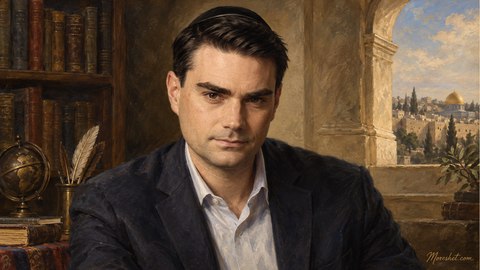
Danny Kaye
The Jewish-American entertainer who joined comedy, music, and humanitarian service on a global stage
Danny Kaye, born David Daniel Kaminsky, was one of the most distinctive Jewish-American actors, singers, dancers, and comedians of the twentieth century. His performances were marked by astonishing verbal speed, physical comedy, pantomime, musical precision, and an ability to move effortlessly between popular entertainment and classical music. His legacy, however, reaches beyond film and television. As UNICEF’s first ambassador-at-large, he turned the reach of an international celebrity into a practical instrument for raising awareness, funds, and public support for children around the world, while also bringing personal visibility and solidarity to Israel.
From Brooklyn to the international stage
Kaye was born in Brooklyn, New York, on January 18, 1911, the third son and only child born in the United States to Jacob and Clara Kaminsky, Jewish immigrants from Ukraine. As a boy, he entertained classmates with songs and jokes. After leaving Thomas Jefferson High School without graduating, he held a series of short-lived jobs before finding his way to the stage. He learned the craft of popular entertainment in the Catskills’ Borscht Belt, a Jewish resort circuit where comedians, singers, and master performers entertained broad working- and middle-class audiences.
In 1933 he joined the dance act the Three Terpsichoreans. During tours across the United States and Asia, he developed the expressive style that would define him. In Osaka, during a typhoon that cut the electricity and left the audience restless, he went onstage with a flashlight, lit his face, and sang every song he could remember. Experiences like this strengthened his ability to communicate through gesture, sound, facial expression, and rhythm even when audiences did not speak English. That talent became one of his greatest international assets.
In 1939 he appeared in the short-lived Broadway production The Straw Hat Revue and met Sylvia Fine, a pianist, lyricist, and composer who became his artistic and personal partner. They married in 1940. Fine wrote many of the songs and verbal routines that made Kaye famous, while he gave them their extraordinary pace, physicality, and theatrical force. Their collaboration shows that his success was not simply the product of individual charisma, but also of a sustained creative partnership.
Broadway and Hollywood stardom
Kaye’s breakthrough came in 1941, when he played Russell Paxton in Ira Gershwin and Kurt Weill’s musical Lady in the Dark. His signature number, Tschaikowsky (and Other Russians), consisted of a nearly impossible stream of Russian composers’ names delivered at breathtaking speed. The performance condensed the qualities that made him unique: intricate language, musical accuracy, physical acting, and a stage presence that transformed technical difficulty into comedy.
His first feature film was Up in Arms in 1944. Its success made Kaye one of Hollywood’s leading comedy stars. He appeared in 23 films, including Wonder Man, The Kid from Brooklyn, The Secret Life of Walter Mitty, The Inspector General, Hans Christian Andersen, White Christmas, The Court Jester, and Me and the Colonel. His roles ranged from clowns, dancers, and acrobats to characters with genuine dramatic depth. He repeatedly made mistaken identity, disguise, and double roles engines of inventive screen comedy.
In the 1952 film Hans Christian Andersen, Kaye played the Danish storyteller and helped turn songs such as “The Ugly Duckling” and “Thumbelina” into internationally familiar standards. The film brought Andersen’s imaginative world to large audiences, while Kaye demonstrated that a musical comedy could combine narrative, tenderness, and fantasy without losing the speed and lightness that defined his performance.
One of Kaye’s best-known routines involved “conversing” with an orchestra while imitating instruments and passages from the classical repertoire. Although he could not read music, he had an exceptional ear and learned many scores by listening. In later years he conducted orchestras around the world in benefit performances, raising more than five million dollars for musicians’ pension funds. The achievement revealed a side of Kaye that his comic persona could obscure: he was not merely pretending to be a musician, but had a real musical intelligence and a productive relationship with major cultural institutions.
Radio, television, and popular culture
Kaye expanded his reach through radio and television. The Danny Kaye Show, broadcast by CBS from 1945 to 1946, quickly became popular. His television series of the same name, hosted from 1963 to 1967, won four Emmy Awards and a Peabody Award. He also appeared in family and children’s programming, including The Muppet Show in 1978, and played Geppetto in Pinocchio and Captain Hook in Peter Pan.
His performances made language, music, and movement accessible to broad audiences. His tongue-twisting songs, exaggerated characters, and physical inventions moved easily among stage, film, radio, and television. In Israel, his routines reached new audiences through Hebrew performances, including versions associated with Tzipi Shavit. His influence therefore continued beyond the language and generation in which the original performances were created.
Jewish identity, Israel, and humanitarian service
Kaye was proud of his Jewish background and maintained a strong connection with Israel. He visited the country repeatedly on goodwill and solidarity missions. During the 1973 Yom Kippur War, he visited wounded Israeli soldiers in hospitals. He also conducted the Israel Philharmonic Orchestra several times in benefit concerts. These visits offered public and personal encouragement during a difficult period and connected the prestige of a Jewish-American star with Israeli cultural and social institutions. A street in Tel Aviv was named in his honor.
Kaye’s most extensive humanitarian work was carried out with UNICEF. In 1954 he became the organization’s first ambassador-at-large. The role was far more than ceremonial. He traveled widely, visited children in hospitals and impoverished communities, spoke to Western audiences about their circumstances, and helped generate donations and public attention. On one UNICEF mission, he flew a Learjet to 65 cities in five days.
Kaye gave UNICEF an unusual ability to make a distant and complex issue—the health and welfare of children in poor countries—immediate and emotionally understandable. He met children, families, and medical workers, performed for them, and used his fame to bring their needs into public discussion. His relationship with UNICEF lasted for decades, and the organization later commemorated him through an international children’s award.
Recognition and lasting legacy
Kaye received, among other honors, Golden Globe Awards, an honorary Academy Award, an Emmy Award, a Screen Actors Guild lifetime achievement award, and the Jean Hersholt Humanitarian Award from the Academy of Motion Picture Arts and Sciences. He has three stars on the Hollywood Walk of Fame, honoring his contributions to film, radio, and music. In 1983 Queen Margrethe II of Denmark appointed him a Knight of the Order of the Dannebrog, and in 1986 he was made a Chevalier of the French Legion of Honor for his UNICEF service. In 1987 he was posthumously awarded the Presidential Medal of Freedom by the United States.
Kaye died on March 3, 1987, at the age of 76. He was survived by Sylvia Fine and their daughter Dena, who became a journalist. Manuscripts, scores, scripts, photographs, recordings, and video materials relating to Kaye and Fine are preserved in the Library of Congress, allowing scholars to study the creative process behind some of the popular comedy and music of their era. Cultural institutions, streets, and UNICEF initiatives continue to bear his name.
Why this legacy belongs in Moreshet
Danny Kaye merits inclusion in Moreshet because he worked in several of the arenas that shaped Jewish and Israeli life and twentieth-century global culture. He emerged from the Jewish entertainment world of Brooklyn and the Catskills, brought the immigrant experience and a recognizably Jewish-American presence into mainstream American culture, and maintained pride in his heritage while becoming an international star. He then used that public position to visit Israel, meet wounded soldiers, and support the Israel Philharmonic Orchestra.
His significance is not limited to successful films or a long list of awards. Kaye showed how an artist could connect laughter with music, high culture with popular entertainment, and personal fame with public service. His UNICEF work affected the public understanding of children’s needs across the world, while his visits to Israel and his benefit performances gave concrete expression to Jewish solidarity during times of crisis. For these reasons, Moreshet.com preserves Kaye not only as a cinema and television star, but as a performer whose work influenced Jewish and Israeli cultural memory and whose humanitarian commitment reached far beyond the stage.