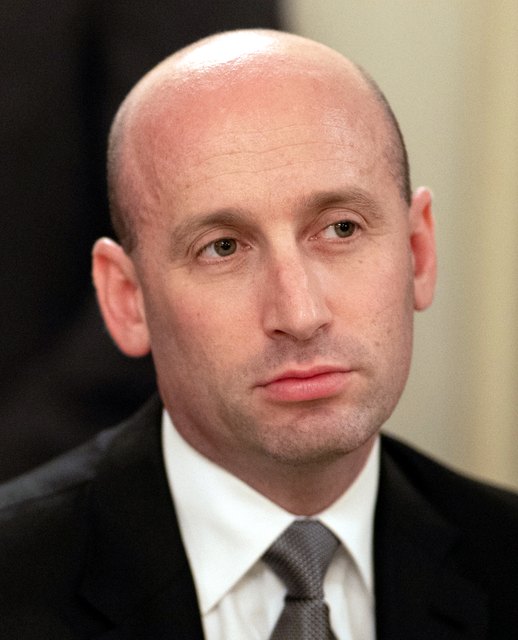
Shimon Peres
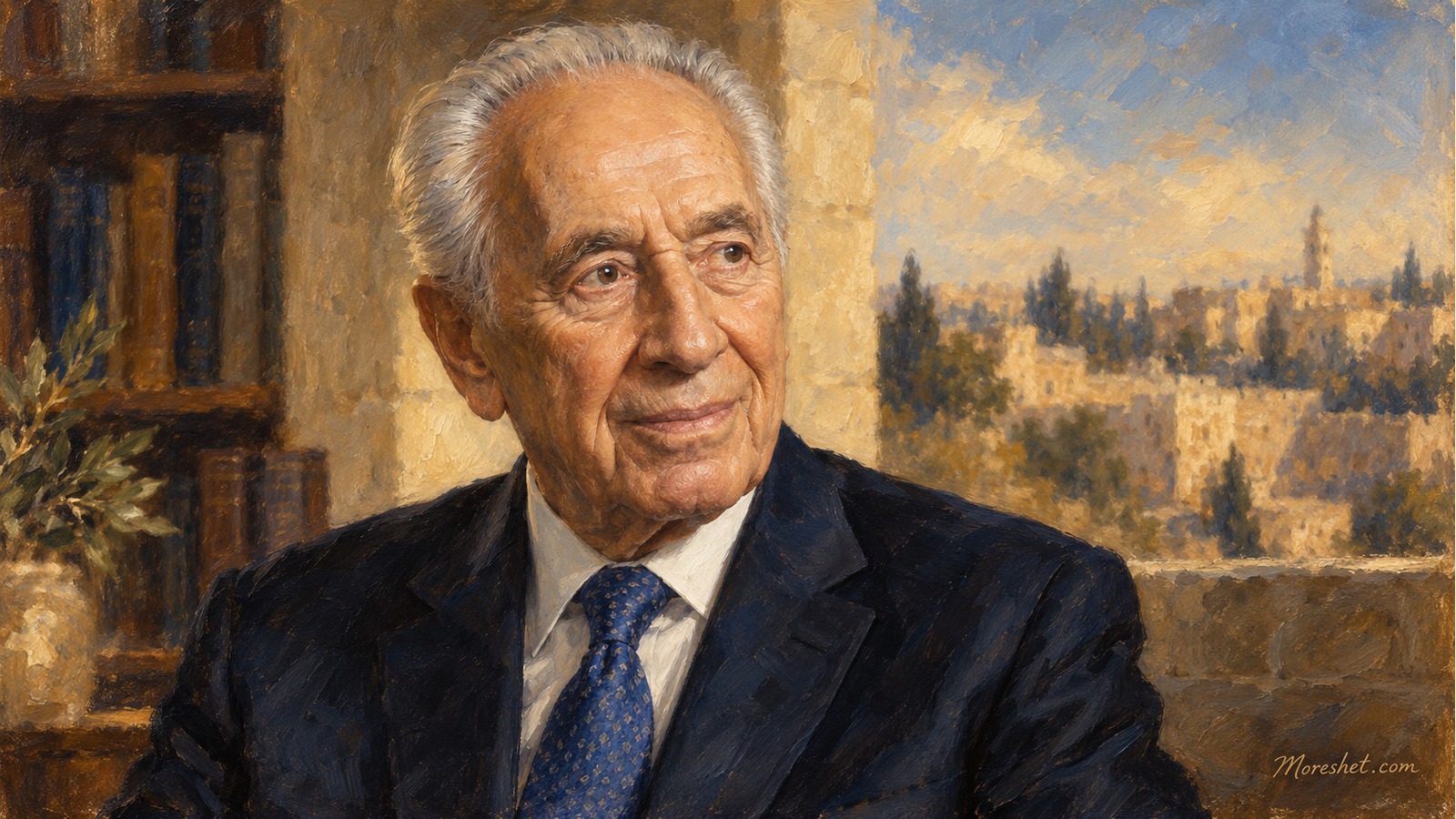
Shimon Peres — AI-generated artistic portrait · Moreshet.com
Israeli statesman, ninth President of Israel, Prime Minister, Defense Minister, Foreign Minister, builder of Israel’s security establishment, Nobel Peace Prize laureate and leading voice of Israeli innovation, diplomacy and peace
Shimon Peres, born Szymon Perski, was one of the central statesmen in the history of the State of Israel: its ninth President, its eighth Prime Minister in two periods, Minister of Defense, Minister of Foreign Affairs, Minister of Finance, a Knesset member for nearly half a century, a builder of Israel’s early defense establishment, a promoter of the peace process and a Nobel Peace Prize laureate. His public life stretched across almost the entire history of the state, from the Haganah and the Ben-Gurion era to a modern Israel of diplomacy, technology, innovation and global visibility.
Peres was unusual because he connected several foundational chapters of the Israeli story. He helped build military power, defense industries and strategic alliances; took part in creating institutions and technologies; led the government during a decisive economic stabilization; pursued regional diplomacy and peace agreements; and later served as a President who spoke of Israel as a Jewish, democratic, scientific and creative society. He was politically controversial at many points in his career, but even critics recognized that he was one of the architects of modern Israel and one of its best-known voices in the world.
Wiszniew, Ben Shemen and the promise to remain Jewish
Shimon Perski was born on August 2, 1923, in Wiszniew, then in Poland and now Vishnyeva, Belarus, to Yitzhak Perski and Sara, née Meltzer. The family spoke Hebrew, Yiddish and Russian at home, and he later learned Polish, English and French. His home was not strictly Orthodox, but his grandfather, Rabbi Zvi Hirsch Meltzer, linked to the Volozhin tradition, deeply shaped his Jewish memory. Peres later recalled that his grandfather introduced him to Talmud, Hebrew literature and a wider world of learning, and sent him on his way to the Land of Israel with the charge to remain Jewish.
His father immigrated to Mandatory Palestine in 1932, and Shimon, his mother and his brother Gershon followed in 1934. Many relatives who remained in Wiszniew were murdered in the Holocaust, including his grandfather, whom Peres remembered as having perished with other Jews in the town synagogue. That memory became more than private grief. It formed part of his conviction that Jewish sovereignty, self-defense and statehood were historical necessities.
In Tel Aviv he studied at Balfour School and Geula Gymnasium before moving to the Ben Shemen agricultural youth village. There he absorbed two elements that stayed with him throughout life: the pioneering ethos of work, settlement and public responsibility, and a love of language, poetry, speech and imagination. He became active in HaNoar HaOved VeHaLomed, joined the group that founded Kibbutz Alumot, worked as a dairy farmer, shepherd and treasurer, and began to stand out as a young organizer with unusual verbal and political talent.
From youth movement to the Haganah and the Defense Ministry
During the 1940s Peres rose in the leadership of HaNoar HaOved VeHaLomed and drew the attention of David Ben-Gurion, Berl Katznelson and Levi Eshkol. In 1946 he was among the young Mapai representatives to the Zionist Congress in Basel, and in 1947 Ben-Gurion and Eshkol brought him into the Haganah command, especially for personnel and arms procurement work.
During the War of Independence, Peres did not serve as a battlefield commander because his role remained inside the emerging Defense Ministry’s procurement and organization system. This fact followed him politically for years, but it also defines his distinct contribution: he helped build the force behind the army — equipment, relationships, budgets, industry, weapons systems and alliances. After independence he headed the Defense Ministry delegation in the United States, worked to obtain equipment and ammunition for the air force, and formed contacts that were essential to a poor and isolated young state.
During this period Peres worked with Al Schwimmer in ways that helped lead to the establishment of Israel’s aircraft maintenance and repair base, from which Israel Aerospace Industries later developed. This was one of the essential foundations of Israeli security: the ability not only to buy weapons abroad, but to maintain, improve, produce and eventually innovate at home.
A young director general and the building of Israeli security
In 1953, at about thirty, Peres became Director General of the Ministry of Defense. It was an extraordinary position for so young a man, but Ben-Gurion saw in him a discreet, daring and highly capable builder. Peres dealt with governments, defense industries and procurement networks, overcame diplomatic obstacles, and helped turn the Israel Defense Forces from a force born out of underground movements and emergency war into a modern military system.
His central contribution in the 1950s was the creation of the defense alliance with France. At a time when many countries avoided supplying Israel with advanced arms, Peres cultivated personal and institutional relationships in Paris that led to aircraft, tanks, radar, artillery and other equipment. These ties were crucial before the Sinai Campaign and gave Israel an important qualitative edge in its early years.
The same strategic path included Israel’s nuclear project. Peres was one of the central figures in advancing the French-Israeli agreement that led to the construction of the nuclear research center at Dimona, and he worked to secure resources and support for it. He saw advanced technology as an essential part of deterrence and national security. Alongside this, he helped develop defense industries, research and development bodies, and the scientific-industrial base that would accompany Israel for decades.
Sinai, France and the secret diplomacy of defense
During the Suez Crisis and the 1956 Sinai Campaign, Peres played a central role in the secret channels with France and Britain. He took part in the Paris contacts and the discussions that produced the understandings at Sèvres, on which the tripartite cooperation against Egypt was built. The campaign remained controversial internationally, but for Israel it temporarily strengthened deterrence, opened the Straits of Tiran and deepened the relationship with France.
This ability — to conduct secret defense diplomacy, work with foreign governments, understand military needs and translate them into agreements — became a hallmark of Peres’s career. He was not a uniformed general, but he was one of the people who made Israeli security a complex state system connecting policy, intelligence, industry, technology and economics.
In later years he also helped open defense channels with West Germany and strengthen the relationship with the United States, including the Hawk missile sale in the early 1960s. These moves helped change Israel’s position from a young state searching for arms wherever it could find them into a country with strategic relationships with major powers.
Knesset, Rafi and Labor
Peres was first elected to the Knesset in 1959 as a member of Mapai and was appointed Deputy Minister of Defense. He continued to work on defense development, industry and procurement while beginning his exceptionally long parliamentary career. Over the years he represented Mapai, Rafi, the Alignment, Labor and Kadima, but he remained fundamentally associated with Ben-Gurion’s statist Zionism: the belief that the Jewish state must be built through strong institutions, science, security and initiative.
His split with Ben-Gurion into Rafi in 1965 placed him for a time in opposition. After the Six-Day War, however, Peres worked for Rafi’s reunification with Mapai and Ahdut HaAvoda in the Israeli Labor Party. This revealed the practical side of his politics. Vision and ideology mattered to him, but he also understood that a state needs functioning parties, broad coalitions and the ability to return to the center of action.
In the late 1960s and early 1970s he served as Minister of Immigrant Absorption, Minister of Transportation and Minister of Communications. These posts expanded his work beyond security into the building of society: immigration, infrastructure, transportation, communication and the preparation of Israel for a more modern age. Even when he was identified mainly with defense and foreign policy, he saw the state as a continuing project of development.
Defense Minister, Entebbe and security in the 1970s
After the Yom Kippur War and Golda Meir’s resignation, Peres competed with Yitzhak Rabin for the leadership of the Labor Party. Rabin won, but appointed Peres Minister of Defense in his first government. This opened a long and tense rivalry, but also a government partnership in matters of great importance: rebuilding the IDF after the war, managing regional negotiations, shaping policy in the territories and confronting international terrorism.
One of the defining moments of that period was Operation Entebbe in July 1976. After the hijacking of an Air France plane and the transfer of hostages to Uganda, Peres was among those pressing for the preparation of a daring military option. The final decision was taken by the government led by Rabin, and the rescue became one of the great symbols of Israel’s courage, planning and commitment to the lives of its citizens and of Jews under threat. For Peres, Entebbe expressed a core principle: a sovereign Jewish state does not abandon Jews and Israelis to terrorists and hostile regimes.
As Minister of Defense, Peres also dealt with deep and difficult political questions, including the future of the territories captured in 1967 and the policy toward settlement. His positions changed over time. In the earlier period he was seen as an activist security figure and a supporter of wide settlement; later he became one of the symbols of diplomatic agreements, territorial compromise and regional peace. That transition is central to understanding his legacy.
Political defeat, opposition and the road to leadership
In 1977, after Rabin stepped aside following the foreign-currency account affair, Peres became leader of the Labor Party and led it into the election that produced Israel’s historic political turnover. Likud under Menachem Begin came to power, and Labor lost the hegemony it had held since the founding of the state. Peres became Leader of the Opposition and had to lead a wounded party through a society that was changing socially, politically and culturally.
In those years he ultimately supported the Camp David Accords and the peace treaty with Egypt, even though he initially advocated a more cautious and gradual approach. He tried to preserve Labor as a responsible party of government, concerned with security and peace even from opposition. In the 1981 election he came close to victory but lost to Likud; in 1984 he led the Alignment to a result that enabled a national unity government and a rotation agreement.
The long years in opposition sharpened his image as ambitious and persistent, but they also taught him the cost of political fragmentation in Israel. When the national unity government was formed in 1984, Peres became Prime Minister at a time of war in Lebanon, severe inflation and deep public uncertainty.
Prime Minister and the economic stabilization plan
Peres’s first premiership, from 1984 to 1986 under the rotation agreement with Yitzhak Shamir, was relatively short but historically significant. His government led a withdrawal from most of the territory occupied by the IDF in the First Lebanon War and redeployed to the security zone in southern Lebanon. The move did not end the Lebanese problem, but it reduced Israel’s direct presence and the human cost of the war.
His great domestic achievement was the 1985 Israel Economic Stabilization Plan, carried out with Finance Minister Yitzhak Modai, Bank of Israel Governor Michael Bruno, Treasury officials, the Histadrut, other partners and American assistance. Israel was facing inflation of hundreds of percent a year, wage erosion, budget deficits and instability. The program included wage and price freezes, budget cuts, exchange-rate arrangements and strict fiscal and monetary measures.
The result was dramatic. Inflation was brought under control, the shekel stabilized and the basis was laid for a more modern Israeli economy. The plan had social and economic costs and also marked a shift toward a more market-oriented economy, but its contribution to saving Israel from a deep economic crisis is regarded as one of the major achievements of Israeli governments in the 1980s.
Ethiopian Jewry, Morocco and the Jordanian option
During his premiership and later as Foreign Minister, Peres was involved in initiatives that went beyond ordinary diplomacy. His government dealt with the rescue and immigration of Ethiopian Jews through covert airlifts and related operations that brought thousands of Jews to Israel. The operations were complex and sensitive, but the decision to act for a distant Jewish community expressed Israel’s role as a national home responsible for Jewish lives wherever they were endangered.
In 1986 Peres made a notable visit to Morocco and met King Hassan II, an important step in the discreet and semi-open relations between Israel and parts of the Arab world. After the rotation, as Foreign Minister in Shamir’s government, he tried to advance the Jordanian option: dialogue with King Hussein as a framework for resolving the future of the West Bank and Gaza. The 1987 London Agreement was not approved by Israel’s government and did not proceed, but it showed Peres’s continuing search for diplomatic openings.
In 1988 Peres became Minister of Finance in another unity government, and in the early 1990s he returned to opposition. Despite political failures and internal struggles, he remained one of Israel’s most experienced public figures, and in 1992, after Labor’s victory under Rabin, he returned to central influence as Foreign Minister.
Oslo, Jordan and the Nobel Peace Prize
As Foreign Minister in Yitzhak Rabin’s second government, Peres was one of the central figures in the Oslo process. Secret channels in Norway, in which Yossi Beilin and Foreign Ministry officials also played important roles, developed into understandings between Israel and the PLO. In September 1993 the Oslo I Accord was signed in Washington, and Peres signed it on behalf of the Government of Israel. The agreement created mutual recognition between Israel and the PLO and opened a new diplomatic process full of hope, dispute and risk.
In 1994 Israel and Jordan signed a peace treaty. Here too Peres, as Foreign Minister, made an important contribution alongside Prime Minister Rabin, King Hussein, Abdelsalam al-Majali and the American administration. The treaty ended decades of formal war with Jordan and became one of the pillars of Israel’s regional stability.
That same year the Nobel Peace Prize was awarded to Shimon Peres, Yitzhak Rabin and Yasser Arafat for their efforts in the Oslo process. The prize reflected the great hope of that moment, but also the scale of the controversy surrounding the process. For Peres, peace was not only a security arrangement. It was a vision of regional cooperation in economics, water, science, infrastructure and education — a vision he formulated in The New Middle East.
After Rabin’s assassination: Prime Minister in crisis
On November 4, 1995, Yitzhak Rabin was assassinated at a rally supporting the peace process in Tel Aviv. Peres, who had stood beside him in the leadership of the government, became Prime Minister and tried to continue the diplomatic process during a period of national mourning, terrorism, internal polarization and security pressure. He served until the direct prime-ministerial election of 1996, which he narrowly lost to Benjamin Netanyahu.
This short period was one of the most difficult in his political life. He wished to preserve Rabin’s legacy and continue the peace process, but had to confront suicide bombings, fierce opposition to Oslo and a regional reality that had become more complicated. His defeat in 1996 did not end his public career. On the contrary, he continued to serve in Israeli politics for almost two more decades.
In 1996 he founded the Peres Center for Peace, later the Peres Center for Peace and Innovation. The center sought to promote dialogue, cooperation, health, education, sports, entrepreneurship and technology among Jews and Arabs, Israelis and their neighbors. Even when the diplomatic process entered crises, Peres continued to believe that regional relations were built not only through agreements between leaders but also through contact among societies, economies and younger generations.
From Labor to Kadima and the presidency
After 1996 Peres continued to hold senior positions: Minister of Regional Cooperation under Ehud Barak, Foreign Minister under Ariel Sharon, Vice Prime Minister and supporter of the Gaza disengagement plan. In 2005 he left the Labor Party and joined Kadima, a step that marked his departure from the party framework in which he had spent most of his life and his desire to support a broad political center.
In 2007 Peres was elected the ninth President of the State of Israel. After decades as a controversial politician, he became in the presidency a more unifying national figure. He represented Israel abroad, met world leaders, promoted science, innovation, education, coexistence and hope, and spoke for Israel in a language of vision and historical responsibility. When he completed his term in 2014, he was among the oldest and most experienced heads of state in the world.
As President he emphasized Israel as a country of creativity, not only survival: science, agriculture, medicine, water, computing, nanotechnology, entrepreneurship and education. He believed that Israel’s future strength would depend not only on a strong army, but also on free minds, an open society and an innovative economy.
Family, writing and public character
Peres married Sonya Gelman in 1945, after meeting her at Ben Shemen. Sonya chose for most of her life to remain outside the spotlight and carefully protected her privacy even when her husband held the highest offices in the country. They had three children: Tsvia Walden, a linguist and educator; Jonathan, a veterinarian; and Nehemia, known as Chemi Peres, a venture-capital investor and technology leader.
Alongside public office, Peres was a reader and writer. His books include David’s Sling, The New Middle East, Entebbe Diary, The Imaginary Voyage: With Theodor Herzl in Israel, Ben-Gurion: A Political Life and his memoir No Room for Small Dreams. He loved poetry, quoted the Bible and world literature, and treated imagination as a practical political force. In his view, leadership could not merely manage the present. It had to describe a future.
During his life he received many honors, including the Nobel Peace Prize, the United States Presidential Medal of Freedom, an honorary British knighthood and recognition from many states and institutions. Yet the deepest measure of his legacy is not in the awards, but in the fact that almost no central field of Israeli statehood was untouched by his work: defense, diplomacy, economy, immigration, industry, technology, peace and the presidency.
Death and public memory
On September 13, 2016, Peres suffered a severe stroke and was hospitalized at Sheba Medical Center. He died on September 28, 2016, at the age of ninety-three, and was buried in the Great Leaders of the Nation section on Mount Herzl in Jerusalem. Leaders and representatives from many countries attended his funeral, reflecting his international standing and the role he had played in global diplomacy.
His death symbolically closed a generation. He was almost the last of the founding-era figures who had traveled from an East European Jewish town to the center of sovereign Jewish power, from the Haganah to the Defense Ministry, from the kibbutz to the Knesset, from secret procurement to international peace ceremonies. Peres was not merely a witness to Israeli history. He was one of the people who shaped it.
His legacy remains debated because it contains real tensions: force and peace, security and vision, party politics and statesmanship, old pioneering and future-oriented innovation. That is precisely why it matters. Peres embodies one of Israel’s central questions: how a small, wounded and threatened people builds sufficient power to survive, and then tries to turn that power into the basis of a better future.
Why this legacy belongs in Moreshet
Shimon Peres merits inclusion in Moreshet because his life spans almost the entire Israeli century: childhood in a Jewish town in Eastern Europe, aliyah to the Land of Israel, building the defense establishment, creating industries, advancing scientific and technological capabilities, leading parties and governments, stabilizing the economy, pursuing peace agreements, serving as President and representing Israel in the world. He was involved in decisions that affected Israel’s security, economy, foreign relations and the way generations of Jews understood the meaning of sovereignty.
Moreshet.com documents Shimon Peres because Jewish and Israeli heritage is not only memory of the past, but also a story of building, responsibility, institutions, political imagination and the ability to change. Peres’s place in Moreshet rests on the rare combination of a Jew carrying the memory of the shtetl and the Holocaust with a statesman who built power, searched for peace, believed in science and innovation, and left behind a complex but essential model of long-term Israeli leadership.