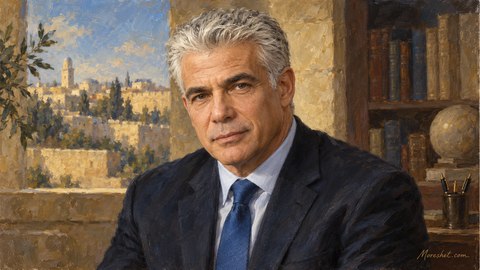
Shalom Kittel
Israeli journalist, editor and media executive who helped shape broadcast news and public discourse
Shalom Kittel is an Israeli journalist, editor and media executive whose career spans public radio, commercial television and public broadcasting. As a reporter, editor, presenter and senior manager, he helped shape the institutions through which Israelis received news and understood major national events. His work reflects the changing face of Israeli media—from the central role once played by radio, through the rise of commercial television, to the renewed public-broadcasting framework of Kan.
From immigration to journalism
Kittel was born in Poland on December 22, 1947, and immigrated to Israel with his family in 1950, when he was about two and a half years old. He grew up in Kiryat Ata and studied at the Hugim High School in Haifa. His early life followed the experience of many immigrant families who became part of Israel's developing social and civic institutions.
In 1970, Kittel began working at Kol Yisrael as a reporter and editor. Over the next 23 years he held a range of positions at the public broadcaster, gaining experience in reporting, editing and the production of news programming. At a time when radio was one of the country's principal sources of information, such work placed him at the center of Israeli public life.
One of the notable broadcasts associated with his early career was the coverage of Egyptian President Anwar Sadat's arrival in Israel in 1977. Sadat's visit was an extraordinary national and international event, and its coverage demonstrated the importance of broadcast journalism in bringing historic developments into Israeli homes and connecting them to the country's wider social and political reality.
Building Channel 2 News
In 1993, Kittel joined the team that established the Channel 2 News Company. Its creation marked a major stage in the development of Israeli television: a large-scale news operation was being built within a commercial channel, with the capacity to reach audiences across the country every evening.
In 1995, following the departure of the company's first chief executive, Eilon Shalev, Kittel became its chief executive and editor-in-chief. The position involved far more than administrative management. He helped organize staff and editorial procedures, oversee the preparation of broadcasts and maintain professional standards in a news organization that quickly became one of Israel's most influential media institutions.
Leading a major television newsroom required judgment about what the public needed to know, how complex events should be explained and how reporters, editors and presenters should work together under intense time pressure. During Kittel's tenure, the company became a central source of news for Israeli viewers. He left the position on May 1, 2007, after more than a decade as chief executive and editor-in-chief.
In November 2007, the Tel Aviv Journalists Association awarded Kittel a lifetime achievement prize at the Eilat Journalism Conference. The award recognized the cumulative significance of his work in Israeli journalism, including his years in radio and his role in building one of the defining news institutions of the commercial-television era.
Public dialogue and strategic advisory work
Kittel's public contribution extended beyond journalism. He was among the formulators of the Kinneret Covenant, an effort to create a shared basis among different currents and camps within Israeli Jewish society, including religious and secular communities and the political right and left. He signed the document alongside public figures from across the political spectrum. His participation reflected a commitment to public conversation and to the search for language capable of connecting a divided society.
In 2008, Kittel competed in a tender for a regional radio station as part of a group led by the Interdisciplinary Center Herzliya. Later that year he moved for a period into political and strategic work. In November, he was appointed an adviser and headed the campaign of Ehud Barak and the Labor Party in the elections for the Eighteenth Knesset. After the election, he served as a special adviser to Defense Minister Barak, leaving the position in November 2009.
In 2012, Kittel became a strategic adviser to the Labor Party under Shelly Yachimovich. These roles expanded his professional experience from shaping news coverage and managing a newsroom to advising public figures and political organizations on how ideas and policies are communicated to citizens.
Returning to broadcasting and community involvement
In 2016, Kittel returned to the microphone for approximately three months as co-host of the Kol Yisrael Reshet Bet program Hakol Diburim, presenting it with Benny Titboim as a replacement for Adi Meiri. The assignment drew on his long experience in current-affairs broadcasting and his familiarity with public radio.
Following the closure of the Israel Broadcasting Authority and the establishment of the Israeli Public Broadcasting Corporation, Kittel began presenting a weekly program on Kan Bet on May 18, 2017, initially with Doron Tsabari and, from January 2018, with Mordechai Gilat. He also presented Yoman HaShavua, the weekly news journal. His work at Kan connected his experience in Israel's older public-radio system with the country's new public broadcaster.
Kittel has also been among the managers of Yadid LaHinuch, an organization that places retired volunteers in Israel's education system. This work gives practical expression to the value of experience and civic participation: retirees contribute knowledge and time to schools, while students and educators gain from sustained intergenerational contact.
He is also a member of the “Committee of Three,” which examines incidents between military censorship and news organizations. The role draws on his firsthand understanding of the institutional tension between security needs, freedom of the press and public responsibility.
Why Shalom Kittel belongs in Moreshet
Shalom Kittel merits inclusion in Moreshet because he worked at several points where Israeli news, public conversation and media institutions were being shaped. He did not merely report on the country's changing reality; he helped build and lead the systems through which millions of Israelis encountered it—first in public radio, then in the Channel 2 News Company and later in the broadcasts of Kan Bet.
His legacy combines journalism, professional leadership and civic involvement. He helped bring historic events to the public, led a major news organization, participated in an effort to create common ground within Israeli Jewish society and supported education through volunteerism. His biography therefore illuminates both an individual career and the development of Israeli society itself: the institutions that inform citizens, the media that frame public discussion and the forms of service that strengthen community life. Moreshet.com preserves this record of Kittel's contribution to Israeli broadcasting, journalism and public service for readers seeking to understand the people who helped shape the country's modern heritage.