Offer Nissim

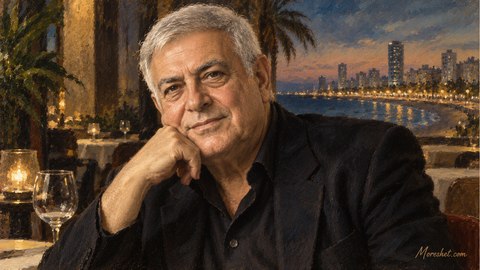
Ofer Nissim — AI-generated artistic portrait · Moreshet.com
The Israeli DJ and producer who carried local dance music from Tel Aviv clubs to audiences around the world
Offer Nissim is an Israeli DJ, remixer and record producer whose work helped define the sound of Israeli dance music and connect it with club cultures around the world. Active professionally since the early 1990s, he developed a recognisable style built from dramatic arrangements, powerful house and trance rhythms, Middle Eastern touches and an instinct for turning a song into a shared experience on the dance floor.
His importance extends beyond nightlife. Through his work with Dana International, Maya Simantov and many other performers, Nissim helped bring Israeli voices into international dance culture. He also became a central figure in the Israeli LGBTQ+ club scene, where music, performance and communal celebration created spaces for visibility and self-expression.
From Tel Aviv’s Theater Club to a professional career
Nissim was born in Israel in 1964, the eldest of three children of Iraqi-Jewish parents. He developed a strong interest in music at an early age. In 1979, when the scheduled DJ failed to appear at Tel Aviv’s Theater Club, Nissim stepped in. That unexpected opportunity became the beginning of a career that would span decades.
During the following decade, the Theater Club became both his workplace and a practical school. He learned how to read a crowd, shape a night through music and build professional relationships. Among the people he met there was Dana International, with whom he would later create some of the most recognisable work in Israeli popular music.
Dana International and the Eurovision breakthrough
In 1993, Nissim produced Dana International’s debut single, Saida Sultana. The two performers were soon invited to appear on Rivka Michaeli’s popular prime-time variety programme, Siba La’mesiba. After signing with IMP, Nissim produced Dana International’s first two albums: her 1993 debut and Umpatampa, released in 1994.
The partnership reached its international high point in 1998. Dana International represented Israel at the 43rd Eurovision Song Contest with Diva, written by Svika Pick and produced by Nissim. The song won the competition, giving Israel its third Eurovision victory and bringing Nissim broad recognition as a producer.
The achievement mattered on several levels. It placed an Israeli club producer at the centre of a major European broadcast, carried a distinctly modern Israeli sound to a mass audience and showed that music associated with nightlife could also become a defining national cultural moment. Nissim and Dana International later went their separate ways because of artistic differences. Already established as a DJ in Israel’s gay scene, Nissim then devoted himself primarily to DJing and production.
Creating an Israeli sound for global dance floors
During the 2000s, Nissim expanded his work through collaborations with Israeli and international singers, producers and DJs. His continuing partnership with Maya Simantov produced songs including That’s The Way I Like It, Searching, Alone, First Time, For Your Love, Happy People, Love and Over You. Together, their voices and productions became closely associated with Nissim’s live sets and Pride events.
Nissim also worked with the Austrian-American DJ Peter Rauhofer and produced official remixes for artists including Madonna, Cher, Christina Aguilera, Pet Shop Boys, Beyoncé, Jennifer Lopez, Deborah Cox, Mylène Farmer and Kristine W. At the same time, he reworked songs by Israeli artists such as Rita, Ivri Lider, Ofra Haza, Dana International, Sarit Hadad, Assaf Amdursky, Ilanit, Miri Mesika, Keren Peles and Ninet Tayeb.
His remixes did more than add a faster beat. They often rebuilt songs for the club: extending their structure, intensifying their emotional arc and introducing dramatic transitions, percussion and occasional Middle Eastern colour. In this way, Nissim made Israeli songs functional within international dance culture without stripping them of their local identity.
Albums, live sets and Pride culture
Nissim released a substantial series of studio albums and remix collections, including Excited in 2002, Searching in 2004, First Time and OfferNissim in 2005, Second Time in 2006, Forever Tel Aviv in 2007, Happy People in 2008, Pride All Over in 2010, Love in 2017 and SuperNatural in 2020. These releases charted his development from a local club DJ into a producer with an international following.
He also issued live recordings, DJ sets and podcasts, including Live @ Roxy, We Can!, MDNA Live Show and recurring Pride series. These recordings extended his reach beyond individual performances and helped document a musical culture in which Israeli listeners and international visitors shared a space shaped by dance, celebration and personal freedom.
His international standing was reflected in four appearances on DJ Magazine’s annual Top 100 DJs list: 29th in 2006, 56th in 2007, 51st in 2008 and 43rd in 2009.
Israeli music, Jewish references and cultural memory
Nissim’s work repeatedly brings Israeli popular culture into conversation with international dance music. His catalogue includes songs in Hebrew, English, Arabic and other languages, as well as works invoking Jewish traditions, biblical figures and Israeli symbols. Among them are Shalom Aleychem, Esther, Ahasuerus, Kol Doudi, Shoshana Yaakov, Adon HaSelichot, Shuva and Hatikva.
These choices show how club music can also become a form of cultural memory. Nissim places familiar names, melodies and themes within contemporary production, sometimes working with artists such as Rita, Zehava Ben, Nasrin Kadri, Harel Skaat, Eden Ben Zaken and many others. The result is a meeting point between inherited cultural material and a modern, international soundscape.
His collaborations also widened the routes by which Israeli music could travel. A listener who encountered one of his remixes in a club or Pride event might meet Israeli singers, Hebrew lyrics and Jewish or Middle Eastern musical references in a setting far removed from Israel. That circulation gave local performers a new context and made Israeli popular music part of a broader global conversation.
A continuing catalogue of collaboration
The scale of Nissim’s output is visible in the long list of original productions, collaborations and remixes released over the years. He has worked with Maya Simantov, Dana International, Ilan Peled, Nasrin Kadri, Rita, Sarit Hadad, Netta Barzilai, Assaf Amdursky, Ivri Lider, Amir Haddad, Ania Bukstein, Miri Mesika, Ninet Tayeb, Ofra Haza and many other performers.
Among the works associated with his name are Searching, First Time, For Your Love, Happy People, Tel-Aviv, My Pride, Equality, Human, Show Me Love, We Can Make It, Feel Free, Liberté, Keep On Dancing and Welcome. Together, these works reveal a distinctive method: production, remixing and live performance become ways of building community as much as ways of arranging sound.
Why Offer Nissim merits inclusion in the archive
Offer Nissim merits inclusion because he spent decades making Israeli music an active part of international club culture. He produced Diva, the song that brought Israel a Eurovision victory and became one of the defining moments in the country’s popular-culture history. He created a platform for Israeli singers and producers, and he gave local songs renewed lives through remixes, recordings and live events.
His legacy is also visible in Israeli LGBTQ+ culture. Through his music, Pride events and club performances, he helped establish nightlife as a place where Israeli creativity, identity and community could be expressed publicly and joyfully. For Moreshet, documenting Nissim matters because his career preserves a vital chapter in contemporary Israeli heritage: one in which music, Jewish and Israeli cultural references, international recognition and communal life met on the dance floor. Moreshet.com presents his story as part of the living legacy of Israel and the Jewish people, while also recognising the wider human significance of music that brings people together across language, geography and identity.