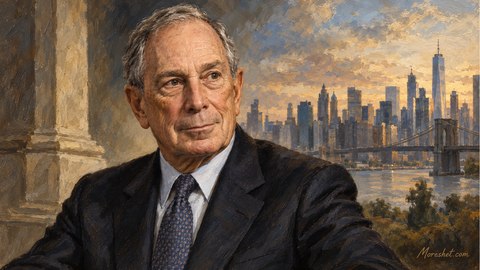
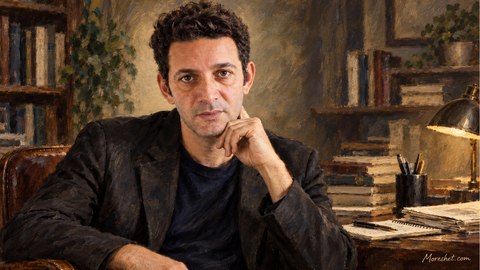
Mickey Rosenthal
Investigative journalist, documentary creator and former Knesset member who advanced transparency and public accountability
Moshe Michael “Mickey” Rosenthal, born on 4 February 1955, is an Israeli investigative journalist, editor, television presenter and documentary creator who later served as a member of the Knesset for the Labor Party and the Zionist Union. Across more than four decades, he moved between newspaper newsrooms, television studios and public office, making the relationships between wealth and government, public corruption, consumer protection and freedom of information central subjects of Israeli public discussion.
Rosenthal’s significance lies not only in the issues he investigated, but in the way he connected journalism with civic action. His reporting brought complex questions about economic power and public resources before a broad audience; in the Knesset, he worked to translate related principles into legislation that could protect citizens and strengthen oversight.
Early life and education
Rosenthal was born to Miriam, who was born in Germany, and Shraga, who was born in Poland. He grew up in the Borochov neighborhood of Givatayim. His father had been a member of the pre-state Lehi underground and took part in the robbery of the Anglo-Palestine Bank. He later owned “Sharnoa,” an agricultural-equipment factory that ran into difficulties during Israel’s 1966 recession. Rosenthal’s father died when Mickey was 11. When he was 13, his mother remarried and moved abroad with her second husband. Rosenthal grew up with household helpers. He contracted polio as a child, leaving him with a limp.
He studied general history and philosophy at Tel Aviv University but did not complete a degree. His public career was shaped less by formal credentials than by sustained journalistic work, an interest in institutions and a willingness to investigate people and systems with significant power.
From print journalism to investigative television
Rosenthal was part of the founding staff of the newspaper Hadashot and served as an editorial coordinator at the Tel Aviv local paper Ha'ir. From 1986 to 1999, he held several positions at Yedioth Ahronoth, including head of the news desk and deputy editor. This experience gave him a broad understanding of the news process, from reporting and verification to editing and the construction of a public agenda.
He later became vice president of content at Channel 2’s news company. As a television presenter, he hosted Bulldog on Channel 8, Bulldozer on Channel 2 and the documentary-drama series The Crackers on Channel 2. He also participated in the production of documentary material for programs including 10 Hachi with Gadi Sukenik, Ma Koreh BeVeit HaSefer? with Haim Hecht and Men in Black, which he co-hosted with Ronal Fisher. In 2010 he began presenting The Week with Mickey Rosenthal, a Friday-evening news magazine on Channel 10, but left the program in September of that year.
His work consistently brought institutional questions into the public sphere. Through investigations, interviews and documentary television, he sought to show how administrative and economic decisions were made and how those decisions could affect ordinary citizens.
The Shakshuka System: an investigation that became a public event
Rosenthal is most closely associated with the documentary film The Shakshuka System, directed by Ilan Abudi between 2005 and 2008. The film examined the relationship between wealthy members of the Ofer family and Israeli government institutions, raising questions about privatization, public assets, political influence and the transparency expected when national resources are involved in major transactions.
The film’s route to its audience became part of its public importance. yes, which had participated in its production, declined to broadcast it, and other major channels initially refused as well. Tel Aviv Cinematheque director Alon Garbuz announced a screening, while the Ofers said they would file a libel suit against Garbuz and others if the film was shown. An online initiative titled “I, too, am Mickey Rosenthal” then gathered pledges of support for possible legal costs. The documentary was screened in Tel Aviv and other cinematheques, attracted sustained public attention and was eventually broadcast by Israel’s Channel 1 on 28 July 2009, followed by a response film from Israel Corporation and a studio debate.
At the 2009 Documentary Film Awards, The Shakshuka System won awards for Best Documentary Film and Best Investigation. Its lasting importance was broader than the prizes. It turned a difficult debate about economic power, state resources and government decision-making into a subject accessible to a large audience. It also demonstrated how documentary cinema and investigative journalism can shape public debate when conventional broadcasting routes are unavailable.
Recognition as a journalist
Rosenthal received several professional and civic honors. They included the Pratt Award in 2003 for his distinctive contribution to environmental reporting; the 2004 Sokolow Award for work in campaigning journalism in support of social-justice principles; the Knight of Quality Government award in the communications category in 2007; and the Omץ Award in 2009. Together, these recognitions reflect his place in Israeli journalism as a reporter who used media to examine public systems and press for accountability.
Service in the Knesset
Before the 2013 elections, Rosenthal joined the Labor Party, won a place on its slate and entered the Knesset after being placed twelfth. He served on the State Control Committee and the Labor, Welfare and Health Committee, as well as subcommittees dealing with regulations under the Equal Rights for Persons with Disabilities Law, pensions in renewing kibbutzim and the Ministry of Economy’s “Circles of Employment” program, which he chaired in committee.
During that Knesset, he chaired the parliamentary lobby against corruption in public administration and the lobby promoting transparency and freedom of information. He was placed thirteenth on the Zionist Union list for the twentieth Knesset, served on the Finance Committee and continued to lead parliamentary efforts for transparency and against corruption. He also headed a Finance Committee team overseeing the Dead Sea tender process.
Rosenthal announced in January 2019 that he would not seek a place on the Labor Party list for the twenty-first Knesset. In February 2021, he began managing the Labor Party’s campaign for the twenty-fourth Knesset election.
Legislation focused on public protection
Rosenthal sponsored and advanced legislation concerning integrity in public life and transparency, as well as consumer rights, employment, welfare and communications. Measures enacted during his parliamentary work included limits on fees charged for representation before Israel’s National Insurance Institute. The law set maximum fees for companies and lawyers assisting with disability-benefit claims, prohibited collecting fees before benefits were actually received and ended the continuation of such charges after the claimant’s death.
Other legislation addressed conflicts of interest in the marketing of fruits and vegetables, expanded state-funded legal assistance for whistleblowers and broadened the definition of corruption under the State Comptroller framework so that public employees reporting improper administration could receive protection. A further amendment required employers with more than 25 employees to notify job applicants whether they had been accepted or rejected.
Rosenthal also promoted the application of freedom-of-information requirements to academic institutions. In communications law, he supported restrictions on unsolicited text messages and recorded calls seeking donations or promoting causes, together with an immediate opt-out mechanism for email recipients. Another amendment expanded the rights of blind people accompanied by guide dogs, including dogs in training and guide-dog puppies in foster care. He also participated in efforts that ultimately reduced the cost of presenting a vehicle for a driving test by approximately half.
After leaving the Knesset, Rosenthal led a public campaign to protect the Dead Sea from the exploitation of its resources by private corporations.
Family life
Rosenthal is married to Ofra, a school counselor, and they have three sons. The family lives in Givatayim. Their son Tal Rosenthal is a scriptwriter for the television program Eretz Nehederet and is married to actress Mai Keshet.
Why this legacy belongs in Moreshet
Mickey Rosenthal merits inclusion in Moreshet because his career connects journalism, democratic oversight and the everyday interests of Israeli citizens. His investigations made questions about wealth and government, corruption and public resources understandable to a wide audience. The Shakshuka System demonstrated the reach of independent documentary work even when its broadcast faced obstacles, and it left a lasting mark on Israeli discussion of accountability, privatization and the responsibilities of powerful economic actors.
His legacy also rests on the practical work he undertook in the Knesset. Legislation concerning whistleblowers, freedom of information, people with disabilities, employment applicants, communications and consumer protection sought to turn public principles into enforceable rights. For his contribution to Israeli journalism, public debate and institutional accountability, Rosenthal belongs in the historical record preserved by Moreshet and Moreshet.com.