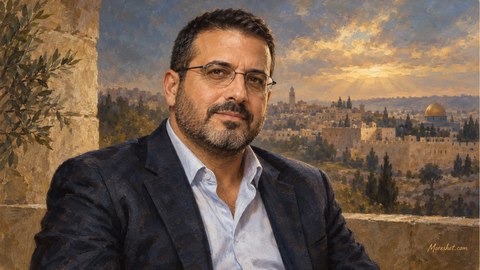
Sandy Koufax
A legendary Los Angeles Dodgers pitcher whose commitment to his Jewish faith became part of American sporting history
Sandy Koufax, born on December 30, 1935, is regarded as one of the greatest pitchers in baseball history. As a leading pitcher for the Los Angeles Dodgers, he became a central figure in American sports and was later inducted into the Baseball Hall of Fame. His achievements on the field secured his place in the memory of the sport, but one decision away from the field gave his legacy a wider Jewish significance.
A career at the summit of baseball
Koufax was a celebrated pitcher for the Los Angeles Dodgers and is widely regarded as one of the greatest players ever to occupy that role. This reputation, reflected in his Hall of Fame status, places him among the most memorable figures in the history of American baseball. His legacy is therefore not limited to a single team or era: he represents the highest level of accomplishment in one of the United States' most influential sports.
Yom Kippur and a defining act of Jewish identity
In 1965, Koufax faced a choice in which a major sporting opportunity coincided with a central religious obligation. The first game of the World Series fell on Yom Kippur, and Koufax chose not to pitch. His decision showed that his Jewish faith was not merely a private label but a principle he was prepared to honor at one of the most important moments of his professional career.
The meaning of that decision extended beyond one game. In professional sports, where athletes often become highly visible public figures, Koufax demonstrated that excellence in American public life could coexist with an openly maintained Jewish identity. For many Jews, and particularly for younger people, he became an example of how achievement and religious commitment could stand together rather than compete with one another.
Why this legacy belongs in Moreshet
Sandy Koufax merits inclusion in Moreshet not only because he is remembered as one of baseball's greatest pitchers and as a member of the Baseball Hall of Fame, but because his public choices gave his athletic achievement a broader cultural meaning. By declining to pitch the opening game of the 1965 World Series on Yom Kippur, he created a lasting image of faith and Jewish identity expressed clearly in the public arena.
Koufax's story connects American sporting culture with Jewish heritage. It shows how the conduct of one highly visible individual can strengthen a community's sense of dignity and belonging. Moreshet and Moreshet.com preserve his significance as more than the story of a celebrated athlete: they present him as an example of Jewish presence in American life and of the lasting influence that can grow from a principled decision at a decisive moment.