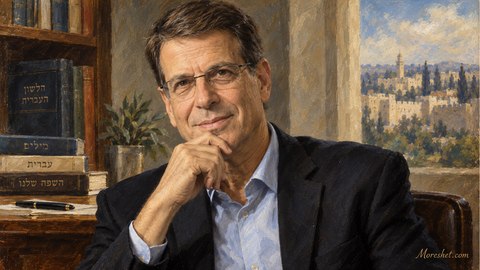
Daliah Mazor
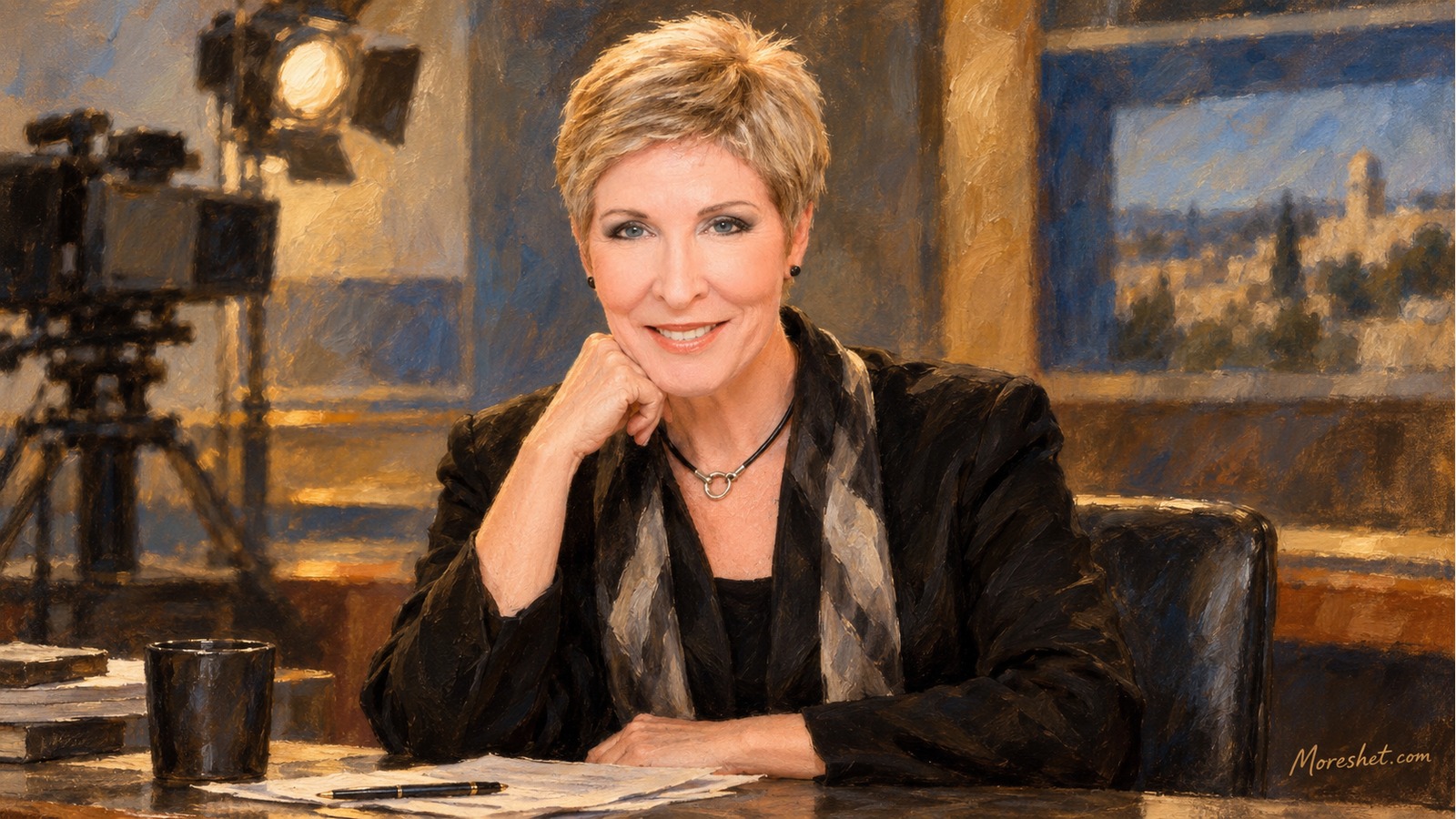
Daliah Mezor — AI-generated artistic portrait · Moreshet.com
A defining voice of Israeli radio, television and public life
Daliah Mazor is an Israeli continuity announcer, news presenter and television host whose career became closely identified with the formative decades of Israeli broadcasting. Over more than four decades, she worked in radio and television, presented major news programs, hosted national celebrations and cultural events, prepared journalistic reports and helped establish the professional language of public broadcasting in Israel.
From Ramat Gan to Galei Tzahal
Mazor was born on December 28, 1949, and grew up in Ramat Gan. Her parents, Aryeh and Hannah Mazor, were born in Poland and immigrated to Israel when they were young. Her father worked for the Dan public transportation cooperative, served as chairman of its secretariat for about twenty years, and later became director general of the Histadrut-affiliated industrial conglomerate Ta'asiya Ezorit Pituach. Mazor has one older sister, Dafna.
After graduating from Ohel Shem High School, she enlisted in the Israel Defense Forces. She initially entered a course for squad commanders, but after successfully passing examinations she was transferred to Galei Tzahal, the IDF radio station. There she served as an announcer and broadcaster until the end of her military service, presenting classical and popular music, news and documentary programs. This early experience gave her a versatile command of both live broadcasting and carefully prepared editorial material.
Between 1970 and 1973 she studied at the Hebrew University of Jerusalem, earning a bachelor's degree in art history and archaeology. In 1970 she co-hosted the first Children's Song Festival with Manny Peer, an early indication of her ability to make live cultural programming accessible to a broad family audience.
A pioneering television career
Near the end of her service at Galei Tzahal, Mazor applied for a training course for television announcers. The course had been advertised by Israeli television, then still a young institution. She passed the examinations and trained under Aryeh Orgad. In December 1969 she made her television debut as a continuity announcer, introducing programs and maintaining the flow of the channel's broadcasts. At a time when Israeli viewers had very few channels, this role formed part of the everyday experience of public television.
Mazor remained a continuity announcer until 1980 while also preparing reports for Mabat LaHadashot, the main news program. Her work gradually expanded from presentation into reporting and production, giving her experience on both sides of the broadcast. In 1980 she joined the television news division and began presenting the channel's various news editions.
For thirteen years she alternated as presenter of Mabat LaHadashot, the central news bulletin of the era when Israel had a single television channel. The program reached a very large national audience, and Mazor's calm, precise delivery became part of the daily rhythm of Israeli life. At the same time, she continued to prepare reports for the bulletin. Her work brought current events, social developments and public affairs into homes throughout the country during a period when television presenters were also highly visible representatives of the national broadcasting institution.
She presented the central edition until 1993. After the launch of Channel 2, a decision was made to retain Haim Yavin as the sole presenter of the main edition. Mazor nevertheless continued to contribute to other programs and formats produced by the Israel Broadcasting Authority.
National celebrations, culture and public affairs
From 1970 and for approximately twenty years, Mazor presented most of the channel's major Independence Day programs, usually alongside Daniel Pe'er. These broadcasts were more than entertainment. They became annual televised rituals that brought music, stories and national events into a shared public setting. Mazor also co-hosted the Israeli Eurovision selection competition twice: in 1983 with Daniel Pe'er and in 1985 with Nathan Datner. She presented the Israel Prize ceremony several times as well.
Between 1990 and 2003, Mazor presented and, in some years, edited the Friday edition of Boker Tov Yisrael, the first channel's morning program. She also prepared reports for Yoman and Ro'im Olam. One of her reports for Ro'im Olam was among the early television reports to introduce Israeli viewers to the growing phenomenon of foreign workers in Israel. This aspect of her career is significant because it shows her contribution not only as an on-screen presenter but also as a journalist who helped bring an emerging social issue into public awareness.
In her final years at the first channel, she presented Madad Yomi, its daily economic program, and the Saturday-night news edition broadcast within the foreign-affairs program Ro'im Olam. At the end of May 2011, she retired after forty-one years of work at the Israel Broadcasting Authority.
Radio, new formats and continued public presence
After an interruption of about thirty years, Mazor returned to radio in the early 2000s. She hosted Color of Money on Reshet Bet and a music program on 88FM. Her return demonstrated the breadth of her broadcasting skills: she could move from news and economic affairs to music while adapting her pacing and presentation to the more intimate, voice-centered medium of radio.
On January 1, 2012, she began co-hosting Yom Hadash, a morning program on Keshet's Channel 2 broadcasts, with Yoav Limor. Six months later, in July 2012, Dror Globerman replaced her as host. In 2013 she became a spokesperson for the Ronit Raphael centers, and in 2021 she appeared on Ze Lo Ulpan Shishi with Israel Katourza and Erez Tal. She also took part in the sixth season of Dancing with the Stars.
Personal life
Mazor has been married and divorced twice. Her daughter from her first marriage, born in 1972, died at the age of one and a half from familial dysautonomia. She has two sons from her second marriage. In 2012 she was in a relationship with international media executive Alex Gilady. Mazor lives in Herzliya.
Why Daliah Mazor belongs in Moreshet
Daliah Mazor merits inclusion in Moreshet because her career preserves a central chapter in the history of Israeli media. She was present during the transition from military radio to national television, the establishment of the daily news bulletin as a shared civic ritual, and the development of televised Independence Day celebrations and public ceremonies. She was not simply a familiar face. Over decades she presented, edited and reported, helping make news, social issues, culture and public events accessible to audiences across Israel.
Her work also illuminates the institutions that shaped Israeli public culture. Through Galei Tzahal, the Israel Broadcasting Authority, Reshet Bet and later commercial television, Mazor connected different broadcasting traditions and generations of viewers and listeners. Her career is therefore both an individual story and a record of how Israel learned to describe its society, celebrate its achievements and confront emerging social questions through radio and television. That enduring connection between personal memory and the country's shared cultural history is why her legacy belongs in Moreshet.com.