Cyril Legum
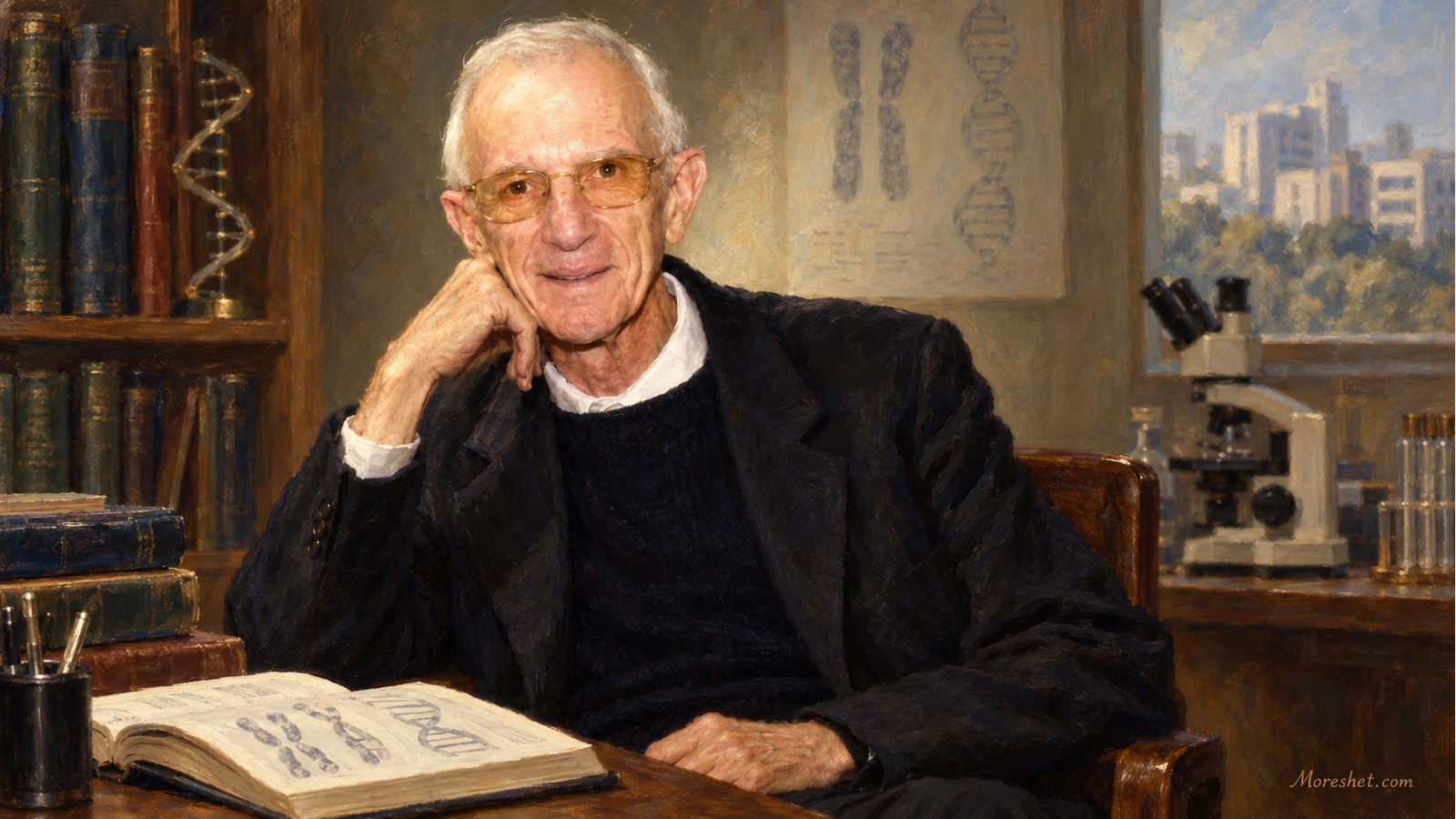
Cyril Legum — AI-generated artistic portrait · Moreshet.com
Pediatrician, geneticist, and founder of one of Israel’s earliest major medical genetics services
Cyril Legum (July 15, 1932 – March 2, 2014) was a pediatrician and geneticist who helped establish medical genetics as a practical field in Israel. He founded the Genetics Institute serving Tel Aviv’s municipal hospitals and directed it for 28 years. At the same time, he was a professor of genetics at Tel Aviv University’s School of Medicine.
Legum’s contribution was both scientific and institutional. He connected laboratory research with clinical diagnosis, genetic counseling, and medical education at a time when genetics was still developing in Israel. The services and professional frameworks he helped create affected physicians, patients, and families dealing with hereditary disease.
From South Africa to Israeli medicine
Legum was born in South Africa and completed his medical studies in Johannesburg in 1958. He immigrated to Israel that year and volunteered for the Paratroopers as a combat military physician in the Israel Defense Forces. After completing his military service, he specialized in pediatrics at Hadassah Hospital in Tel Aviv, finishing his training in 1967.
His later move into genetics broadened the scope of his work. As a pediatrician, he encountered children and families facing serious illness; as a geneticist, he sought to understand hereditary causes and to give families medical information that could guide diagnosis, counseling, and future decisions.
Advanced training and the creation of a genetics service
From 1967 to 1970, Legum pursued advanced training in medical genetics in the United States. His studies took him to several leading centers, including Johns Hopkins University in Baltimore, Albert Einstein College of Medicine in New York, and Stanford University. He returned to Israel with expertise in a field that had not yet developed a broad institutional presence there.
Back in Israel, he established genetics services at Beit HaBriut, the Nathan and Lina Strauss House of Health at 14 Balfour Street in Tel Aviv, which was part of the Hadassah Hospital complex. After Hadassah Hospital moved to Ichilov, Legum founded the Genetics Institute at Ichilov. The institute served Tel Aviv’s municipal hospitals—Ichilov, Hadassah, and the Kiryah Maternity Hospital—and became a central setting for genetic diagnosis, research, and teaching.
Bringing genetics into clinical practice
Legum’s distinctive achievement was his effort to make genetics useful in everyday medicine. He was among the first physicians in Israel to integrate molecular genetics into clinical genetic diagnosis, particularly in the diagnosis of muscular dystrophy and related degenerative muscle diseases. This helped establish genetic testing as a clinical tool for understanding disease and advising patients, rather than as a subject confined to research laboratories.
According to the supplied biographical material, Legum was the first geneticist in Israel to introduce alpha-fetoprotein testing into prenatal screening for genetic disease. He also developed a method for assessing the risk that a pregnant woman would give birth to a child with Down syndrome. At a time when prenatal testing and genetic counseling were still emerging in Israel, these efforts expanded the information available to physicians and families.
In 1970, Legum investigated a pulmonary disease affecting a large Samaritan family. The study examined, among other questions, the presence of a trypsin inhibitor and a possible immunological defect. The work demonstrated the value of studying disease patterns within families and reflected the distinctive opportunities for medical research presented by Israel’s diverse communities.
Director, professor, and builder of a profession
Legum directed the Genetics Institute of Tel Aviv’s municipal hospitals for 28 years. His role involved more than supervising a medical unit. He helped establish services, introduce new diagnostic approaches, and connect laboratory work with clinical care. His position at Tel Aviv University’s School of Medicine extended that influence into medical education, where he helped train professionals who would carry the field forward.
His legacy therefore lies in both people and institutions: in the patients and families who received diagnosis or counseling, and in the hospital and academic structures that made genetics a continuing part of Israeli medicine. During the formative years of the discipline, Legum helped give medical genetics a durable clinical, research, and educational foundation.
Family and later years
In 1959, Legum married Shula Legum (1932–2007). In March 1994, Shula Legum was promoted to the rank of major general in the IDF. They had four sons: Uri, Danny, Yonatan, and Michael. Cyril Legum died in 2014 and was buried at Kiryat Shaul Cemetery.
Why this legacy belongs in Moreshet
Cyril Legum merits inclusion in Moreshet because he helped build an important part of Israel’s medical infrastructure. He did not merely practice genetics; he founded a genetics institute serving major municipal hospitals, directed it for nearly three decades, and brought the field into the academic life of Tel Aviv University’s medical school.
His work had practical consequences for families. The introduction of prenatal screening, the development of risk assessment for Down syndrome, and the use of molecular genetics in clinical diagnosis expanded the ability of Israeli medicine to identify hereditary disease and offer informed counseling. His career also represents the contribution of immigrant physicians who helped create Israel’s health and academic institutions. Moreshet.com preserves his memory as a physician, educator, researcher, and institution-builder whose work influenced Israeli medicine and the generations that followed.