Arnon Milchan
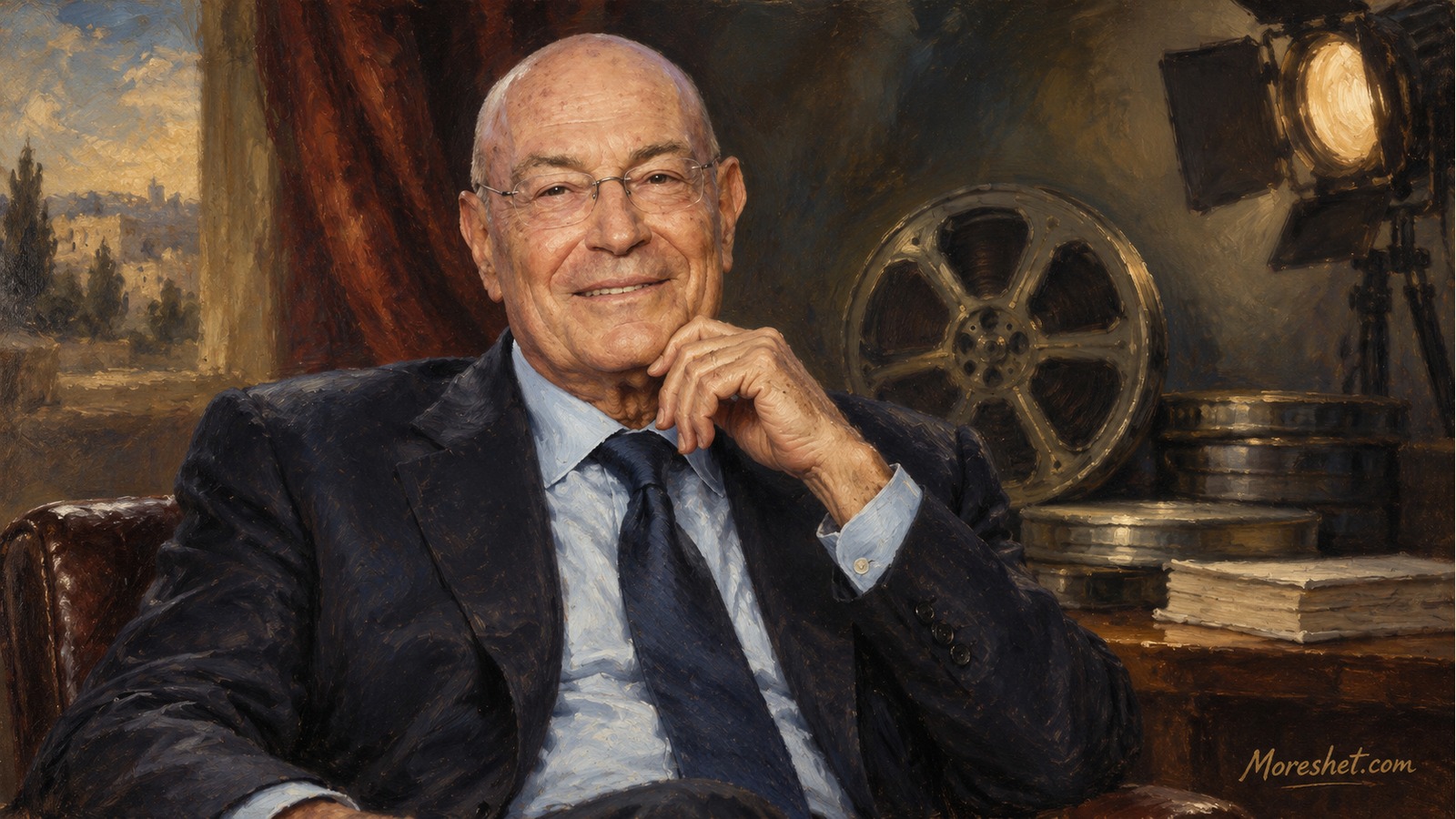
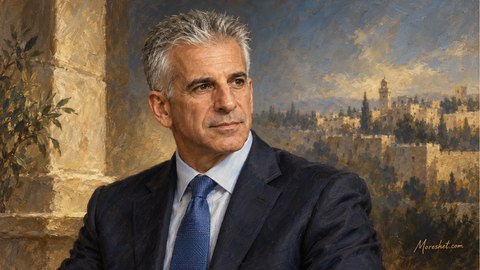
Arnon Milchan — AI-generated artistic portrait · Moreshet.com
The Israeli businessman and producer who built Regency, backed Oscar-winning films, and connected Israel with the center of global cinema
Arnon Milchan is an Israeli businessman and film producer, the founder of Regency Enterprises and New Regency, and a figure associated with more than 130 feature films. His remarkable career began in a family agricultural-chemicals business, passed through covert procurement work for the State of Israel, and ultimately reached the highest levels of Hollywood. There he helped bring to the screen such films as The King of Comedy, Once Upon a Time in America, Brazil, Pretty Woman, L.A. Confidential, Fight Club, 12 Years a Slave, and The Revenant.
Milchan's significance lies in more than the size or commercial reach of that filmography. He built an independent production structure capable of supporting markedly different filmmakers, combined private capital with long-term studio partnerships, and established an unusual Israeli presence within one of the world's most influential cultural industries. Earlier in his life, his work for Israel's Bureau of Scientific Relations formed part of the country's effort to obtain strategic equipment and technology at a time when the young state faced severe security and diplomatic constraints.
Roots in Rehovot and an early business education
Milchan was born in Rehovot on December 6, 1944, during the British Mandate, into a Jewish family with deep roots in the country. Through his mother, Shoshana, née Gabriele, he was the eighth generation of a family descended from European Jewish disciples of the Vilna Gaon who reached the Land of Israel in the early nineteenth century. His paternal family became involved in agriculture, commerce, and the distribution of local and imported products. His grandfather, Haim Eliezer Milchan, planted a vineyard and citrus grove in Rehovot, participated in the establishment of a winegrowers' association, and later developed trading and distribution businesses.
His father, Dov Milchan, owned Milchan Brothers, a company that marketed fertilizers and pesticides to Israeli agriculture. Arnon grew up in Tel Aviv, attended Dubnov School, and was later sent to boarding school in England. He studied at the London School of Economics and acquired an early command of languages and international business environments.
Milchan was only 21 when his father died unexpectedly and he inherited the family company. He expanded it beyond fertilizers, securing import relationships with international corporations, marketing Israeli agricultural chemicals abroad, and conducting business in chemicals and pharmaceuticals in Europe and the Middle East. He later represented and brokered defense-related transactions. The skills required for that work—raising capital, negotiating across borders, and building relationships among corporations and governments—would also become central to his career in film.
Work for Israel's Bureau of Scientific Relations
For many years, Milchan's intelligence role was known chiefly through press reports and books. In a 2013 interview on the Israeli investigative program Uvda, he publicly confirmed that he had worked for the Bureau of Scientific Relations, known by its Hebrew acronym Lekem. The secret organization sought scientific knowledge, technology, and equipment for Israel's strategic programs. According to books by Meir Doron and Joseph Gelman and by Yossi Melman and Dan Raviv, Shimon Peres recruited Milchan, who assisted with the procurement and financing of components connected, among other purposes, to Israel's nuclear program.
Milchan operated in an environment where international business relationships could also serve national needs. His access to corporations, officials, and intermediaries enabled him to participate in procurement efforts that could not be conducted through conventional diplomatic channels. Peres later described Milchan's ability to create relationships at the highest levels as a strategic, diplomatic, and technological advantage for Israel.
A complete account also requires an essential qualification. Milchan acknowledged that, within Israel's relationship with South Africa, he participated in activity that assisted the apartheid regime in exchange for cooperation involving uranium supplies. His covert procurement work also came under scrutiny after a United States investigation into shipments of electronic krytron switches through a company associated with him. Milchan was investigated but was not charged. These facts place his work within the morally and diplomatically complex world of Cold War procurement. They do not eliminate the need to record either its contribution to Israel's strategic capabilities or the methods and partnerships that contribution entailed.
From Israeli film to Hollywood
Dizengoff 99 and Masada
Milchan entered filmmaking in the second half of the 1970s after moving to Paris. He began with commercials and films in France and Britain, and in 1979 produced Avi Nesher's Israeli feature Dizengoff 99. Its depiction of young urban life in Tel Aviv made it one of the films most closely associated with Israeli cinema of that period. It also gave Milchan a distinctly Israeli starting point as his career became increasingly international.
Between 1979 and 1981 he participated in the production of the American television miniseries Masada, filmed in Israel for ABC. The large-scale production introduced an episode with a powerful place in Jewish and Israeli memory to an international television audience, using Israeli locations and production resources. It was an early example of Milchan helping to connect the landscape and historical inheritance of Israel with the reach of American entertainment.
Artistic risks that became classics
Milchan began working systematically in Hollywood in the early 1980s. Several of his first major productions were not immediate box-office successes, but later acquired important places in cinema history: Martin Scorsese's The King of Comedy, Sergio Leone's Once Upon a Time in America, and Terry Gilliam's Brazil. All three demonstrated a willingness to support directors with strongly individual visions, even when their projects were difficult, expensive, or resistant to a safe commercial formula.
These films connected Milchan with leading filmmakers and actors, including Robert De Niro, Scorsese, Leone, Gilliam, Oliver Stone, and Sydney Pollack. His ability to raise financing, assemble studio partnerships, and sustain ambitious productions gradually transformed him from an outside investor into the builder of an independent film institution.
Pretty Woman and the creation of New Regency
The decisive commercial breakthrough was Pretty Woman in 1990. Milchan was contractually committed to Richard Gere and sought a suitable second project after an earlier Gere film had disappointed commercially. Developed on a comparatively modest budget and acquired for distribution by Disney, Pretty Woman became a worldwide hit and sharply elevated Milchan's standing in the industry.
In 1991 he founded New Regency Productions within Regency Enterprises. Rather than financing films one at a time, he built an organization around packages of productions, long-term distribution arrangements, and partnerships with major studios. Regency worked extensively with Warner Bros. and later with Fox, producing an unusually broad range of legal dramas, historical films, thrillers, comedies, action pictures, and director-led works.
Films that entered popular culture
Milchan and Regency's body of work reflects an uncommon combination of mass-market entertainment and artistically ambitious cinema. Notable productions include JFK, Under Siege, The Client, Natural Born Killers, Heat, A Time to Kill, L.A. Confidential, Fight Club, Mr. & Mrs. Smith, Gone Girl, The Revenant, Widows, Bohemian Rhapsody, Little Women, The Lighthouse, and Blitz.
Milchan personally received Academy Award nominations for Best Picture as a producer of L.A. Confidential and The Revenant. Two other Regency-associated productions, 12 Years a Slave and Birdman, won Best Picture in consecutive years. Academy credit rules did not place Milchan among the individual Best Picture nominees for those two films, but Regency's participation in them illustrates the production framework he created for demanding projects with worldwide reach.
The importance of these films extends beyond awards. 12 Years a Slave became a major cinematic work about the history and memory of American slavery; L.A. Confidential renewed the film-noir tradition for a modern audience; Fight Club shaped the cultural vocabulary of a generation; and Little Women reintroduced a literary classic to contemporary viewers. A producer's contribution is to create the conditions in which such visions can be realized—financing, casting, distribution, time, and institutional protection—and Milchan's lasting influence is particularly visible in that role.
Entrepreneurship beyond the screen
Milchan continued to pursue other businesses alongside filmmaking. During the 1990s he acquired a significant interest in the German sportswear company Puma, expanded his holding, and later sold it at a substantial gain. His other investments included automobile distribution, high-end audio and video technology, and energy ventures. In Acre, he partnered in the establishment of Milpol, a manufacturer of printing plates, in an initiative intended to generate industrial activity and employment in a city then suffering from high unemployment.
He also participated in the Israeli media market. In 2005, New Regency acquired approximately a quarter of Israel's Channel 10; Milchan sold most of that interest in 2015. His involvement brought international capital and media experience to a commercial Israeli broadcaster during a period of intense competition and instability. In 2012, reports described a New Regency partnership with the Israeli ADD agency to develop ideas from Israeli creators for presentation in the American market. Not every development initiative becomes a finished production, but the effort represented Milchan's continuing role as a bridge between local talent and international finance and distribution.
Israel, art, and family
Despite the international scale of his career, Milchan maintained deep connections with Israel. He organized solidarity and support gatherings involving Hollywood figures, hosted prominent artists and actors in Israel, and helped create direct encounters between them and Israeli society. He was a friend of Shimon Peres and maintained relationships with other Israeli leaders. In 2009 and 2016 he attempted to mediate talks aimed at forming national unity governments, though neither effort produced the intended result.
Milchan was questioned in December 2016 about his relationship with Prime Minister Benjamin Netanyahu. In 2018 the police recommended charging Milchan in the gifts investigation known as Case 1000, but the attorney general decided not to indict him. In 2023 Milchan testified in Netanyahu's trial by video link from a court in Brighton. These facts are necessary to an accurate biographical record, but they do not define the full extent of the business, cinematic, and public career he built over several decades.
Milchan is also a longtime art collector. In 2015 CNBC valued his collection at approximately $600 million and ranked him among Hollywood's leading collectors. In 1979, works by artists including Pablo Picasso, Mané-Katz, René Magritte, Nahum Gutman, and Naftali Bezem were stolen from his home in one of the largest art thefts recorded in Israel.
Milchan had three children with his first wife, French-born model Brigitte Genmaire, including photographer Elinor Milchan and producer Alexandra Milchan. He later married former South African tennis player Amanda Coetzer, who reached world No. 3 at the height of her professional career, and they have two children. In the most recent period documented by the supplied sources, he was living in Sussex, England.
Why this legacy belongs in Moreshet
Arnon Milchan merits inclusion in Moreshet because his life joins several important chapters in Israel's development: a family rooted in the country since the nineteenth century, the growth of an international business from a locally focused agricultural enterprise, strategic procurement work for a young state, and the creation of an Israeli-led production company with genuine influence at the center of world cinema.
His contribution to Israeli heritage can be identified in specific achievements. He produced Dizengoff 99, helped bring the story of Masada to American television, created avenues intended to introduce Israeli ideas to the international market, and used his position to connect prominent cultural figures with Israel. In the wider world, he helped make films that reached vast audiences, received the film industry's highest recognition, and influenced how cinema addresses history, power, identity, justice, and memory.
The record on Moreshet.com rests not on Milchan's wealth alone, but on his unusual ability to turn capital, relationships, and initiative into institutions and enduring cultural works. By documenting his career, Moreshet preserves the complex and consequential story of an Israeli who worked across business, security, and international culture—and whose imprint can be traced both in the history of the State of Israel and in the development of modern cinema.